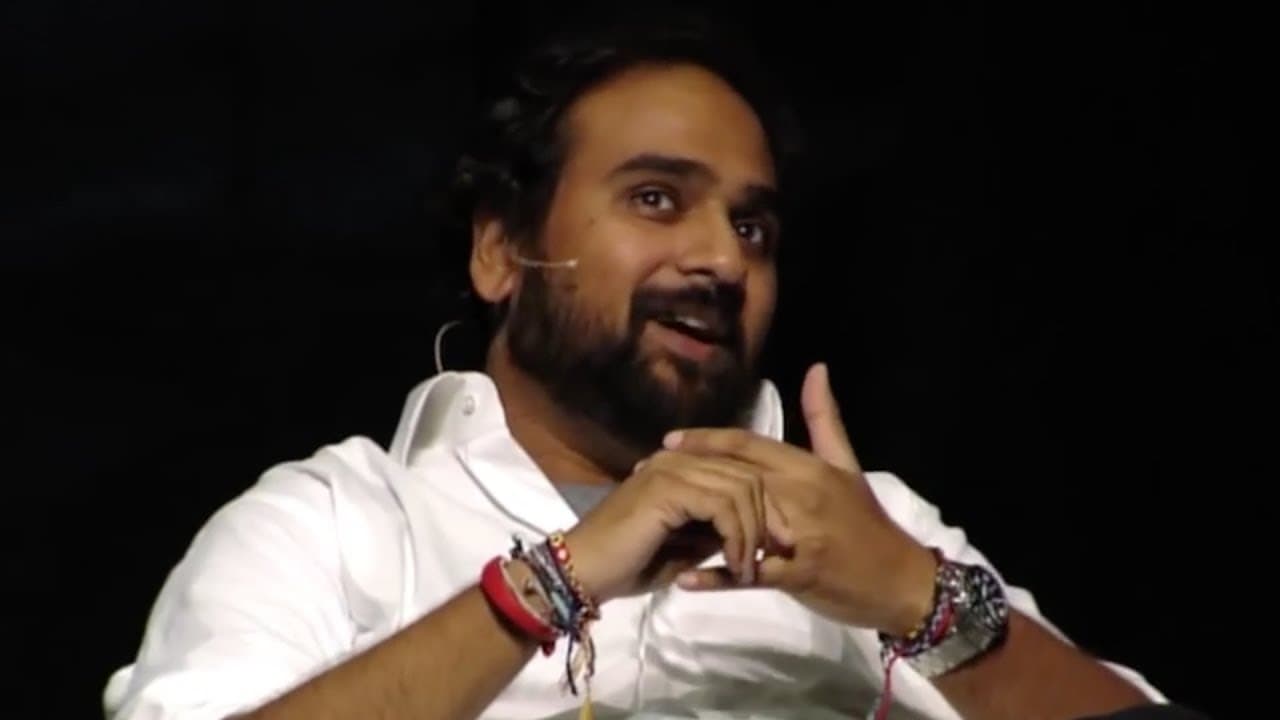
How Did Hosain Rahman Build Jawbone? Startup School SV 2014
TL;DR
Hosain Rahman built Jawbone by repeatedly returning to real customer problems, surviving failed launches, and combining software, hardware, and data into better products. Founded in 1999 around a voice interface for mobile devices, the company found its breakthrough in noise cancellation and used DARPA funding to stay afloat. Read on for lessons from its financing struggles, manufacturer resistance, Steve Jobs’s feedback, and the 2008 financial crisis.
Transcript
thank you for coming I hope to do not much talking at all and I'm going to just ask you because it's sort of a strange thing you have this I want you to sort of go through the chronology of the early days yeah um and talk about you really did have a lot of close calls and I'd love for you to talk about them and how you got through them and sort of ... Read More
Key Insights
- Hosain Rahman started his company in 1999, aiming to create a voice interaction system for mobile devices, similar to Siri, but faced numerous challenges in raising initial capital.
- The breakthrough for Rahman’s company came with the invention of noise cancellation technology, which became a significant advancement in mobile audio.
- Despite the impressive technology, initial attempts to integrate it into devices faced resistance due to cost concerns from manufacturers.
- DARPA funding played a crucial role in sustaining the company during tough times, allowing them to refine their technology for military applications.
- The company's first consumer product launch was unsuccessful, leading to a shutdown and Rahman taking back control with limited resources.
- A pivotal moment came when Steve Jobs provided brutally honest feedback on their product design, reinforcing the importance of staying true to customer experience.
- The company eventually succeeded with a consumer headset, achieving significant revenue growth, but faced new challenges during the 2008 financial crisis.
- Rahman emphasizes the importance of integrating software, hardware, and data to solve customer problems effectively, learning from past failures to drive future success.
Install to Summarize YouTube Videos and Get Transcripts
Explore YouTube Video Summarizer or Get YouTube Transcript Extractor
Questions & Answers
Q: How did Hosain Rahman build Jawbone through repeated setbacks?
Rahman began with a customer problem: making mobile devices easier to use through voice interaction. When speech recognition proved inadequate, the company developed noise-cancellation technology, survived with DARPA funding, and continued after an unsuccessful consumer launch. Rahman says the company performed best when it stayed focused on solving customer problems.
Q: What was Hosain Rahman’s original vision for the company?
The company started in 1999 after work on its ideas began around 1997 or 1998. Rahman wanted to build a voice-interaction layer for mobile devices, essentially an early version of Siri inspired by Palm, Nokia, and the emerging mobile-device revolution.
Q: Why was raising Jawbone’s early funding so difficult?
Investors in Silicon Valley were not yet focused on mobile technology or mobile voice interfaces. Rahman says raising the first half-million dollars was harder than raising the first $200 million because the company first had to prove that it possessed a compelling technical advantage.
Q: What technological breakthrough changed the company’s direction?
The team invented noise-cancellation technology while trying to make speech recognition work. Rahman describes it as the biggest breakthrough in mobile audio in 30 years, and the company realized it could improve the core mobile-phone activity of that period: talking.
Q: Why did handset manufacturers reject the noise-cancellation technology?
Manufacturers liked demonstrations in which the technology removed sounds from weed whackers, blenders, and other noise sources. They resisted integration because it required additional microphones and increased costs, while handset makers were highly concerned about pennies.
Q: How did DARPA funding help Jawbone survive?
DARPA wanted the company’s noise-cancellation algorithms to become a foundation for battlefield technology. Government grants kept the lights on for its eight engineers and helped the team turn its raw science into technology that could be delivered in a product.
Q: What did Hosain Rahman learn from the failed first consumer product launch?
The first consumer headset generated attention but sold poorly after design and functionality were compromised to meet deadlines. Operations shut down, employees were laid off, and the office doors were chained, but Rahman regained control. The failure taught him to protect product design and the customer experience.
Q: How did Jawbone respond to later product and financial crises?
During the 2008 financial crisis, canceled orders left the company with substantial inventory in China, and it spent much of 2009 reducing that inventory, including through a deal with Costco. When Up units later broke at scale, Rahman publicly apologized, offered refunds, let customers keep the product, and used the experience to improve its eventual relaunch.
Summary & Key Takeaways
-
Hosain Rahman's entrepreneurial journey began with the vision of creating a voice interaction system for mobile devices. Despite early challenges, his company made a significant breakthrough with noise cancellation technology, although manufacturers were initially hesitant to adopt it due to cost concerns.
-
DARPA funding was instrumental in keeping the company afloat, allowing them to refine their technology for military use. A failed product launch led to a company shutdown, but Rahman regained control, learning valuable lessons about the importance of design and customer experience.
-
The company eventually succeeded with a consumer headset, achieving rapid revenue growth but facing new challenges during the 2008 financial crisis. Rahman highlights the importance of integrating software, hardware, and data to effectively solve customer problems, drawing on past experiences to guide future innovation.
Read in Other Languages (beta)
Share This Summary 📚
Summarize YouTube Videos and Get Video Transcripts with 1-Click
Try YouTube Summary with ChatGPT & Claude or YouTube Transcript Generator
Explore More Summaries from Y Combinator 📚





Summarize YouTube Videos and Get Video Transcripts with 1-Click
Try YouTube Summary with ChatGPT & Claude or YouTube Transcript Generator