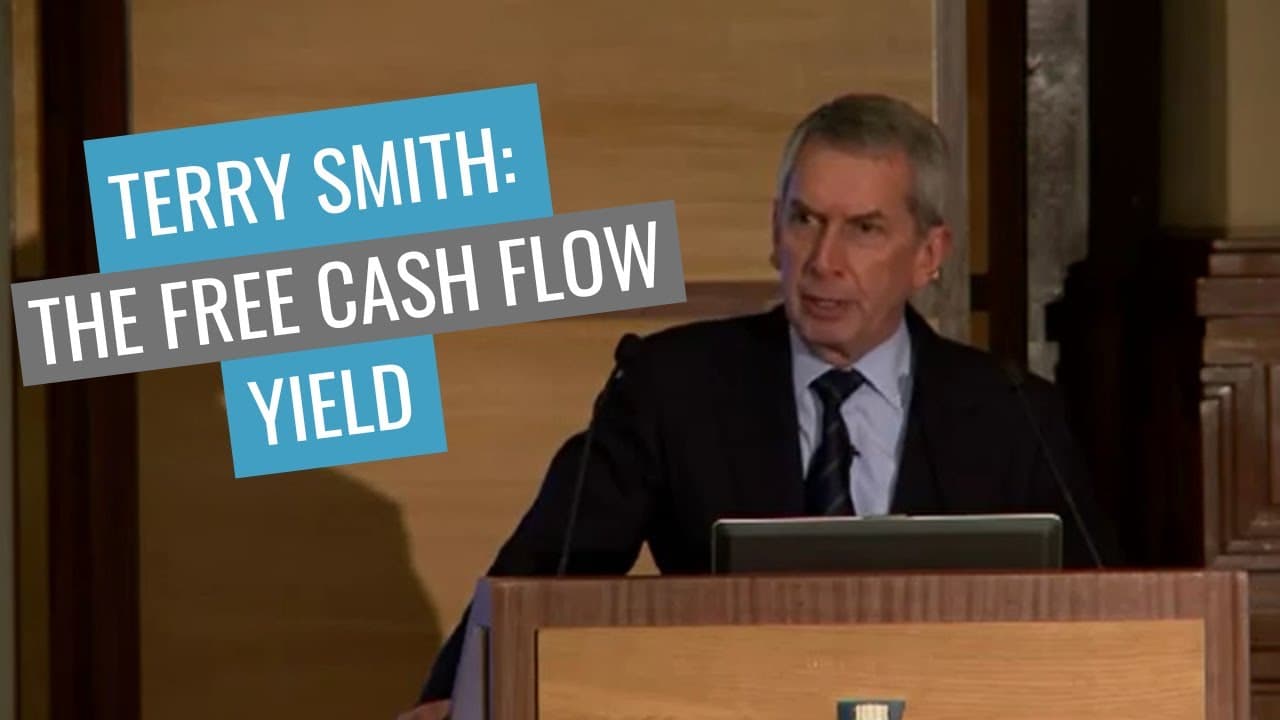
Terry Smith explains: the free cash flow yield
TL;DR
The speaker addresses common investor concerns about the high valuations of their portfolio companies, highlighting the importance of free cash flow yield and comparing it to bond yields as a benchmark for value. He explains their investment strategy and emphasizes the potential for long-term value creation.
Transcript
i think the most frequently asked question that i get from investors or potential investors is well the fund has done very well in their opinion and uh as a result doesn't it mean all the companies you invest in are very expensive and we shouldn't really be investing any more money uh in these companies and uh and discussed they say and there are a... Read More
Key Insights
- 🙃 The speaker acknowledges that he does not have insights into the future performance of portfolio companies, but he believes in the value of owning companies with a higher free cash flow yield than bond yields.
- 🥶 The strategy of comparing free cash flow yield to bond yields helps identify potentially undervalued companies and create long-term value.
- ↩️ Companies with intangible advantages are less prone to mean reversion and can maintain superior margins and returns on capital.
- ✋ Investors are often attracted to high-risk, high-return investments, but historical data shows that stability and low volatility yield better returns.
- ⌛ Timing market entry based on economic outlook or market declines is not a reliable strategy. The focus should be on maintaining discipline and avoiding overpayment.
- 🏅 The comparison between a "gold can" of corned beef and a "gold ETF certificate wrapped whole sweet burger" highlights the potential risks of investing in assets with no intrinsic value.
Install to Summarize YouTube Videos and Get Transcripts
Explore YouTube Video Summarizer or Get YouTube Transcript Extractor
Questions & Answers
Q: How do you determine if the companies you invest in are overpriced?
The speaker compares the free cash flow yield of their portfolio companies to bond yields and the expected rate of inflation. They consider a 5% or higher free cash flow yield as a reasonable benchmark for value.
Q: What is the significance of comparing free cash flow yield to bond yields?
Bond yields are artificially low due to quantitative easing, so the speaker believes that a rational investor would demand a 1% real yield over inflation. By comparing free cash flow yield to bond yields, they can identify companies that offer a better return.
Q: Why do you prioritize companies with intangible advantages?
The speaker believes that companies with intangible advantages, such as brand names, patents, or distribution networks, are less prone to mean reversion. These companies can maintain superior margins and returns on capital, making them attractive investments.
Q: How do you ensure you don't overpay for stocks?
The speaker emphasizes the importance of discipline and avoiding overpayment. They only invest in companies that meet their criteria for free cash flow yield, and they focus on long-term value creation rather than short-term price speculation.
Summary & Key Takeaways
-
Investors often question whether the high performance of a fund means their portfolio companies are overpriced. The speaker acknowledges that he cannot predict future share prices, but they assess value by comparing free cash flow yield to bond yields.
-
Free cash flow yield is the cash companies generate after expenses divided by their market value. The speaker believes this yield should be compared to the expected rate of inflation plus a required real yield of 1%, while bond yields are artificially low due to quantitative easing.
-
They invest in companies with a free cash flow yield of 5% or more, as they believe these companies will generate increasing cash flows over time. Despite some companies meeting this criteria, they maintain discipline and avoid overpaying for stocks.
Read in Other Languages (beta)
Share This Summary 📚
Summarize YouTube Videos and Get Video Transcripts with 1-Click
Try YouTube Summary with ChatGPT & Claude or YouTube Transcript Generator
Explore More Summaries from The value investing channel 📚






Summarize YouTube Videos and Get Video Transcripts with 1-Click
Try YouTube Summary with ChatGPT & Claude or YouTube Transcript Generator