What Are the Unique Properties of Liquid Mercury?
TL;DR
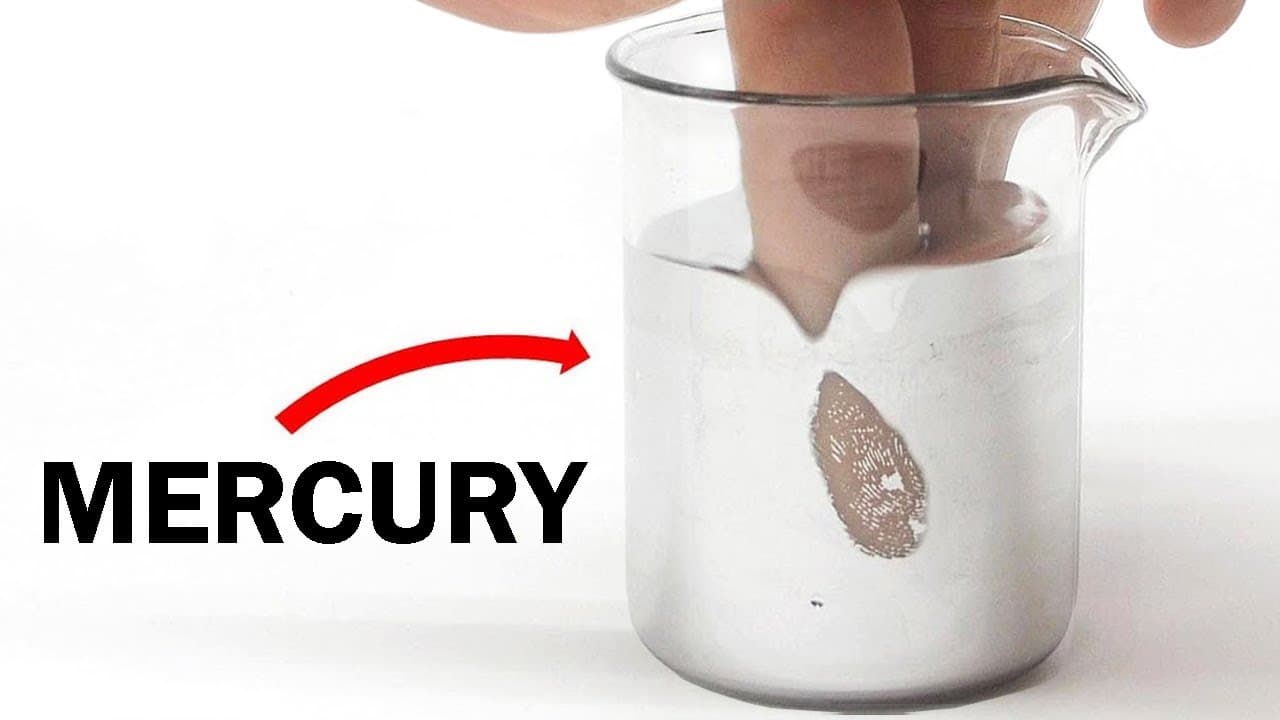
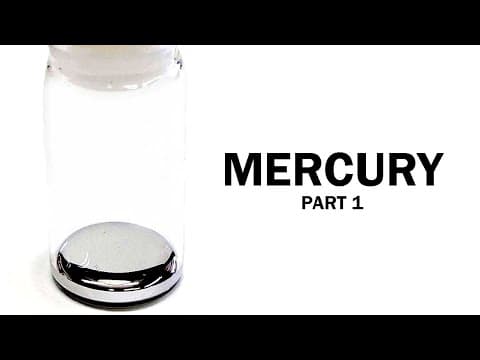
Mercury (symbol Hg) is the only metallic element that stays liquid at standard temperature and pressure, freezing near -39°C and boiling at only around 360°C. It's so dense that a small handful weighs about two and a half pounds and a coin will float on its surface. In nature it occurs mainly as mercury sulfide, or cinnabar, which is roasted to release the elemental metal. Read on for how mercury conducts electricity, forms amalgams, and why its vapor is the real hazard.
Transcript
Mercury is special because it's the only metallic element that's a liquid at standard temperature and pressure. Its elemental symbol is Hg, because it's based on its older and much harder to pronounce name. It used to be called "Hydrargyrum", which is the combination of the two greek words "hydror" and "argyros", which mean water and silver. The de... Read More
Key Insights
- 🫗 Mercury is the only metallic element that is liquid at standard temperature and pressure.
- 👻 It has a high density, allowing objects like coins to float on its surface.
- 🏅 Mercury amalgamation is commonly used in gold extraction and dental fillings.
- 👨 Organic mercury compounds found in seafood are highly fat soluble and pose health risks.
- 💦 Inorganic mercury compounds can be solubilized in water and have varying levels of toxicity.
- 🤘 Mercury vapor is more dangerous than the metal itself and can be inhaled, causing harm.
- 🦺 Mercury was historically used in medicine and as an industrial ingredient but has been phased out due to safety concerns.
Install to Summarize YouTube Videos and Get Transcripts
Explore YouTube Video Summarizer or Get YouTube Transcript Extractor
Questions & Answers
Q: What is elemental mercury and why is it unique?
Elemental mercury is the only metallic element that exists as a liquid at standard temperature and pressure. Its symbol Hg comes from its older name "Hydrargyrum," a combination of the Greek words for water and silver. It is very dense, highly conductive, and has a high surface tension caused by strong metallic bonding between its atoms.
Q: What is the melting and boiling point of mercury?
Mercury has a melting/freezing point of around -39 degrees Celsius, so below that it freezes solid. It has a relatively low boiling point for a metal, at around 360 degrees Celsius, which makes it somewhat easy to purify by distillation, though doing so is dangerous.
Q: What are the forms of mercury?
Mercury doesn't normally exist as a metal in nature and is usually found as mercury sulfide, known as cinnabar, which comes in a red and a black form. Beyond the metal, mercury also forms organic and inorganic compounds, and this is where the real toxicity danger comes from. Organic mercury compounds, found in a lot of seafood, are highly fat soluble.
Q: How is elemental mercury extracted from cinnabar?
Mercury sulfide is most commonly converted to mercury metal by roasting. Strong heating breaks the mercury sulfide down into elemental mercury, which is distilled off and collected. It can also be done chemically by dissolving the sulfide in a strongly basic sodium sulfide solution and then leaching the mercury out with aluminum foil, where it sinks to the bottom to be collected.
Q: Why can a coin float on mercury?
Mercury's density is really high, significantly denser than most other metals, so a small amount weighs a surprising two and a half pounds. Because it is so dense, lighter objects like a coin float on top of its surface rather than sinking.
Q: How is mercury used in electrical switches?
Because mercury is a metal, it conducts electricity, which is used to make various mercury-based electrical switches. The most common design is the tilt switch: when tilted in the right direction, the mercury completes the circuit, turning on a light bulb or whatever the system is set up for.
Q: Why is mercury banned on airplanes?
Mercury undergoes amalgamation, forming alloys with other metals. With aluminum it disrupts the protective oxide layer, exposing fresh aluminum that reacts and corrodes. Even after visible mercury is cleaned up, some seeps into the aluminum and keeps destroying it, which is why you're completely banned from taking any amount of mercury onto an airplane.
Q: What are the dangers of mercury vapor?
Mercury metal itself isn't very dangerous because it doesn't absorb well through skin, but its vapor is the most dangerous thing about it. The vapors are normally invisible and, if breathed in, can be absorbed through the lungs. Small amounts aren't too bad unless you're regularly exposed to it.
Summary & Key Takeaways
-
Mercury is a liquid metal with a high density and distinctive properties such as surface tension and conductivity.
-
It is commonly found in the form of mercury sulfide, which can be converted into elemental mercury through roasting.
-
Mercury amalgamation is used in various applications, including gold extraction and dental fillings.
Read in Other Languages (beta)
Share This Summary 📚
Summarize YouTube Videos and Get Video Transcripts with 1-Click
Try YouTube Summary with ChatGPT & Claude or YouTube Transcript Generator
Explore More Summaries from NileRed 📚

Summarize YouTube Videos and Get Video Transcripts with 1-Click
Try YouTube Summary with ChatGPT & Claude or YouTube Transcript Generator