How to Draw Backgrounds for Manga and Concept Art
TL;DR
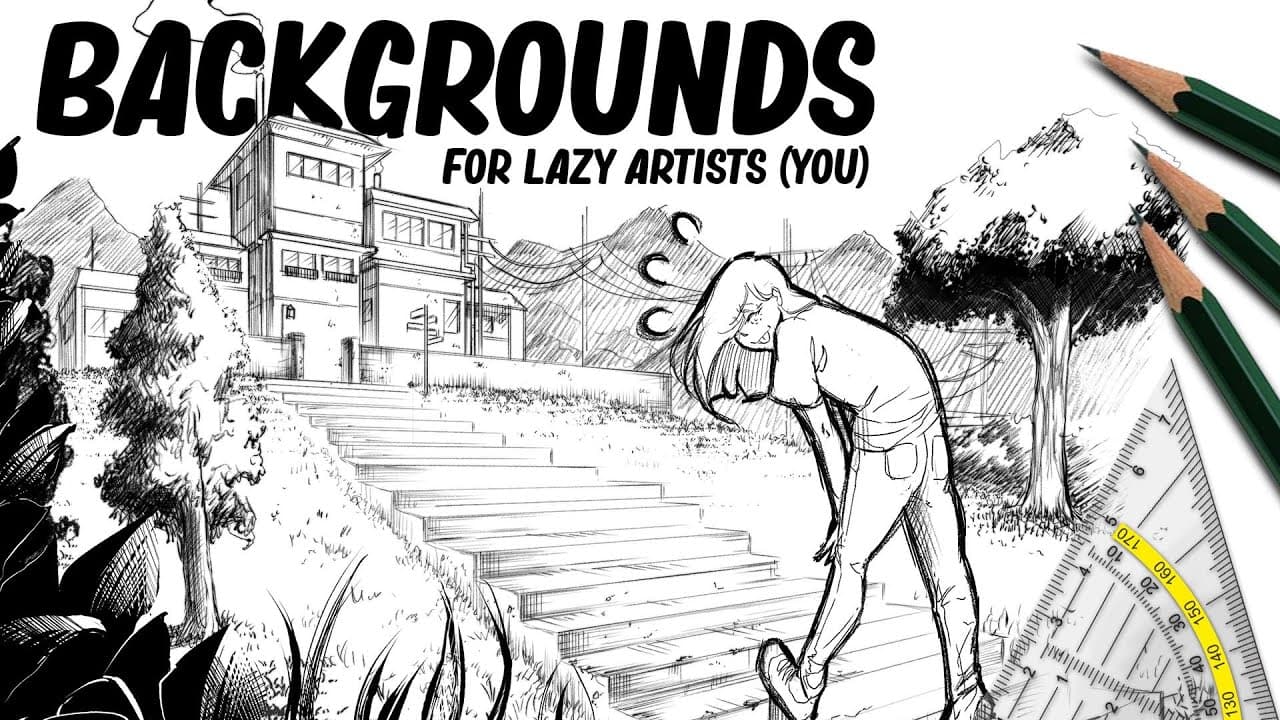
To draw impressive backgrounds for manga and concept art, start with rough sketches to outline your ideas before adding details. Use vanishing points to establish perspective, incorporate multiple layers for depth, and finish with shadows to enhance realism. These techniques create dynamic and visually engaging scenes.
Transcript
[intro music] Hi guys. My name is Marcel and you are probably watching this video because your backgrounds look like this. But after watching this video, they will hopefully end up looking more like that and be noticeably better drawn. Basically, what I'm saying is today, you are going to learn how to draw backgrounds... "Say the line!" like a Sir.... Read More
Key Insights
- 👻 Initial rough sketches allow for exploration and foundation building before detailing backgrounds, which is crucial for effective perspective drawing.
- 😥 Understanding and utilizing vanishing points significantly enhances the accuracy of spatial representation in artwork.
- 🖤 Shadows are essential for providing depth and context in backgrounds, particularly impactful in black-and-white illustrations like manga.
- 🫓 Multi-layering techniques in backgrounds can create a greater sense of realism and complexity, transforming flat scenes into dynamic visuals.
- 🛟 The Fibonacci curve serves as a valuable artistic tool for achieving balanced and aesthetically pleasing compositions.
- 🌍 Observing and practicing real-world photography can improve compositional understanding and execution in art.
- 🚫 Blocking out characters with basic shapes before detailing ensures that proportions and spatial relationships remain consistent in the drawing.
Install to Summarize YouTube Videos and Get Transcripts
Explore YouTube Video Summarizer or Get YouTube Transcript Extractor
Questions & Answers
Q: Why is starting with rough sketches important when drawing backgrounds?
Starting with rough sketches allows artists to focus on the overall composition and shape of the background without getting bogged down in details. This foundational step enables the artist to block out essential elements and relationships within the scene, ensuring accuracy in proportions and perspective. It also promotes creative exploration of ideas before committing to finer details.
Q: How do vanishing points contribute to the perspective of a background?
Vanishing points are crucial in creating the illusion of depth in art by guiding all lines in the background toward these designated points. This method helps ensure that the elements of the scene align correctly in relation to one another, thus maintaining spatial coherence. Using one, two, or even three vanishing points can drastically alter the perception of space and realism in a drawing.
Q: What role does shadow play in background drawing?
Adding shadows enhances the three-dimensionality of objects by indicating their position relative to a light source. Shadows help establish context, suggesting where objects are placed in space, which improves the overall believability of the background. This technique is particularly important in manga, where shading conveys depth without color, allowing for an effective visual narrative.
Q: How can layering improve the composition of a drawing?
Layering adds depth and complexity to a drawing, making it visually interesting. By incorporating multiple layers—foreground, midground, and background—artists can create a sense of depth that makes the scene more engaging. This technique also allows for a more dynamic interaction between elements, as the viewer's eye is guided through the artwork rather than being trapped in a flat space.
Q: What is the Fibonacci curve and how is it applied in artwork?
The Fibonacci curve is a compositional guideline that helps artists understand the balance and flow of their artwork. By using this curve, artists can arrange elements in a way that feels natural and visually appealing, spreading the viewer's attention across significant parts of the artwork. It's an effective way to create harmony and interest in any composition.
Q: How can artists practice improving their composition skills?
Artists can enhance their composition skills by studying landscape photography and experimenting with their camera to apply compositional techniques in real life. This practice helps them understand spatial relationships, framing, and the arrangement of elements within a scene. Going outdoors and selecting interesting compositions also encourages observational skills, which are invaluable for artistic development.
Q: What should artists keep in mind when adding characters to the background?
When adding characters to a background, artists should first indicate the scale of human figures relative to surrounding objects. Using simple shapes to block out where characters will go can help check for appropriate sizing in relation to elements like doors or furniture. This ensures that all components of the scene feel cohesive and believable.
Summary & Key Takeaways
-
The tutorial provides a step-by-step guide on drawing backgrounds, emphasizing the importance of initial sketches and establishing perspective using vanishing points for accurate representation.
-
Techniques for adding depth through multiple layers, composition rules, and incorporating shadows to enhance realism are discussed, particularly in the context of manga and concept art.
-
The video encourages viewer engagement and support while offering supplementary resources, like a handy cheat sheet, for artists looking to improve their background drawing skills.
Read in Other Languages (beta)
Share This Summary 📚
Summarize YouTube Videos and Get Video Transcripts with 1-Click
Try YouTube Summary with ChatGPT & Claude or YouTube Transcript Generator
Explore More Summaries from Draw like a Sir 📚

Summarize YouTube Videos and Get Video Transcripts with 1-Click
Try YouTube Summary with ChatGPT & Claude or YouTube Transcript Generator