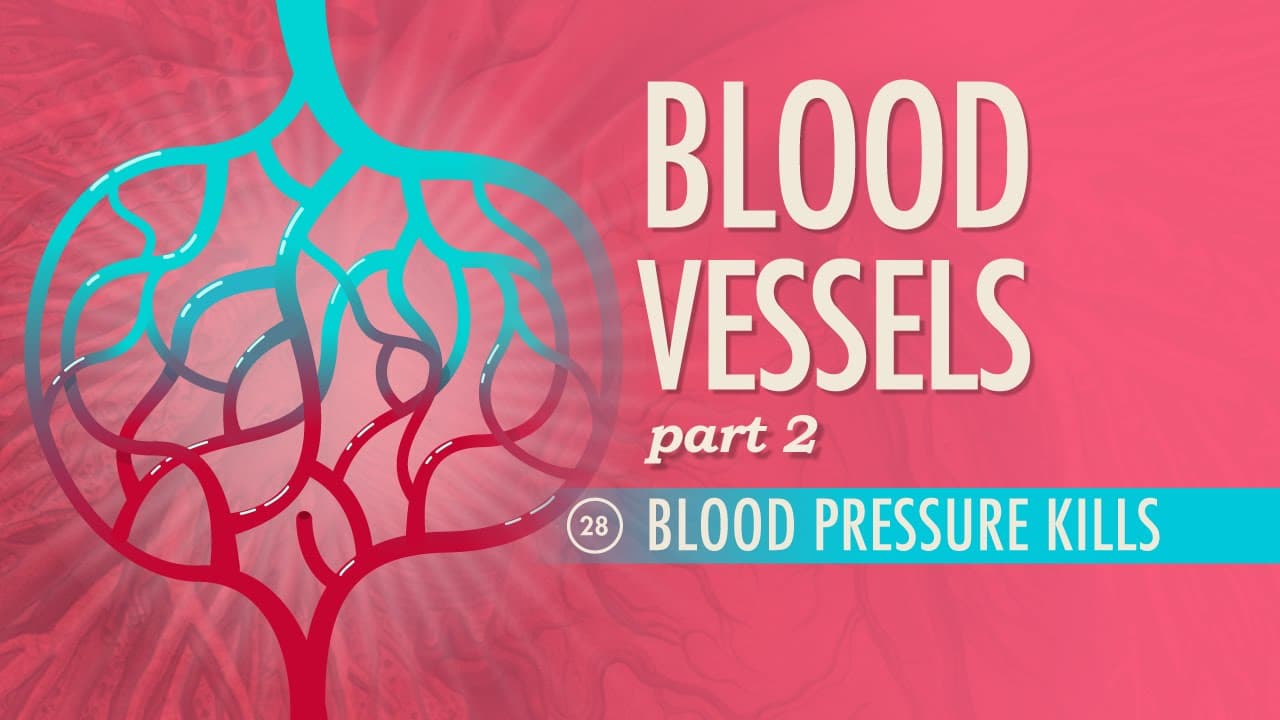
Blood Vessels, Part 2: Crash Course Anatomy & Physiology #28
TL;DR
High blood pressure can lead to serious cardiovascular diseases.
Transcript
Why is everybody so worried about high blood pressure? I mean, of all of the millions of things that could go fatally wrong in your body at any given moment, it doesn’t seem like the biggest threat you face is that your blood might be pumping a little too hard. A heartbeat that’s too strong? Isn’t that like an awesome song that’s played too loud? O... Read More
Key Insights
- High blood pressure, or hypertension, poses significant risks to cardiovascular health, potentially leading to heart disease and stroke.
- Blood pressure is crucial for circulating blood, but chronic hypertension can damage heart and blood vessels over time.
- Factors like stress, diet, and physical activity can influence blood pressure, with some being more controllable than others.
- Blood flow is determined by cardiac output and resistance, with vessel diameter playing a significant role in resistance.
- The body uses neural, hormonal, and kidney responses to regulate blood pressure, but these are not sustainable long-term solutions.
- Baroreceptors in arteries help the brain adjust blood pressure by altering cardiac output and vessel resistance.
- Hormones like epinephrine and norepinephrine increase heart rate and resistance, impacting blood pressure levels.
- Chronic high blood pressure can lead to heart failure, myocardial infarction, arteriosclerosis, and aneurysms, among other issues.
Install to Summarize YouTube Videos and Get Transcripts
Explore YouTube Video Summarizer or Get YouTube Transcript Extractor
Questions & Answers
Q: What are the main risks of high blood pressure?
High blood pressure increases the risk of cardiovascular diseases, including heart attacks, strokes, and heart failure. It can damage arteries, leading to arteriosclerosis, and cause aneurysms if blood vessels become weak and burst. Chronic hypertension can also affect organs like the kidneys and eyes.
Q: How does the body regulate blood pressure short-term?
The body regulates blood pressure short-term through neural and hormonal responses. Baroreceptors in arteries send signals to the brain to adjust cardiac output and vessel resistance. Hormones like epinephrine increase heart rate and resistance, while the brain can alter blood flow distribution to manage pressure.
Q: What role do kidneys play in blood pressure regulation?
The kidneys regulate blood pressure long-term by controlling blood volume. They produce hormones like renin and angiotensin to manage sodium and fluid levels, impacting blood volume and pressure. When blood pressure is high, kidneys reduce blood volume by excreting excess water, helping to lower pressure.
Q: Why is vessel diameter important in blood flow?
Vessel diameter significantly affects blood flow resistance. Wider vessels allow more blood to pass through easily, reducing resistance, while narrower vessels increase resistance. Temporary changes in diameter, like vasoconstriction and vasodilation, can adjust blood flow, but permanent changes due to plaque buildup can hinder circulation.
Q: What happens when blood pressure stays high over time?
Chronic high blood pressure can lead to heart muscle thickening, increasing oxygen demand that the body cannot meet, potentially causing heart failure. It can also lead to arteriosclerosis, where arteries harden, or aneurysms, where vessels weaken and may burst, causing severe complications.
Q: How do lifestyle factors affect blood pressure?
Lifestyle factors like diet, physical activity, and stress levels can significantly influence blood pressure. High sodium intake, common in processed foods, increases blood volume and pressure. Stress and physical exertion can temporarily raise blood pressure, while regular exercise and a balanced diet can help maintain healthy levels.
Q: What is cardiac output, and how does it relate to blood flow?
Cardiac output is the volume of blood the heart pumps per minute, determined by stroke volume and heart rate. It directly influences blood flow, as higher cardiac output increases blood circulation. Blood flow is also affected by resistance, with cardiac output and resistance together determining overall blood pressure.
Q: What are baroreceptors, and how do they function?
Baroreceptors are nerve endings in arteries that detect changes in blood pressure by sensing arterial wall stretch. They send signals to the brain to adjust cardiac output and vessel resistance, helping regulate blood pressure. However, they adapt to prolonged high pressure, reducing their effectiveness for long-term regulation.
Summary & Key Takeaways
-
High blood pressure is a prevalent issue affecting one in three adults in the U.S., often without noticeable symptoms until severe damage occurs. It can lead to cardiovascular diseases, making it crucial to understand its causes and effects.
-
Blood flow is influenced by cardiac output and resistance, with vessel diameter being a key factor. The body's short-term responses to regulate blood pressure include neural and hormonal adjustments, but these are not sustainable long-term solutions.
-
Chronic hypertension can lead to severe health issues like heart failure and arteriosclerosis. Understanding how blood pressure works and the body's regulatory mechanisms is vital for managing and preventing these conditions.
Read in Other Languages (beta)
Share This Summary 📚
Summarize YouTube Videos and Get Video Transcripts with 1-Click
Try YouTube Summary with ChatGPT & Claude or YouTube Transcript Generator
Explore More Summaries from CrashCourse 📚





Summarize YouTube Videos and Get Video Transcripts with 1-Click
Try YouTube Summary with ChatGPT & Claude or YouTube Transcript Generator