What Are Data Unions and How Can They Empower Users?
TL;DR
Data unions, or data cooperatives, empower individuals by pooling their data to collectively negotiate fair compensation and licensing terms. This approach addresses power imbalances in the data economy, enhances privacy controls, and bridges gaps between traditional financial services and decentralized finance. By participating in data unions, users gain more control over how their data is used and can benefit financially from its value.
Transcript
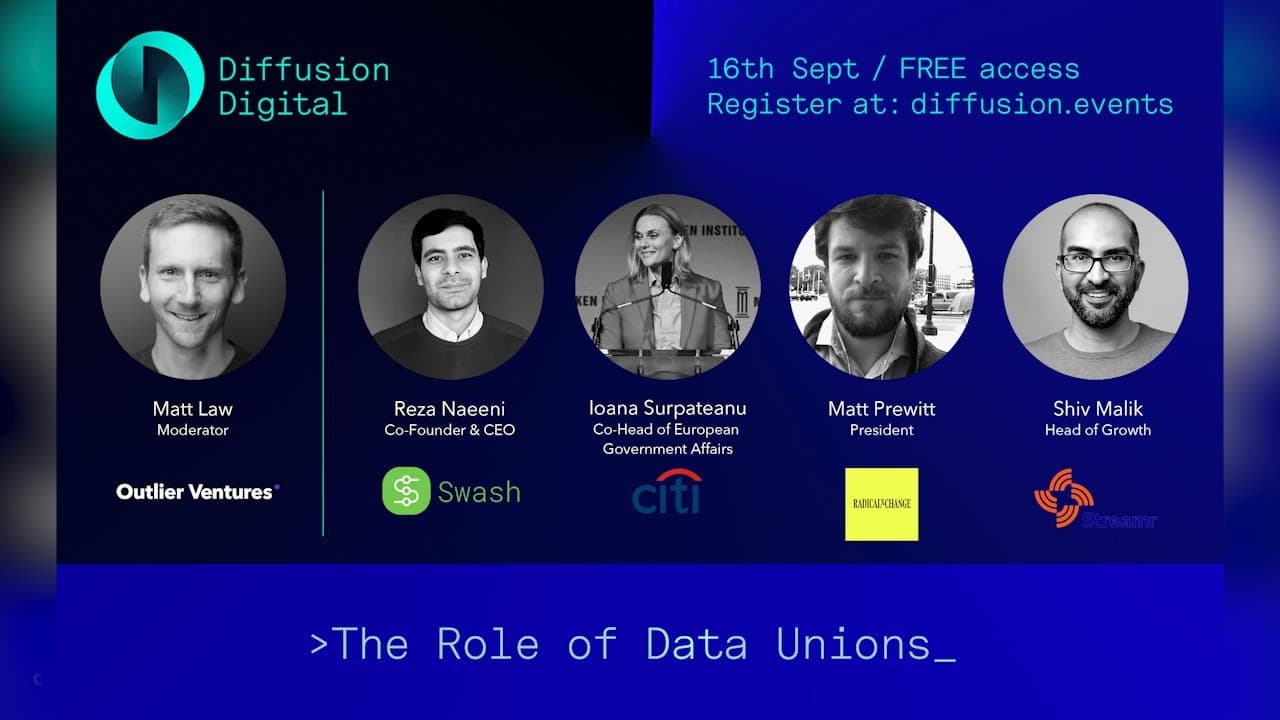
hello yes 15 minutes in the uh in the waiting room thank you everyone for joining don't leave us we have a great session uh lined up on data unions i have with me matt razer shiv and joanna um and they'll introduce themselves in just a minute but um let me just set the scene um we're here to talk about data unions about the um uh incredible value t... Read More
Key Insights
- ✊ Data unions aim to address power imbalances and inequities in the current data economy by giving individuals collective bargaining power and control over their data.
- 🏪 The convenience vs. privacy trade-off needs to be carefully balanced as data unions offer individuals the choice to monetize their data while retaining control and protecting their privacy.
- 🐕🦺 Data unions can bridge the gap between traditional financial services and decentralized finance by leveraging data aggregation for optimization and compliance purposes.
Install to Summarize YouTube Videos and Get Transcripts
Explore YouTube Video Summarizer or Get YouTube Transcript Extractor
Questions & Answers
Q: What are data unions, and how do they address power imbalances in the digital economy?
Data unions, data trusts, and data cooperatives are interchangeable terms that represent entities where individuals join forces to pool their data. By collectively bargaining with data users and negotiating licensing terms, data unions aim to give individuals more control over their data and address power imbalances in the digital economy.
Q: How do data unions differ from traditional labor unions?
While traditional labor unions focus on protecting workers' rights in the physical economy, data unions aim to provide collective bargaining power and fair compensation for individuals in the digital economy. Data unions allow individuals to monetize their data and have a say in how it is used, similar to the goals of traditional unions in ensuring fair labor practices.
Q: What challenges do data unions face in terms of privacy and data manipulation?
Privacy concerns are a significant challenge for data unions, as individuals may be hesitant to share their data even within a collective framework. Additionally, data manipulation and misuse can occur, where data is used against individuals to support specific business models. Striking a balance between data privacy and data monetization is a crucial challenge that data unions aim to address.
Q: How can data unions bridge the gap between traditional financial services and decentralized finance?
In an enterprise context, data unions can optimize data aggregation and analysis for cost or structural optimization within a business. By utilizing data from platforms like Streamr or Swash, traditional financial entities can enhance their investment strategies, assess sector or company health, and streamline their operations. This bridge between traditional and decentralized finance enables a more comprehensive approach to data utilization.
Summary & Key Takeaways
-
Data unions, also known as data trusts or data cooperatives, aim to empower individuals by giving them collective bargaining power in the data economy.
-
These entities allow individuals to pool their data and negotiate licensing terms, ensuring they have control over data usage and receive fair compensation.
-
Data unions have the potential to address privacy concerns, inequities in the current data economy, and bridge the gap between traditional financial services and decentralized finance.
Read in Other Languages (beta)
Share This Summary 📚
Summarize YouTube Videos and Get Video Transcripts with 1-Click
Try YouTube Summary with ChatGPT & Claude or YouTube Transcript Generator
Explore More Summaries from Outlier Ventures 📚





Summarize YouTube Videos and Get Video Transcripts with 1-Click
Try YouTube Summary with ChatGPT & Claude or YouTube Transcript Generator