How to Speak Better on Camera to Grow on Social Media
TL;DR
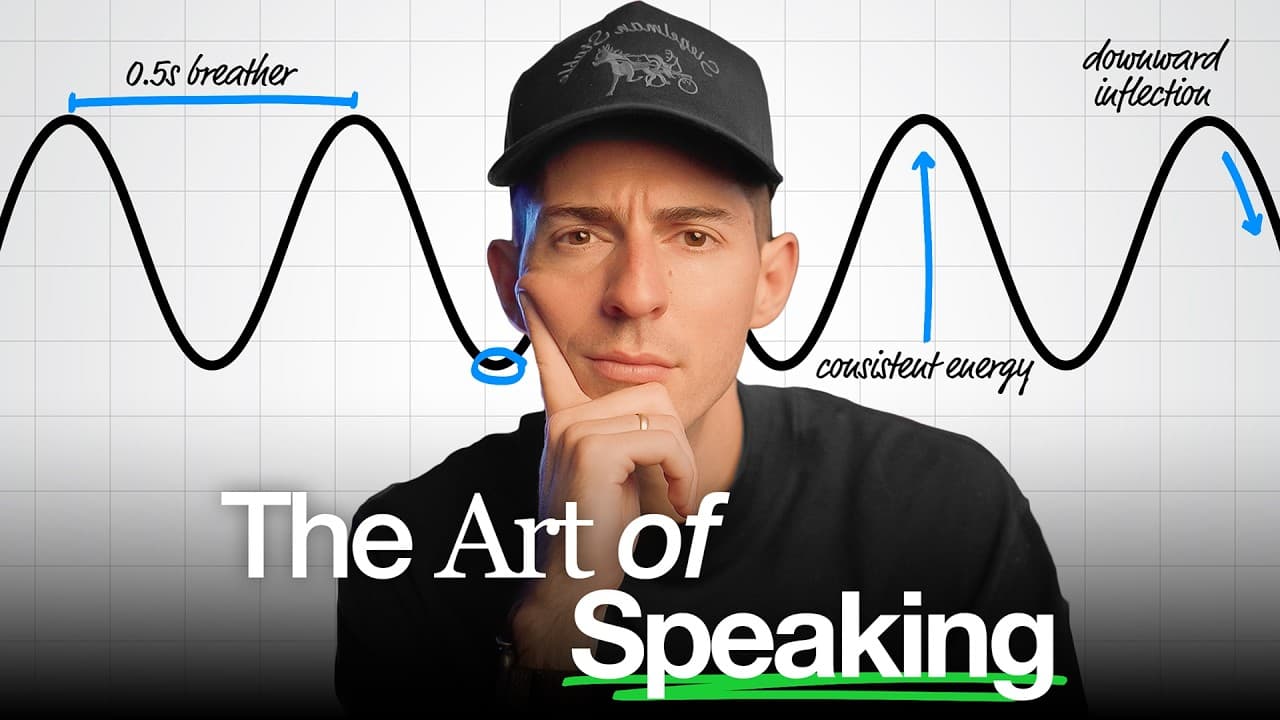
Improving how you speak on camera builds trust faster than changing what you say. Start by solving camera anxiety with five fixes: physically shake out tension, do throwaway recording reps, tape a friend's photo below the lens, record line by line for micro resets, and remind yourself the take does not matter. Then use shorter sentences so viewers absorb more.
Transcript
If you want your videos to perform better, the easiest way is to improve how you speak. And it's not just what you say, it's how you say it and deliver it on camera. The words you use, your tone, energy, charisma, it all combines together to play a massive role in how well your content resonates. Now, I've studied hundreds of the top personal brand... Read More
Key Insights
- How you speak on camera, including tone, energy, and charisma, plays a massive role in how content resonates, and improving delivery is described as the easiest way to make videos perform better and build trust faster.
- Camera anxiety is the root cause of most speaking problems, because a heightened state of anxiety when you press record creates a subconscious adrenaline response that shows up as tension and roughness in your voice.
- Physically shaking out your body for 30 seconds before recording, like UFC fighters shaking their arms before a fight, releases tension and resets adrenaline, which improves speaking performance rather than just looking cool.
- Throwaway reps work as a warm-up: press record and ramble for a few minutes of footage you intend to discard, so you get past the initial adrenaline spike before recording the intro, which is the most important part of the video.
- The friend photo trick involves taping a photo of a close friend near ideal-viewer avatar below your lens, because the brain struggles to imagine a friend when staring into cold glass but connects relationally to an actual picture, dropping you into a conversational tone.
- Recording line by line from a script allows micro resets between lines, letting you read, look down, reset, and restart with full energy, which helps introverted creators keep energy up and reduce anxiety compared to going off the top of the head.
- Reminding yourself that a recording does not matter resets anxiety to zero, because anxiety spikes come from self-invented pressure, nobody sees the bad takes, and you will need to make thousands more videos over your career anyway.
- Rhythm speaking directly affects absorption, and using shorter sentences reduces the load on the viewer's brain, because the brain processes meaning in chunks and a six-word sentence is far easier to parse than a 30-word one.
Install to Summarize YouTube Videos and Get Transcripts
Explore YouTube Video Summarizer or Get YouTube Transcript Extractor
Questions & Answers
Q: How can I speak better on camera to grow on social media?
Improve how you speak, not just what you say, because tone, energy, charisma, and delivery combine to determine how well content resonates and how much people trust you. The video breaks it into buckets: first solve camera anxiety using five fixes, then improve your rhythm speaking so viewers absorb what you say. Doing this makes people trust you faster, relate more deeply, and want to buy from you more often, and the creator says it is the easiest way to make videos perform better.
Q: Why do I feel so anxious and awkward when I record videos?
It is very normal because you'd have to be fairly sociopathic to talk naturally into a camera your first time, and most people are not sociopaths. The number one reason you don't come off well is that pressing record and sitting in front of a camera puts you in a heightened state of anxiety. This triggers a subconscious adrenaline response because you're uncomfortable, and that tension shows up in your voice as tightness and roughness, making your delivery less smooth.
Q: What is the throwaway reps technique for recording video?
Throwaway reps means pressing record and talking for a few minutes, reading lines, looking around, and rambling, with footage you intend to discard. The point is to get past the initial adrenaline and anxiety that come with hitting record, similar to physically shaking out your body. It works like a warm-up before a workout, since you'd never walk into the gym cold and max bench. This matters because the intro is the most important part of a video, so you avoid spending that valuable real estate while cold and anxious.
Q: How does the friend photo trick reduce camera anxiety?
You take a photo of a close friend you're comfortable talking to, ideally someone close to your ideal viewer avatar, and tape it below your camera lens or keep it on a phone next to the camera. It works because the brain has trouble imagining a friend when staring into the cold glass of the lens, but with an actual picture the brain connects relationally to that person and immediately drops into a more conversational, friend-to-friend tone, which shifts everything about your delivery.
Q: Should I record video line by line or off the top of my head?
The creator prefers recording word for word, line by line, because it allows micro resets between lines: you read a line, look down, reset or look away, then come back with full energy. Going off the top of the head or from bullets creates pressure to maintain continuity across eight to ten sentences, and if you stop it's hard to pick the flow back up. Extroverts may prefer talking off the dome, but introverts who struggle with energy and anxiety benefit from line by line, trading more prep work upfront for less anxiety while performing.
Q: Why should I shake out my body before recording a video?
Physically shaking out your body for about 30 seconds, rolling your neck, moving your shoulders, and shaking your arms, releases tension and resets the adrenaline in your body before you record. The creator compares it to UFC fighters who jump around and shake their arms violently right before a fight. They do this not to look cool but because getting the tension out significantly improves performance. Since recording triggers the same subconscious adrenaline response, shaking it out prevents that tension from showing up in your voice.
Q: What is the best mindset to calm anxiety before hitting record?
Remind yourself that the recording does not matter in the grand scheme of what you're trying to achieve. Anxiety spikes because you pile pressure on the moment, thinking the video leads to traffic that grows your business. But nobody sees the bad takes, nobody is grading you, and even if the video flops you'll need to make thousands more in your career. The creator sometimes zooms out further, noting we're on a floating rock and will be dead in 80 years, which acts as an emergency valve that resets anxiety to zero.
Q: Why do shorter sentences make your videos easier to understand?
Shorter sentences reduce the load on the viewer's brain to process what you're saying, because the brain processes meaning in chunks rather than rewarding more words per chunk. As a rough illustration, if the brain took a second per word, a 30-word sentence would take far longer to parse than a six-word one; real brains are more efficient, but the direction holds. When scripting or practicing, cut long sentences in half or by a third to make them punchier, and if you can say something in six words instead of 15, use six so more people understand.
Summary & Key Takeaways
-
The core argument is that improving how you speak on camera, not just what you say, is the easiest way to make content perform better. Tone, energy, and charisma combine to determine how well content resonates. Callaway, who has a million followers and billions of views, studied hundreds of top personal brands and found they all deliver with high trust and high authenticity using a similar method.
-
The first bucket is solving camera anxiety, the root of most speaking problems, caused by an adrenaline response that tenses the voice. Five fixes help: physically shaking out your body for 30 seconds, doing throwaway recording reps as a warm-up, taping a friend's photo below the lens to trigger a conversational tone, and recording line by line for micro resets.
-
The fifth anxiety fix is reminding yourself the recording does not matter, since nobody grades the bad takes and you will make thousands more videos. The second bucket, rhythm speaking, governs how well viewers absorb information. The first rhythm tactic is using shorter sentences, because the brain processes meaning in chunks and a six-word sentence loads it far less than a 30-word one.
Read in Other Languages (beta)
Share This Summary 📚
Summarize YouTube Videos and Get Video Transcripts with 1-Click
Try YouTube Summary with ChatGPT & Claude or YouTube Transcript Generator
Explore More Summaries from Kallaway 📚

Summarize YouTube Videos and Get Video Transcripts with 1-Click
Try YouTube Summary with ChatGPT & Claude or YouTube Transcript Generator