Why Sugar Is Hidden in 73% of US Grocery Foods
TL;DR
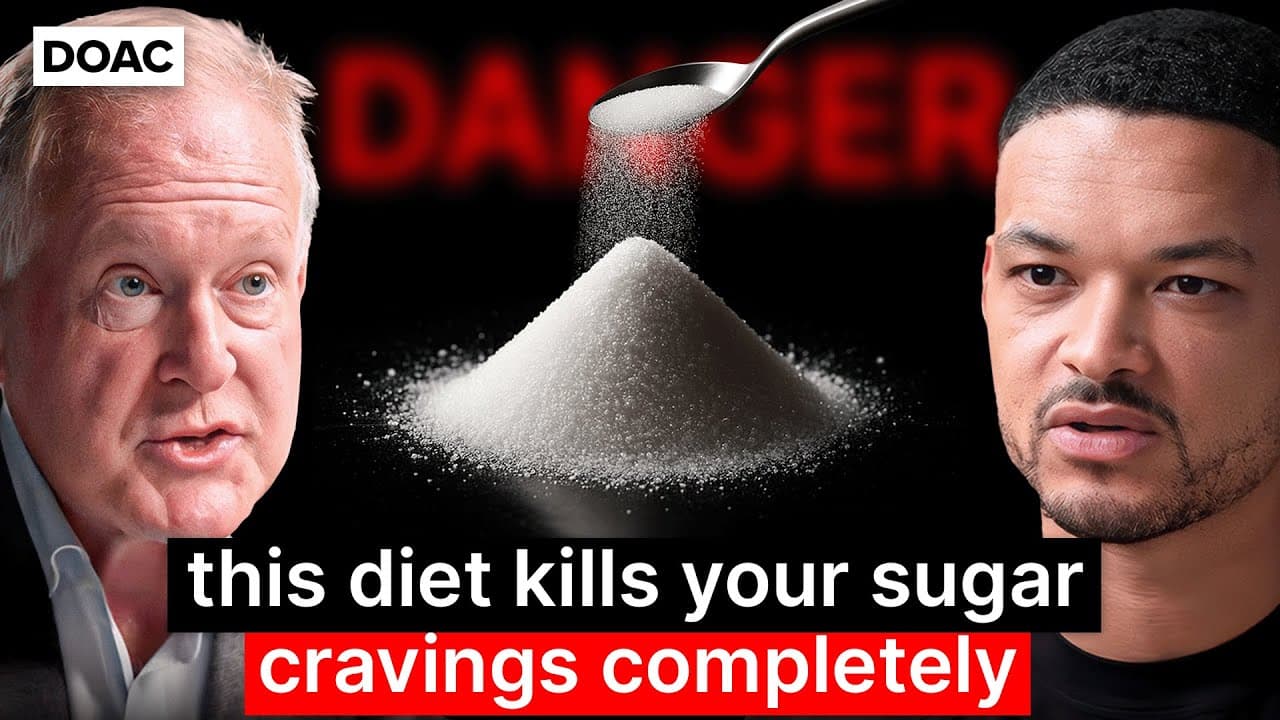
Sugar hides in 73% of items in the American grocery store, and the food industry uses all 262 names for it because added sugar makes you buy more. Two quick shopping rules cut through the labels: if a food has a label, treat it as a warning label, and if sugar appears in the first three ingredients, it is dessert. Do not shop hungry.
Transcript
People say, "Oh, Alzheimer's is genetic garbage." That genetic component is only 5%. So that means 95% of Alzheimer's risk is environmental air pollution, microlastics, ultrarocessed food. And a paper just came out showing that sweetener consumption correlates with dementia. And we think we know why. And you've not talked about this publicly yet. N... Read More
Key Insights
- 73% of the items in the American grocery store are described as poison because sugar is hidden throughout the food supply. There are 262 names for sugar, and the food industry uses all of them because adding sugar makes people buy more.
- The hostage brain is the state where the illusion of control drives stress and pain. Everyone wants control because control lowers perceived threat, but the harder people exert it, the more they discover they do not have it, and the pain grows.
- Depression is one direction that pain turns, inward, and 29% of Americans plus 4.4% of the entire world are depressed. These figures were infinitesimal a generation ago, and the stated reason is the inappropriate illusion of control.
- Dopamine has exactly two functions: learning and reward. There is no learning without dopamine, positive or negative, and touching a hot stove as a toddler rewires the basolateral amygdala through an excitatory dopamine circuit that still operates decades later.
- Tolerance is the start of addiction. Chronic dopamine release would kill the downstream neuron, so that neuron downregulates its dopamine receptors, meaning more and more input produces less and less effect until a huge hit produces nothing.
- Liking, wanting, and needing are three distinct stages. The first taste is liking, the second is wanting, the third is needing, and no one wants to remove liking, but needing is where a biochemical and medical problem exists.
- Exercise does not reduce the desire to reach for sugar. It carries its own metabolic benefits, but the position stated is that expecting exercise to make you lose weight is a delusion.
- Only about 5% of Alzheimer's risk is genetic, which leaves 95% environmental: air pollution, microplastics, and ultra-processed food. A recently published paper shows sweetener consumption correlates with dementia, and the mechanism is believed to be understood.
Install to Summarize YouTube Videos and Get Transcripts
Explore YouTube Video Summarizer or Get YouTube Transcript Extractor
Questions & Answers
Q: How do you avoid hidden sugar when grocery shopping?
Three practical rules are given. First, if a food has a label, treat that label as a warning label, since 73% of items in the American grocery store are described as poison. Second, if any food lists a sugar among the first three ingredients, it is dessert, not food. Third, do not go to the store hungry. These rules matter because there are 262 names for sugar and the food industry uses all of them, knowing that added sugar makes shoppers buy more.
Q: What is the hostage brain?
The hostage brain is the state produced when the illusion of control collides with reality. Everyone wants to be in control because control lowers the sense of threat, and the amygdala, the brain's fear center and 24-hour sentry, is constantly assessing that threat. But control is largely an illusion, and the harder someone exerts it, the more clearly they see they do not have it. That gap generates enormous stress and psychological pain, which people then try to mollify with dopamine-releasing substances and behaviors, creating a never-ending cycle of consumption and misery.
Q: Why is dopamine addictive?
Dopamine provides a small amount of pleasure layered on top of a large amount of pain, which drives repetition. The deeper mechanism is that chronic overstimulation of any neuron leads to neuronal cell death. Faced with chronic dopamine release, the downstream neuron protects itself by downregulating its dopamine receptors, so fewer receptors remain for dopamine to bind to. The result is more and more input required for less and less effect. That is tolerance, and once neurons actually begin to die, that is addiction.
Q: What is the difference between liking, wanting, and needing?
They are three sequential stages of the same behavior. The first time someone tastes something, a Froot Loop, a candy corn, a Frappuccino, a large slug of dopamine hits the nucleus accumbens and they like it. An hour later the effect is gone and they want it again. By the third time, they need it. Liking is universal and no one proposes taking it away. Wanting creates problems because things can be over-abused. Needing is the point at which a genuine biochemical and medical problem exists.
Q: How do you recover from a sugar or dopamine addiction?
There are many remedies and they can be used together, but ultimately the only thing that works is getting the downregulated dopamine receptors back up. Since dopamine downregulates its own receptor, the fix requires reducing the stimulus so receptors can recover. This is the logic behind dopamine fasting, a trend in Silicon Valley where people lock themselves in a hotel room for roughly three weeks, remove the TV, avoid external stimuli, and try to commune with themselves and with nature. It is particularly relevant for cocaine addicts, whose dopamine receptors are especially depleted.
Q: Is Alzheimer's genetic or environmental?
The genetic component is only about 5%, which means 95% of Alzheimer's risk is environmental. The environmental drivers named are air pollution, microplastics, and ultra-processed food. A paper described as recently published shows that sweetener consumption correlates with dementia, and the claim is that the mechanism behind that correlation is now understood. This reframes Alzheimer's from an inherited fate to a largely preventable condition, since dismissing it as purely genetic is called garbage.
Q: Does exercise help you stop craving sugar?
No. Exercise does not really impact the desire to reach for sugar. It does carry its own metabolic benefits, which are real and worth having, but the craving mechanism is not addressed by physical activity. The stronger claim made is that anyone who thinks exercise is going to make them lose weight is deluded. The implication is that sugar and ultra-processed food consumption is a dopamine and biochemistry problem, and it must be treated at that level rather than through compensating effort in the gym.
Q: What health problems are linked to ultra-processed food?
Data is cited associating ultra-processed food with dementia, diabetes, cancer, and every single mental health disease. Ultra-processed food is also named alongside air pollution and microplastics as one of the environmental factors making up the 95% of Alzheimer's risk that is not genetic. The mechanism discussed is that these foods deliver a dopamine hit, and that dopamine is addictive, which is why the food industry adds sugar under any of its 262 names, knowing consumers will buy more.
Summary & Key Takeaways
-
Dr. Robert Lustig, a neuroendocrinologist and author of 'Metabolical' and 'Fat Chance', describes a 'hostage brain': people crave control to reduce perceived threat, but that control is an illusion. The gap generates stress and pain, and 29% of Americans and 4.4% of the world are now depressed, numbers that were far smaller a generation ago.
-
People medicate that pain with dopamine hits: cocaine, amphetamine, nicotine, alcohol, sugar, gambling, social media, internet gaming, pornography. Dopamine has two jobs, learning and reward motivation, and both are necessary. The problem is chronic overstimulation of any neuron leads to neuronal cell death, so the receiving neuron downregulates its dopamine receptors to survive.
-
Fewer receptors means more input is needed for less effect, which is tolerance, and when neurons actually start dying that is addiction. The progression runs liking, then wanting, then needing, and needing is where a biochemical and medical problem exists. Recovery requires getting dopamine receptors back up, which is the logic behind Silicon Valley's dopamine fasting.
Read in Other Languages (beta)
Share This Summary 📚
Summarize YouTube Videos and Get Video Transcripts with 1-Click
Try YouTube Summary with ChatGPT & Claude or YouTube Transcript Generator
Explore More Summaries from The Diary Of A CEO 📚





Summarize YouTube Videos and Get Video Transcripts with 1-Click
Try YouTube Summary with ChatGPT & Claude or YouTube Transcript Generator