How to Get a Slimmer Waist and Lose Lower Belly Fat
TL;DR
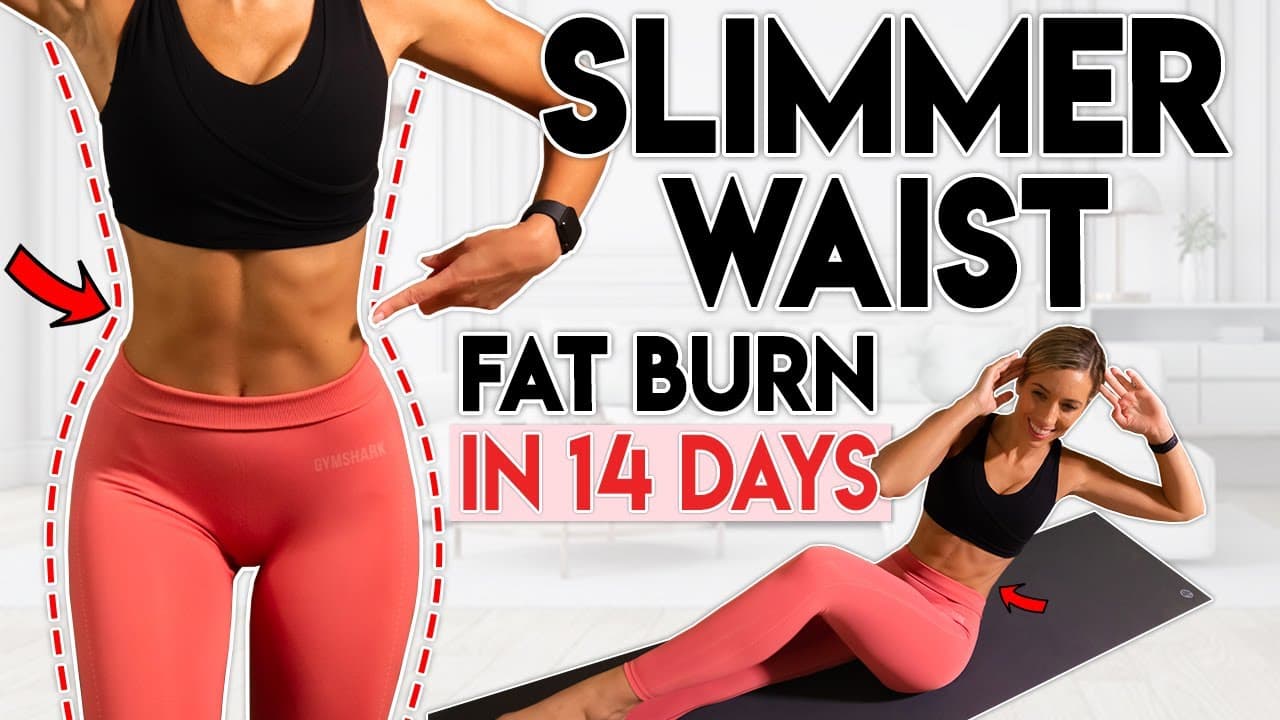
A 10-minute floor-based ab routine done for 14 days in a row targets the waist and lower abs, with each exercise held for 50 seconds followed by 10 seconds of recovery. The sequence runs from seated rotations with opposite leg lifts through cross-body twists, reverse crunches, flutter kicks, heel taps, single-leg raises, hundreds, and full roll-ups with a clap.
Transcript
This 10-minute home workout is a smaller waist and lower abs fat burn workout. I can guarantee you are going to feel a burn. I want you to do this workout for 14 days in a row, and you can get results like these ladies. The Gymshark sale starts on Thursday, for 24 hours only. This outfit here, how cute it is by the way, is on sale! Selected items a... Read More
Key Insights
- The work-to-rest structure of this routine is 50 seconds on each exercise followed by 10 seconds of recovery, which keeps the core under near-continuous tension across the full 10 minutes rather than allowing long breaks between moves.
- The prescribed frequency is 14 days in a row, and the video points to results achieved by other women who completed it. The description pairs the challenge with good nutrition as the condition for seeing the best results.
- The seated opening exercise starts high on the butt bones, then rolls back to the point where the core kicks in. From there, rotating in one direction while lifting the opposite leg links the rotation to a leg lift on each rep.
- Cross-body twists are performed lying down: twist across the body, reach to the ankle, stay nice and high in the crunch, then hold and pump. The cue is to squeeze the muscles on the side of the waist while continuing to breathe.
- Reverse crunches in this routine are set up with the hands in a diamond shape underneath the lower back, then the legs straighten, open, and close. The hand position stays the same going into the flutter kicks and heel taps that follow.
- Flutter kicks transition into heel taps by tapping the heels together at the halfway point of the interval. Keeping the back flat and the core tight throughout is the stated form priority for this segment.
- Single-leg raises are done one side at a time: the left knee stays bent while the right leg is straight and travels all the way up and back down, then the sides swap with the right knee bent and the left leg straight.
- The hundreds is performed with the legs straight and the arms pumping up and down while looking forwards and breathing. Lowering the legs a little at the halfway point increases the demand for those who can manage it.
Install to Summarize YouTube Videos and Get Transcripts
Explore YouTube Video Summarizer or Get YouTube Transcript Extractor
Questions & Answers
Q: How long is this waist and lower belly workout, and how many days should you do it?
The session is a 10-minute home workout, and the instruction is to do it for 14 days in a row. It is presented as part of a 14 day summer challenge, with the promise that following it consistently can produce results like those of the women shown in the video. The description adds that pairing the challenge with good nutrition is what leads to the best results, so the routine is positioned as one half of the equation rather than a standalone fix.
Q: What is the work-to-rest interval used in this 10 minute ab workout?
Every exercise runs for 50 seconds, followed by 10 seconds of recovery before the next move begins. That one-minute block repeats across the whole session, which is what keeps the total at 10 minutes. The short 10 second recovery means the abdominal muscles do not fully relax between exercises, which is why the routine is described as a guaranteed burn. Countdown cues at 15 and 10 seconds remaining are given during the harder intervals to help you hold form to the end.
Q: What exercises are included in this smaller waist and lower abs routine?
The sequence begins seated with rotations that lift the opposite leg, then moves to lying work: cross-body twists reaching to the ankle with pulses, a movement with the feet further from the body where the hands come up and touch to the left and then the right, diamond-hands reverse crunches with a straighten-open-close, flutter kicks that transition into heel taps, single-leg raises on each side, a set of hundreds, and finally full roll-ups with a clap alternating sides.
Q: How do you perform the seated rotation exercise that opens the workout?
Start in a seated position, making sure you are high on your butt bones rather than slumped back onto your tailbone. From there, roll back to the point where you really feel the core kicking in and hold that angle. As you rotate in one direction, you lift the opposite leg, so the twist and the leg lift happen together on each repetition. The exercise runs for the standard 50 seconds before the 10 second recovery.
Q: What is the correct hand position for the reverse crunches in this workout?
The hands go into a diamond shape underneath the lower back. That placement supports the lumbar spine while the legs work, and it stays in position for the exercises that immediately follow. From that setup the movement is a reverse crunch, then the legs straighten, open, and close. Breathing is specifically cued here because it is easy to hold your breath during reverse crunch work. The same hand position carries into the flutter kicks and heel taps that come next.
Q: How do you do the hundreds exercise correctly?
Lie down with the legs straight, then, if you can, pump the arms up and down beside the body. The cue is to keep looking forwards and to keep breathing rather than holding the breath through the pumping. At the halfway point of the interval, the option is given to lower the legs a little bit, which lengthens the lever and increases the load on the lower abs. The if you can phrasing means both the arm pumping and the lower leg position are optional progressions.
Q: What form cues matter most during the flutter kicks and heel taps?
Keep the back flat against the mat and keep the core tight throughout. The two moves are linked in one interval: you start with flutter kicks, then at the halfway point you tap the heels together. Maintaining a flat back is the priority because letting the lower back arch shifts the work away from the abs. The hands remain in the diamond shape underneath the lower back from the previous exercise, which helps support that flat-back position.
Q: Is this workout suitable for beginners?
The description states that beginner modifications are included, and several cues in the routine are phrased conditionally, such as if you can, pump the arms up and down and if you can, lower the legs a little bit during the hundreds. That phrasing means the harder version of a movement is optional rather than required. It is a floor-based bodyweight routine performed on a mat with no equipment mentioned, which keeps the entry barrier low for people training at home.
Summary & Key Takeaways
-
The workout is a 10-minute home routine designed for a smaller waist and lower abs fat burn, requiring no equipment beyond a mat. It is presented as part of a 14 day summer challenge, and the instruction is to repeat it for 14 days in a row alongside good nutrition to see the best results.
-
Timing is fixed across the session: 50 seconds of work on each exercise followed by 10 seconds of recovery. Cues throughout emphasize sitting high on the butt bones, rolling back until the core kicks in, keeping the back flat, keeping the core tight, staying high in the crunch, and continuing to breathe.
-
The routine moves from seated to lying work: rotations with opposite leg lifts, cross-body twists reaching to the ankle with pulses, feet-away touches to the left and right, diamond-hands reverse crunches with straighten-open-close, flutter kicks into heel taps, single-leg raises on each side, a set of hundreds, and full roll-ups with an alternating clap.
Read in Other Languages (beta)
Share This Summary 📚
Summarize YouTube Videos and Get Video Transcripts with 1-Click
Try YouTube Summary with ChatGPT & Claude or YouTube Transcript Generator
Explore More Summaries from Lilly Sabri 📚
Summarize YouTube Videos and Get Video Transcripts with 1-Click
Try YouTube Summary with ChatGPT & Claude or YouTube Transcript Generator