How Does Team Water Bring Clean Water Worldwide?
TL;DR
Team Water aims to raise $40 million to provide clean water to 2 million people, with every $1 funding one person’s access for a year. More than 3,000 creators are supporting projects that include wells, filtration systems, storage tanks, local distribution points, and atmospheric water machines, alongside maintenance and cooperation with local leaders and governments.
Transcript
We're on a mission to give all around the world This village in Malawi impacting over This is the first of many projects and the largest creator collab Over 3,000 of your favorite creators with over 3 billion followers This could be one of the largest Team Water. All of us, teaming up from to get clean water to over 2 million people All starting he... Read More
Key Insights
- Team Water is a creator-led campaign seeking to raise $40 million and provide clean water to 2 million people. More than 3,000 participating creators collectively reach over 3 billion followers, giving the campaign a broad platform for donations and public engagement.
- The campaign’s donation model states that every $1 provides one person with clean water for an entire year. Shopify supported the campaign, while YouTube committed to matching the next $2 million in donations, allowing qualifying contributions to provide twice the stated impact.
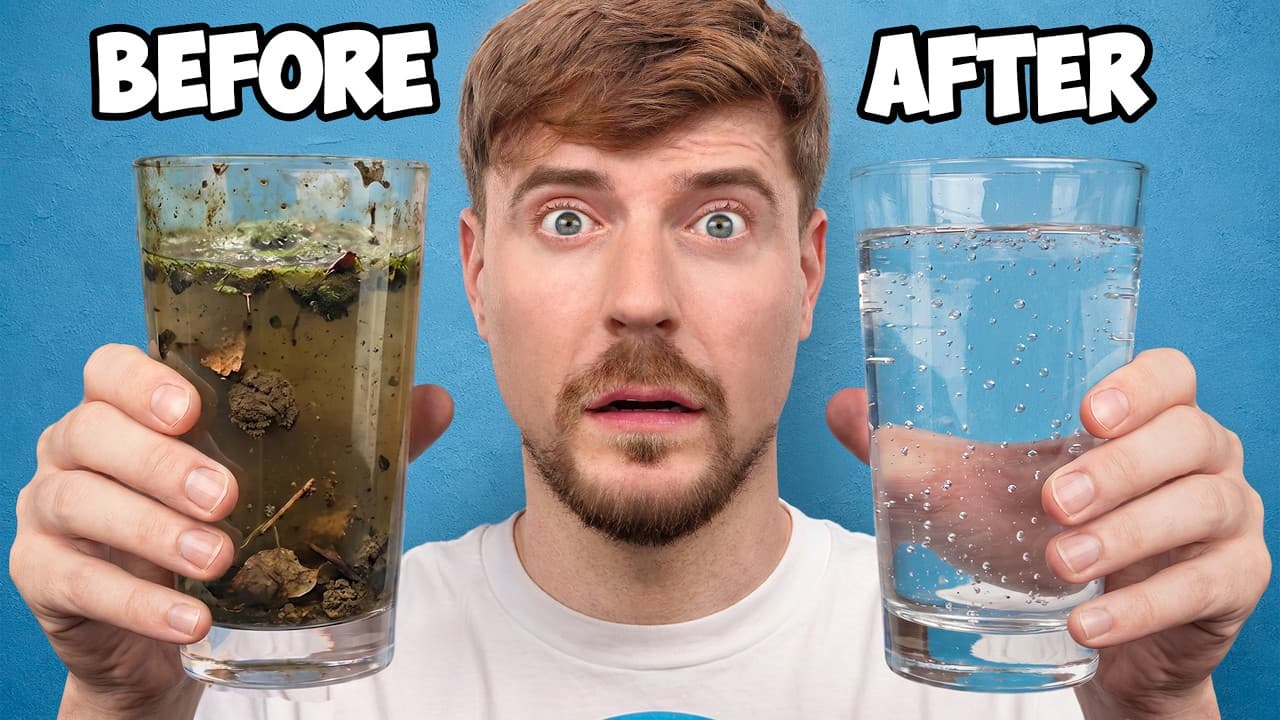
- Clean-water infrastructure must address both water availability and contamination. The featured projects include pumps, wells, large storage tanks, local distribution tanks, reverse osmosis filters, and treatment systems designed to remove dirt, sand, bacteria, germs, and other unsafe material.
- Local access points can reduce the physical burden of collecting water. At one project, people traveled from far away to reach a central source, so three nearby tanks were added to shorten trips and reduce the need to carry heavy water jugs over long distances.
- Long-term water access depends on maintenance and local coordination. Team Water worked with local leaders, partnered with WaterAid, supported local governments, and emphasized that completed systems would be maintained rather than simply installed and left without continuing support.
- Water systems can use locally appropriate designs and available materials. One community’s pump was built from recycled spare parts, while another system passed water through filters and ultraviolet treatment before pumping it into storage where residents could collect fresh water.
- Atmospheric water generation can serve communities after existing infrastructure fails. At an assisted-living facility affected by flooding, a machine collected moisture from the air, purified it, and generated water for the facility, with plans to share it with others facing similar difficulties.
- Team Water builds on earlier creator fundraising campaigns described in the video. Team Trees raised $20 million five years earlier, and Team Seas sought to remove 30 million pounds of trash three years earlier, while the current campaign focuses on clean water access.
Install to Summarize YouTube Videos and Get Transcripts
Explore YouTube Video Summarizer or Get YouTube Transcript Extractor
Questions & Answers
Q: How does Team Water plan to provide clean water worldwide?
Team Water plans to fund infrastructure that matches the needs of individual communities. The projects shown include wells, pumps, filtration systems, storage tanks, neighborhood distribution points, reverse osmosis filters, and a machine that extracts moisture from the air. The campaign also works with local leaders, WaterAid, and governments to support maintenance and continued operation after installation.
Q: How much money does Team Water want to raise?
Team Water aims to raise $40 million to provide clean water to 2 million people. The campaign states that every $1 donated can supply one person with clean water for one year. More than 3,000 creators with over 3 billion combined followers are promoting the effort through videos, TikToks, shorts, donations, messages, and social sharing.
Q: What clean-water projects did Team Water build in Malawi?
The Malawi projects included a newly installed pump for a community that had relied on water collected from an unsafe source, as well as additional water treatment and storage infrastructure. One featured system filtered out dirt and sand, used ultraviolet treatment to remove bacteria, and pumped the treated water into storage so residents could collect fresh water.
Q: Why are local water tanks important for rural communities?
Local water tanks bring clean water closer to the people who need it. At one featured site, residents traveled from far away to reach a central water point and carried heavy jugs home. Team Water added three nearby tanks, reducing travel and making collection easier while extending the project’s benefits to surrounding households and community members.
Q: How does Team Water make contaminated water safer to drink?
Team Water uses several treatment methods based on the local problem. One system removed dirt and sand before using ultraviolet treatment against bacteria. Another project used reverse osmosis filters for households relying on a river containing germs and contamination. The campaign also supported tanks paired with a filtering mechanism to make collected water safer for residents.
Q: How will Team Water keep its water projects working?
The campaign treats maintenance as part of providing water access. Team Water works with local leaders and partnered with WaterAid, which supports local governments and helps ensure systems continue operating. The video specifically emphasizes that the projects are not limited to installing new infrastructure, because the wells, tanks, pumps, and filtration equipment also require ongoing maintenance.
Q: How can a machine create drinking water from the air?
The featured machine pulls moisture from the air using the same basic effect that produces water beads on the outside of a cold glass. As the air cools, it can no longer hold the same moisture, allowing water to be collected. The machine then purifies that water and supplies an assisted-living facility whose water system was damaged by flooding.
Q: How can viewers support the Team Water campaign?
Viewers can donate through the campaign link or TeamWater.org, leave messages, share campaign content, and engage with videos, TikToks, and shorts posted by participating creators. The description also states that all profits from Team Water merchandise go directly to the campaign. YouTube committed to matching the next $2 million in donations, increasing the effect of qualifying gifts.
Summary & Key Takeaways
-
Team Water brings together more than 3,000 creators with over 3 billion combined followers to raise $40 million for clean water. The campaign says every $1 donated provides one person with clean water for a year, and its overall goal is to reach 2 million people around the world.
-
Projects shown across Malawi and other communities combine locally appropriate infrastructure with safer water treatment. The work includes pumps, wells, storage tanks, distribution points, and filtration systems that remove dirt, sand, bacteria, and other contamination. Some installations also reduce the distance residents must carry heavy water containers.
-
Additional projects include reverse osmosis filtration for a village relying on a dangerous river, three tanks serving communities whose existing well faced contamination, and a machine that collects water from the air after flooding damaged a local water system. WaterAid also supports maintenance and coordination with governments.
Read in Other Languages (beta)
Share This Summary 📚
Summarize YouTube Videos and Get Video Transcripts with 1-Click
Try YouTube Summary with ChatGPT & Claude or YouTube Transcript Generator
Explore More Summaries from MrBeast 📚






Summarize YouTube Videos and Get Video Transcripts with 1-Click
Try YouTube Summary with ChatGPT & Claude or YouTube Transcript Generator