How to Build a Morning Routine for Lasting Change
TL;DR
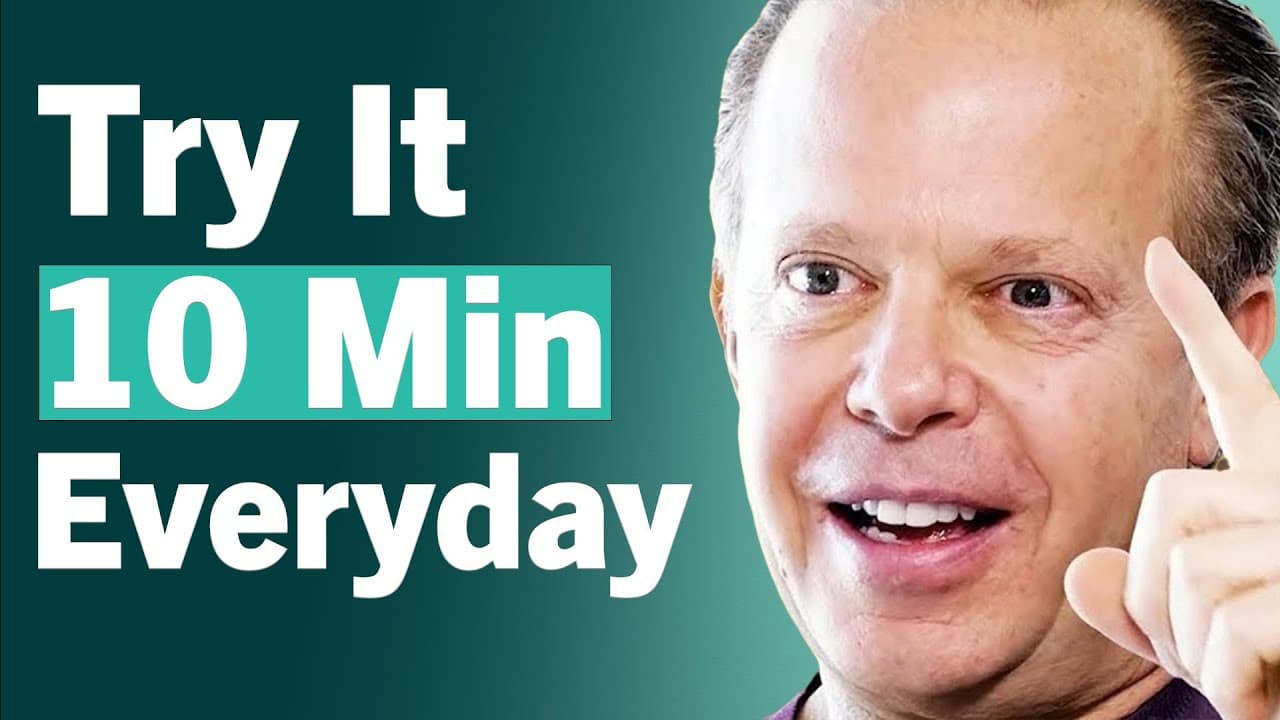
Use the first moments after waking to rehearse how you want to think, feel, and act before your phone or familiar problems reactivate old patterns. Meditation can establish a new internal state, but lasting change requires noticing unconscious thoughts, emotions, and behaviors throughout the day, then repeatedly choosing a different response in real situations.
Transcript
what we practice we get good at so for many people the first thing they do in the morning is that they practice stress they get up whether it's the news or emails or social media they in what I consider to be a very important time of the day they allow the environment to start conditioning their mind and their back conditions their body so that's t... Read More
Key Insights
- Morning attention is highly consequential because news, email, social media, and familiar problems can immediately condition the mind and body toward stress. Using that period intentionally allows a person to rehearse a preferred response before environmental cues reactivate habitual thoughts and emotions.
- The transition between waking and sleeping is described as an opening to the subconscious mind. As brain waves pass through theta and analytical activity is suppressed, the boundary between conscious and subconscious processes becomes more accessible for rehearsing new behaviors and states of being.
- A phone reconnects users with familiar people, objects, places, and situations that are already neurologically mapped through experience. Those reminders can trigger associated emotions, allowing the external environment to determine how a person thinks and feels before the day has intentionally begun.
- Thoughts about personal problems are memories connected to past people, objects, times, and places. When those thoughts produce familiar unhappiness, both mind and body become oriented toward the past, making it harder to create a different state or a different life experience.
- Personality is presented as the combined pattern of how a person thinks, acts, and feels. Because personality creates personal reality within the speaker's framework, repeatedly thinking, acting, and feeling in the same ways preserves the same conditions rather than producing meaningful change.
- Positive statements alone are insufficient when the body remains conditioned to contradictory emotions. A person may repeat claims of health, wealth, freedom, or worthiness while the body continues expressing misery, showing why conscious intention must be paired with emotional and behavioral retraining.
- Unlearning is as important as relearning because old automatic patterns must be identified before a new self can become stable. The process involves observing unconscious thoughts, speech, actions, and feelings, then interrupting those patterns and deliberately practicing more intentional alternatives.
- Meditation does not complete change unless its internal state carries into waking life. A strong morning practice can be outweighed by many hours of rushing, unhappiness, and unconscious behavior, so real change depends on repeatedly remembering and choosing the rehearsed state throughout the day.
Install to Summarize YouTube Videos and Get Transcripts
Explore YouTube Video Summarizer or Get YouTube Transcript Extractor
Questions & Answers
Q: Why is the first part of the morning important for changing habits?
The first part of the morning is important because waking involves a transition from delta through theta and alpha toward beta and ordinary conscious awareness. During theta, analytical activity is described as reduced and the subconscious mind as more accessible. Using this period intentionally can help rehearse new thoughts, emotions, and behaviors before familiar problems, messages, or environmental cues reactivate old patterns.
Q: What should you do before checking your phone in the morning?
Before checking a phone, choose one quality or behavior to practice during the coming day. Mentally rehearse how you want to respond to your children, spouse, colleagues, traffic, solitude, or a Zoom meeting. Identify feelings and reactions you do not want to repeat, then practice the emotions and actions you want to maintain. The phone can be checked afterward, once the day has been intentionally framed.
Q: How does a phone reinforce familiar thoughts and emotions?
A phone connects a person with known people, objects, places, news, email, and social media. These familiar elements are described as neurologically mapped because of prior experience, with emotions attached to coworkers, bosses, former partners, and other circumstances. Responding to those reminders can reproduce the same feelings and thoughts, allowing the environment to shape a person's internal state early in the day.
Q: How can mental rehearsal change the way you behave during the day?
Mental rehearsal lets a person practice a preferred response before encountering the real situation. Just as athletes rehearse performance and actors rehearse a role, individuals can imagine how they want to act with family, during meetings, in traffic, or while alone. Repeated rehearsal creates a clear intention, making it easier to notice an old reaction and choose the practiced alternative when a challenge occurs.
Q: Why are positive affirmations alone not enough to create change?
Positive affirmations may conflict with emotional conditioning already held in the body. A person can say that they are healthy, wealthy, free, or worthy while continuing to feel miserable or behave according to old habits. The conversation argues that change therefore requires more than positive thought. It also requires observing automatic emotions and actions, unlearning old responses, and repeatedly embodying the intended state.
Q: How do you become conscious of unconscious habits?
Becoming conscious of unconscious habits requires observing thoughts that usually escape awareness, listening to habitual speech, watching automatic actions, and noticing recurring feelings. The goal is to remain aware during waking life instead of slipping back into a familiar program. Each time an old response appears, a person can recognize it, interrupt it, remember the intended state, and practice a different choice through trial and error.
Q: Why must old behaviors be unlearned before a new self is established?
Old behaviors are part of a broader system of memorized actions, automatic emotional responses, hardwired attitudes, beliefs, and perceptions. If those patterns continue operating without awareness, they can overpower a newly rehearsed intention. The speaker describes change as deprogramming before reprogramming, pruning old synaptic connections before developing new ones, and unfiring and unwiring familiar patterns before refiring and rewiring different responses.
Q: How can you carry a meditation practice into the rest of the day?
Carry meditation into the day by treating ordinary situations as opportunities to practice the internal state created during the session. Notice whether rushing, unhappiness, stress, or familiar interactions cause you to forget your intention. When that happens, remember the thoughts, emotions, and behaviors you rehearsed and choose them again. Lasting change occurs as periods of unconscious reaction become less frequent and conscious remembering becomes more consistent.
Summary & Key Takeaways
-
The periods around waking and falling asleep are presented as openings to the subconscious mind because brain waves move through theta while analytical activity is reduced. Instead of immediately connecting with a phone, news, email, or social media, a person can use the morning to rehearse intentional thoughts, emotions, and behaviors.
-
Familiar people, objects, places, and problems can reactivate memories and their associated emotions. Thinking about past problems produces familiar feelings, creating a state of being rooted in the past. If thinking, acting, and feeling remain unchanged, personality and personal reality also remain unchanged, according to the framework presented in the conversation.
-
Meditation begins the process, but daily life tests whether a new state can be maintained. Change requires repeatedly catching unconscious reactions, remembering the intended response, and practicing it under real conditions. The old self must be unlearned while a new self is rehearsed through conscious thought, elevated emotion, observation, and trial and error.
Read in Other Languages (beta)
Share This Summary 📚
Summarize YouTube Videos and Get Video Transcripts with 1-Click
Try YouTube Summary with ChatGPT & Claude or YouTube Transcript Generator
Explore More Summaries from Dr Rangan Chatterjee 📚




Summarize YouTube Videos and Get Video Transcripts with 1-Click
Try YouTube Summary with ChatGPT & Claude or YouTube Transcript Generator