How Does Twitter Impact Media and Democracy?
TL;DR
Twitter significantly shapes media narratives and political discourse by prioritizing sensational content, which negatively affects societal health and communication. A profound redesign is necessary to shift from profit-driven metrics to fostering constructive dialogue that strengthens democracies and counters authoritarianism.
Transcript
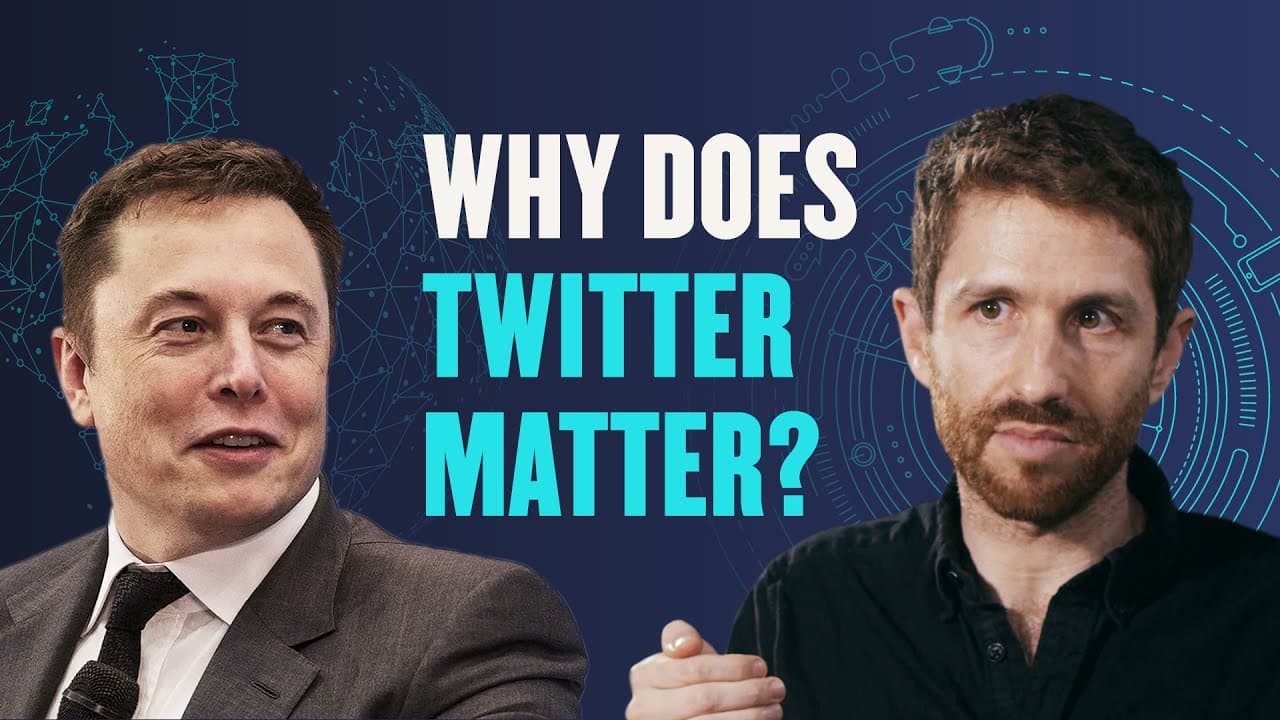
why does twitter matter well twitter is different than instagram or youtube because twitter really is like the place where politics and journalism live journalists construct the world the media world the rest of us live in so if you influence twitter you influence the ink that fills the pages of the media more broadly including just twitter itself ... Read More
Key Insights
- 🛟 Twitter serves as the primary battleground for political opinions and media narratives, shaping public discourse significantly.
- 🧑⚕️ The platform’s design incentivizes engagement based on divisiveness, contributing to a negative societal atmosphere and mental health issues.
- 📈 A shift from profit-driven metrics to community-focused engagement is essential for Twitter to positively influence democratic dialogue and cooperation.
- 🥶 Authentic content creation, free from the burdens of audience expectation, can lead to higher-quality discourse on social media platforms.
- 👋 Technology's role in shaping media narratives necessitates thoughtful design and regulation to promote good faith communication.
- 🪡 Authoritarian access to social media tools starkly contrasts with democratic struggles, highlighting the need for proactive measures to strengthen democratic discourse.
- 😑 There is a pressing need for social media platforms to retain the integrity of free speech while minimizing harmful communication that undermines democracy.
- 🎙️ More videos with Elon Musk:
Install to Summarize YouTube Videos and Get Transcripts
Explore YouTube Video Summarizer or Get YouTube Transcript Extractor
Questions & Answers
Q: How does Twitter impact the media landscape and political discourse?
Twitter acts as a significant influence on media narratives and political discourse, shaping how journalists report news and how the public perceives events. The platform's trending algorithms determine what content gains visibility, thereby influencing mainstream media coverage. This interconnectedness underscores the importance of responsible engagement on social media to support healthy democracy.
Q: What issues arise from Twitter's current engagement model?
The existing engagement model prioritizes sensationalism and divisive content, often leading to “doom scrolling” and negative mental health outcomes. This profit-driven approach encourages users to post more provocative content to gain likes and followers, thus compromising the quality and integrity of conversations. The platform rewards bad faith interactions, exacerbating societal divides.
Q: What changes could improve Twitter’s impact on society?
Introducing a redesign focused on good faith speech could radically transform Twitter into a more constructive platform. This would involve minimizing metrics that encourage sensationalism and instead prioritizing dialogue, understanding, and productive discourse. By moving away from maximizing engagement for profit, Twitter could enhance collective conversation and bolster democratic principles.
Q: How can free speech coexist with the need for responsible discourse?
Free speech is vital for individual expression and democratic functionality, but it must also consider the potential harm of disinformation and bad faith speech. Balancing these elements requires a nuanced approach to moderation that distinguishes between constructive and harmful interactions. For democracy to thrive, platforms must facilitate good faith discussions while discouraging toxic debate.
Q: What lessons can be drawn from Jon Stewart's approach to content creation?
Jon Stewart’s method of creating content without fixating on audience metrics embodies a principled approach to media. By prioriting authenticity over popularity, content creators can foster more meaningful, engaging conversations. If Twitter could encourage similar attitudes among users, it may lead to higher-quality discourse and less divisive content.
Q: In what ways does technology shape cultural and informational landscapes?
Technology plays a crucial role in shaping cultural narratives and public consensus. Social media platforms like Twitter are often the first points of distribution for news and ideas, influencing traditional media far more than acknowledged. This phenomenon necessitates a deeper understanding of technological impacts on society and the importance of designing platforms to foster positive cultural shifts.
Q: How do authoritarian regimes leverage social media differently than democracies?
Authoritarian regimes exploit social media technologies to reinforce their power and suppress dissent, while democracies often struggle to harness these technologies for fortification. Democracies must proactively create systems that enhance public discourse and discourage divisive rhetoric, as failure to do so can lead to a decline in democratic norms and values.
Summary & Key Takeaways
-
Twitter is distinct from platforms like Instagram and YouTube, serving as a key space for political and journalistic discourse, influencing public perception and media narratives significantly.
-
The platform currently favors virality and divisive content, contributing to mental health issues and societal discord, rather than promoting constructive, good faith communication.
-
A radical redesign of Twitter could shift its focus from profit-driven engagement metrics to fostering healthy conversations that could strengthen democracies and counter authoritarianism.
Read in Other Languages (beta)
Share This Summary 📚
Summarize YouTube Videos and Get Video Transcripts with 1-Click
Try YouTube Summary with ChatGPT & Claude or YouTube Transcript Generator
Explore More Summaries from Center for Humane Technology 📚
Summarize YouTube Videos and Get Video Transcripts with 1-Click
Try YouTube Summary with ChatGPT & Claude or YouTube Transcript Generator