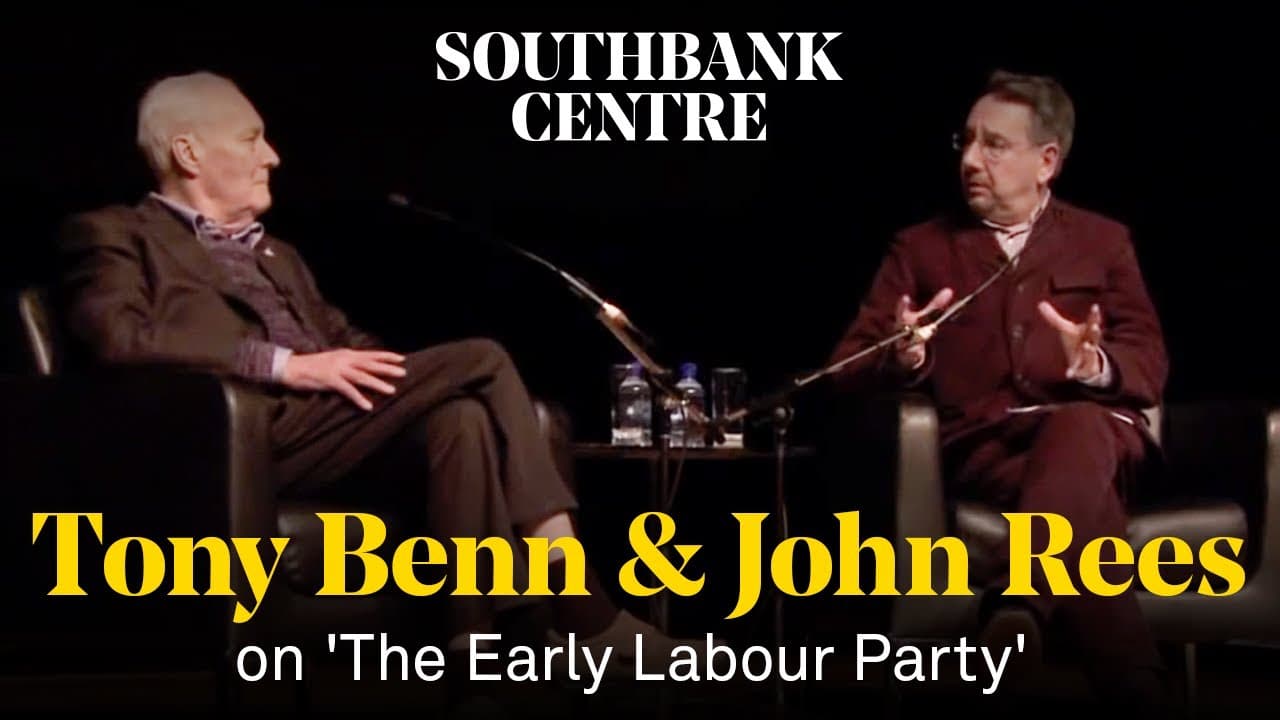
Tony Benn on the founding of the Labour party
TL;DR
The Labour Party was founded as trade unionists, socialists, and other reform movements organized to secure parliamentary representation and challenge the power of market forces. Its roots included the trade union explosion of the 1880s, the Labour Representation Committee, the Independent Labour Party, and the Social Democratic Federation. Tony Benn also explains how women’s rights, nationalism, and the First World War tested this emerging coalition. Read on for the forces and conflicts that shaped it.
Transcript
I suppose one of the the main characteristics of the period that we're looking at the period of the formation of the labor party is that it happened at a time when official Society was at the kind of peak of uh the Victorian Colonial idea but at the bottom of society something very different was happening because the origins of the labor party um c... Read More
Key Insights
- 😮 The Labour Party formed amidst the rise of trade unionism and suffragette movements in the 19th century, shaping its foundational principles.
- 🥳 Socialist ideologies and Marxist elements played a significant role in uniting the party against market forces and advocating for societal change.
- 🥳 The First World War created divisions within the Labour Party, leading to debates on nationalism, peace movements, and the party's stance on the conflict.
- ⚧️ The relationship between the suffragette movement and the Labour Party highlighted the importance of gender equality in social and political movements.
- 🫵 Nationalism was viewed as a divisive force by some members, emphasizing the need to focus on class struggles and unity against capitalist institutions.
- 🥺 The history of the Labour Party showcases successful campaigns that have led to progress in areas like abolition of slavery and women's suffrage.
- 👯 Advice for young people interested in politics includes attaching oneself to causes, learning from movements, and combating pessimism to drive positive change.
Install to Summarize YouTube Videos and Get Transcripts
Explore YouTube Video Summarizer or Get YouTube Transcript Extractor
Questions & Answers
Q: How was the Labour Party founded?
The Labour Party emerged from the growth of trade unionism and a new political movement seeking representation in Parliament. The Labour Representation Committee, the Independent Labour Party, the Social Democratic Federation, and other organizing forces gradually came together to form the party.
Q: How did trade unionism influence the formation of the Labour Party?
The party’s origins were tied to the new union movement and the huge expansion of trade unionism in the 1880s. After gaining the vote, working people wanted representatives in Parliament, making political representation a central goal of the emerging movement.
Q: What role did socialism and Marxism play in the early Labour Party?
Socialist and Marxist ideas gave the party a common purpose: opposition to a system that permanently subjected people to market forces. Socialism was never completely dominant, but Tony Benn describes it as a very strong element from the beginning.
Q: What did “educate, agitate and organize” mean for the early Labour movement?
It described a progression from understanding the forces operating in society to campaigning for specific beliefs and organizing for a different kind of society. Tony Benn presents the phrase as a fair account of how the movement developed.
Q: How did the First World War affect the Labour Party?
The war created a contentious and divisive moment for the Labour movement. The party opposed the war while its parliamentary leaders cooperated with the war effort, and a strong peace movement remained active in the background.
Q: Why did socialists in the Labour movement oppose nationalism?
They believed nationalism united people by nationality instead of by shared economic interests. Tony Benn argues that it could redirect feelings of oppression toward foreign countries and immigrants rather than toward powerful capitalist institutions.
Q: How did the suffragette movement influence the Labour Party?
Some early Labour members treated class and gender as separate struggles. Keir Hardie and others persuaded the party that women’s rights were integral to the development of rights for everyone at work, helping bring the suffragette movement into Labour.
Q: How did the First World War divide the suffragette movement?
The movement split over support for the war. Sylvia Pankhurst opposed it and organized in London’s East End with George Lansbury and Labour figures, while other members of the Pankhurst family supported the war.
Summary & Key Takeaways
-
The Labour Party emerged from a period of social upheaval, during the growth of trade unionism and suffragette movements in the 19th century.
-
The presence of socialist elements, Marxist ideology, and opposition to market forces influenced the party's formation.
-
The First World War created divisions within the party, with a strong peace movement and debates on nationalism and socialism.
Read in Other Languages (beta)
Share This Summary 📚
Summarize YouTube Videos and Get Video Transcripts with 1-Click
Try YouTube Summary with ChatGPT & Claude or YouTube Transcript Generator
Explore More Summaries from Southbank Centre 📚





Summarize YouTube Videos and Get Video Transcripts with 1-Click
Try YouTube Summary with ChatGPT & Claude or YouTube Transcript Generator