Products
Features
YouTube Video Summarizer
Summarize YouTube videos
Web & PDF Highlighter
Highlight web pages & PDFs
Chat with PDF
Ask any PDF questions with AI
Ask AI Clone
Chat with your highlights & memories
Audio Transcriber
Transcribe audio files to text
Glasp Reader
Read and highlight articles
Kindle Highlight Export
Export your Kindle highlights
Idea Hatch
Hatch ideas from your highlights
Integrations
Obsidian Plugin
Notion Integration
Pocket Integration
Instapaper Integration
Medium Integration
Readwise Integration
Snipd Integration
Hypothesis Integration
Apps & Extensions
Chrome Extension
Safari Extension
Edge Add-ons
Firefox Add-ons
iOS App
Android App
Discover
Discover
Ideas
Discover new ideas and insights
Articles
Curated articles and insights
Books
Book recommendations by great minds
Posts
Essays and notes from readers
Quotes
Inspiring quotes collection
Videos
Curated videos and summaries
Explore Glasp
Glasp Newsletter
Weekly insights and updates
Glasp Talk
Interview series with great minds
Glasp Blog
Latest news and articles
Glasp Use Cases
Learn how others use Glasp
Build & Support
Glasp API
Access Glasp's API for developers
MCP Connector
Connect Glasp to Claude & ChatGPT
Community
Glasp Reddit Community
Students
Student discount and benefits
FAQs
Frequently Asked Questions
AboutPricing
DashboardLog inSign up

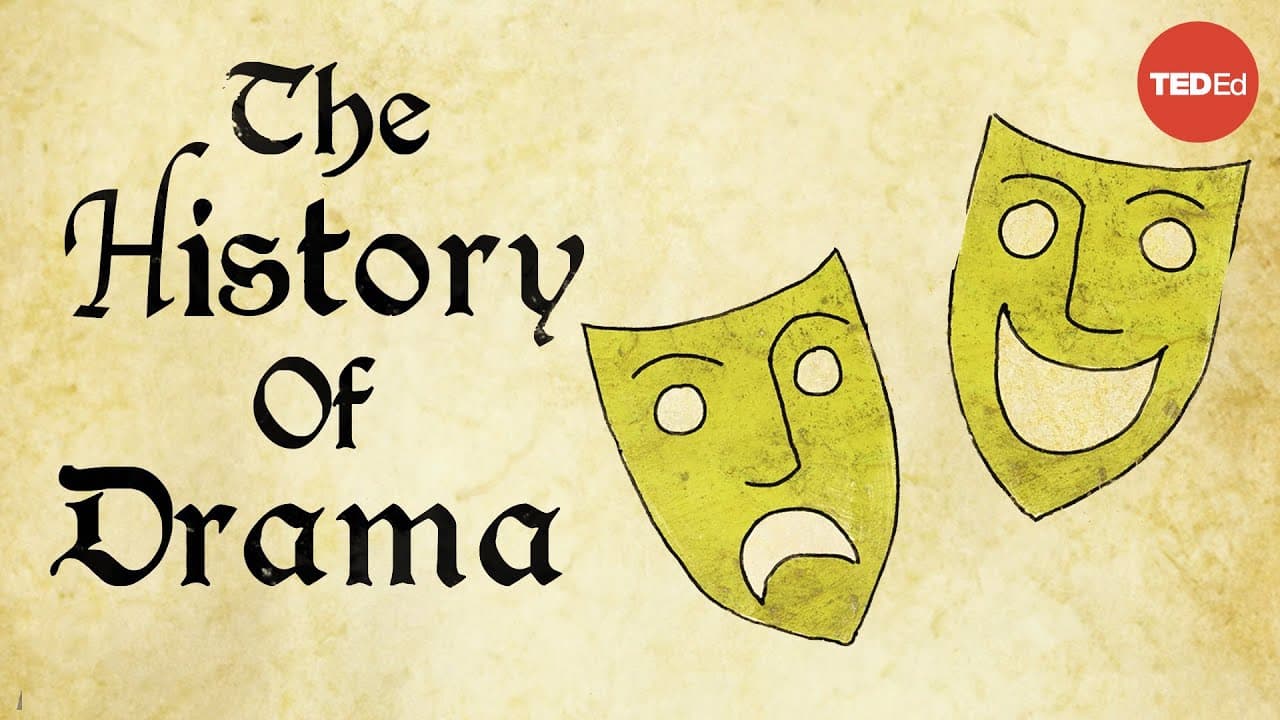
The emergence of drama as a literary art - Mindy Ploeckelmann
195.2K views
•
June 5, 2013
by
TED-Ed
YouTube video player
The emergence of drama as a literary art - Mindy Ploeckelmann

TL;DR

Medieval clergy used plays to teach Bible stories, leading to morality plays and influencing Renaissance playwrights.

Transcript

Transcriber: Andrea McDonough Reviewer: Jessica Ruby In the 11th and 12th centuries, most English commoners were illiterate. Since they had no way to learn the Bible, the clergy came up with an inventive solution: they'd create plays out of certain Bible stories so even people who couldn't read could learn them. These were called mystery plays beca... Read More

Key Insights

  • 🖐️ Medieval clergy created mystery and miracle plays to educate illiterate commoners on Bible stories.
  • 🖐️ The transition to morality plays in the 14th century focused on virtues and vices rather than direct Biblical narratives.
  • 🥺 Morality plays eventually led to the outlaw of performances by the church due to the shift towards crude and immoral content.

Install to Summarize YouTube Videos and Get Transcripts

Explore YouTube Video Summarizer or Get YouTube Transcript Extractor

Questions & Answers

Q: How did clergy in the medieval period use drama to educate illiterate commoners?

Clergy in the medieval period used mystery plays and miracle plays to creatively depict Bible stories, making them accessible to commoners who were illiterate.

Q: Why did the plays transition from Biblical stories to morality plays in the 14th century?

The transition occurred as morality plays aimed to depict virtues and vices, reflecting a shift towards moral lessons and allegorical storytelling during the medieval period.

Q: What were some consequences of the clergy losing control over the portrayal of these morality plays?

When the clergy lost control, the content of the plays shifted into crude and sometimes comic stories, promoting vices rather than virtues to the audiences.

Q: How did the outlaw of medieval performances influence the development of theater?

The outlaw of medieval performances led to the establishment of theaters outside city walls, paving the way for Renaissance playwrights like Shakespeare to carry on the legacy of storytelling through drama.

Summary & Key Takeaways

  • In the 11th and 12th centuries, clergy created mystery plays and miracle plays to teach Bible stories to illiterate commoners.

  • These plays evolved into morality plays by the 14th century, focusing on virtues and vices, eventually leading to the outlaw of performances by the church.

  • The transition from medieval drama to Renaissance playwrights like Shakespeare was influenced by the themes of inner struggles and conscience in these plays.


Read in Other Languages (beta)

English

Share This Summary 📚

Summarize YouTube Videos and Get Video Transcripts with 1-Click

Download browser extensions on:

Try YouTube Summary with ChatGPT & Claude or YouTube Transcript Generator

Explore More Summaries from TED-Ed 📚
String theory - Brian Greene thumbnail
String theory - Brian Greene
TED-Ed
Can you solve the control room riddle? - Dennis Shasha thumbnail
Can you solve the control room riddle? - Dennis Shasha
TED-Ed
How do solar panels work? - Richard Komp thumbnail
How do solar panels work? - Richard Komp
TED-Ed
Does time exist? - Andrew Zimmerman Jones thumbnail
Does time exist? - Andrew Zimmerman Jones
TED-Ed
Exponential growth: How folding paper can get you to the Moon thumbnail
Exponential growth: How folding paper can get you to the Moon
TED-Ed
Why do we love? A philosophical inquiry - Skye C. Cleary thumbnail
Why do we love? A philosophical inquiry - Skye C. Cleary
TED-Ed

Summarize YouTube Videos and Get Video Transcripts with 1-Click

Download browser extensions on:

Try YouTube Summary with ChatGPT & Claude or YouTube Transcript Generator

Apps & Extensions

  • Chrome Extension
  • Safari Extension
  • Edge Add-ons
  • Firefox Add-ons
  • iOS App
  • Android App

Key Features

  • YouTube Video Summarizer
  • Web & PDF Summarizer
  • Web & PDF Highlighter
  • Chat with PDF
  • Ask AI Clone
  • Audio Transcriber
  • Glasp Reader
  • Kindle Highlight Export
  • Idea Hatch

Integrations

  • Obsidian Plugin
  • Notion Integration
  • Pocket Integration
  • Instapaper Integration
  • Medium Integration
  • Readwise Integration
  • Snipd Integration
  • Hypothesis Integration

More Features

  • APIs
  • MCP Connector
  • Blog & Post
  • Embed Links
  • Image Highlight
  • Personality Test
  • Quote Shots

Company

  • About us
  • Blog
  • Community
  • FAQs
  • Job Board
  • Newsletter
  • Pricing
Terms

•

Privacy

•

Guidelines

© 2026 Glasp Inc. All rights reserved.