How to Build Cold Email Campaigns That Get Replies
TL;DR
Build cold email campaigns that get replies by defining a precise ideal customer profile, creating and verifying a tightly filtered lead list, and personalizing messages around relevant prospect details. The demonstrated workflow narrows a broad audience to 104 United States CMOs at Series A companies with 25 to 100 employees. Read on for practical guidance on targeting, verification, writing, testing, deliverability, and follow-ups.
Transcript
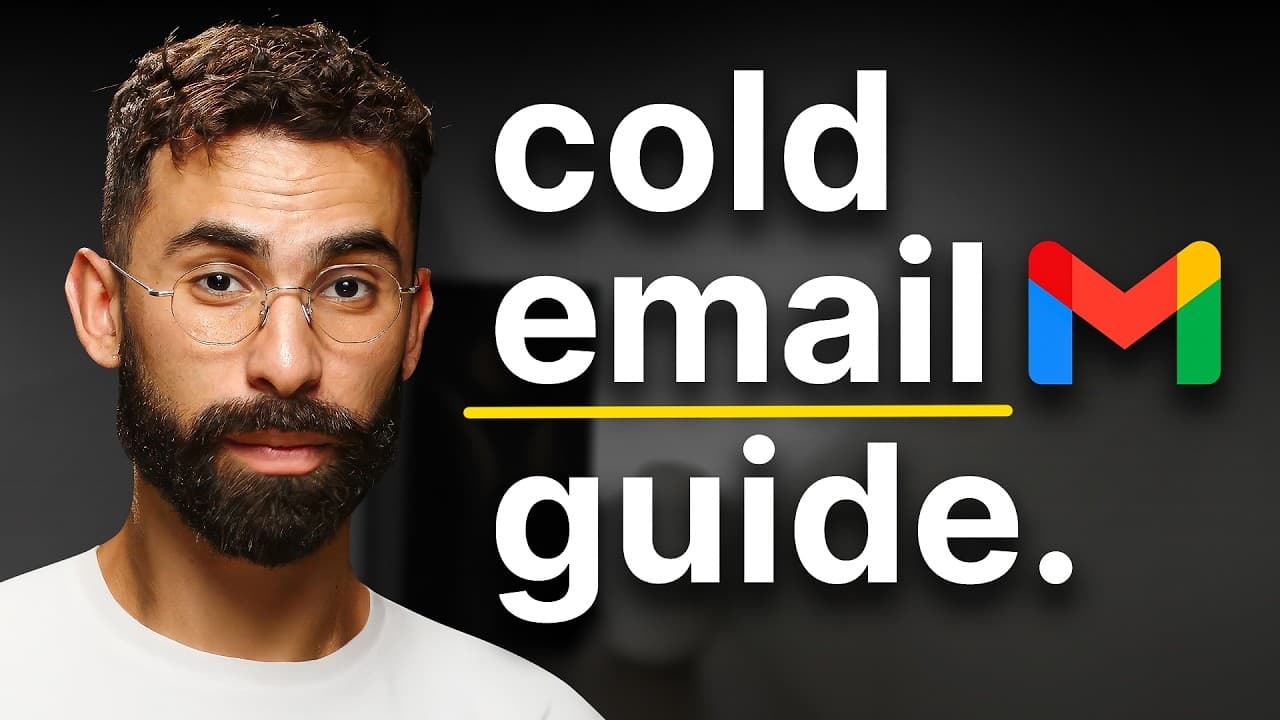
this is the only cold email tutorial you will ever need i've been doing cold email for over five years and have sent over 5 million cold emails and have literally booked thousands of calls and in this video I am going to go in-depth about how you can copy my exact same cold email strategy so you can book meetings for your business too my promise to... Read More
Key Insights
- Cold email is a scalable outreach channel because the right tools and setup can reach thousands of prospects in one day, automate much of the process, and leave more time available for higher-value work.
- Personalization is a central cold email advantage because messages can be tailored to the specific needs and characteristics of each prospect. More relevant emails can improve reply rates and support better relationships with potential clients.
- Cold email provides direct access to decision makers because businesses use email and researchers can identify contact information for CEOs, directors, and other key participants. This access can reduce dependence on organizational gatekeepers.
- An ideal customer profile is a detailed description of the customer most likely to benefit from an offer. It can combine factors such as company type, employee count, location, and the job titles of relevant decision makers.
- Lead quality is more important than lead quantity because a smaller, highly targeted database can contain more relevant prospects than a large, loosely filtered list. The database should be designed around the campaign's specific objective.
- Email verification is essential because invalid addresses can create high bounce rates, damage sender reputation, and reduce deliverability. Removing contacts marked invalid provides greater confidence that messages have a strong chance of reaching inboxes.
- Advanced lead filters make outreach more relevant by narrowing prospects according to technology, geography, company size, revenue, or funding status. The transcript demonstrates filtering Shopify users by location and an employee range of 25 to 100.
- Hiring activity is a useful targeting signal because open roles can indicate that a company is growing or investing in a particular function. Combining Shopify use with hiring for BDR or SDR roles creates clear details for personalized outreach.
Install to Summarize YouTube Videos and Get Transcripts
Explore YouTube Video Summarizer or Get YouTube Transcript Extractor
Questions & Answers
Q: How do you build cold email campaigns that get replies?
Start with a detailed ideal customer profile, translate it into lead-search filters, and verify contact information before sending. Write concise, personalized emails that connect the offer to each prospect’s needs, then test deliverability, messaging, and follow-ups while tracking replies and outcomes.
Q: How do you define an ideal customer profile for cold email?
An ideal customer profile describes the prospect most likely to benefit from your offer. It can include industry, location, company size, revenue, funding stage, technology use, and decision-maker role; one example targets United States technology companies with 50 to 200 employees and roles such as CTO or head of operations.
Q: How should you build a targeted cold email lead list?
Convert the ideal customer profile into specific filters for attributes such as job title, industry, location, employee count, revenue, and funding type. The demonstration targets United States CMOs at Series A companies with 25 to 100 employees, producing a focused list of 104 leads.
Q: Why should email addresses be verified before cold outreach?
Invalid addresses can increase bounce rates, harm sender reputation, and reduce deliverability. Verification lets you identify and remove invalid contacts before outreach, improving confidence that messages can reach their intended inboxes.
Q: Why is cold email useful for business growth?
Cold email combines scalability, personalization, direct access, and minimal investment. With the right tools and setup, a business can contact thousands of prospects in one day, automate most of the process, and reach CEOs, directors, and other decision makers directly.
Q: How can technology filters improve cold email targeting?
Technology filters identify companies using a platform relevant to the sender’s offer. The demonstrated search selects Shopify users, then narrows them by location and an employee range of 25 to 100, creating a more relevant audience and a concrete detail for personalization.
Q: How can hiring activity support cold email personalization?
Open roles can signal that a company is growing or investing in a particular function. Combining Shopify use with companies hiring for BDR or SDR positions gives the sender specific context for more relevant outreach.
Q: What stages should a complete cold email campaign include?
The process covers defining the ideal customer profile, generating and verifying leads, writing concise personalized emails, communicating value, and structuring the message. It also includes testing deliverability, protecting sending domains, sending test emails, A/B testing, tracking metrics, scaling outreach, planning follow-ups, and monitoring replies and outcomes.
Summary & Key Takeaways
-
Cold email offers scalable, direct, personalizable, and budget-friendly outreach. Unlike calling, it can reach thousands of prospects in a day with the right tools and setup. Automation can handle much of the process, while direct email access helps businesses contact CEOs, directors, and other decision makers without relying on gatekeepers.
-
A strong campaign begins with an ideal customer profile describing who is most likely to benefit from the offer. Useful targeting criteria include job title, industry, location, company size, revenue, funding type, and technology use. A smaller, highly relevant list is more effective than a large database of poorly matched contacts.
-
Contact verification protects sender reputation by identifying invalid addresses before outreach begins. Advanced targeting can improve relevance further by combining firmographic filters with buying signals. Companies using a specific platform or hiring for relevant roles may have identifiable needs, giving the sender concrete details for more specific cold email language.
Read in Other Languages (beta)
Share This Summary 📚
Summarize YouTube Videos and Get Video Transcripts with 1-Click
Try YouTube Summary with ChatGPT & Claude or YouTube Transcript Generator
Explore More Summaries from Instantly 📚



Summarize YouTube Videos and Get Video Transcripts with 1-Click
Try YouTube Summary with ChatGPT & Claude or YouTube Transcript Generator