How to apply existential therapy in counseling
TL;DR
Existential therapy centers on meaning, freedom, and responsibility, helping clients confront existential anxiety and pursue authenticity. It emphasizes self-awareness, the four worlds of experience, and genuine therapeutic relationships rather than directive techniques. Therapy aims to enable meaning making, responsibility for choices, and deeper authentic relationships with others.
Transcript
hello this is Dr Grande welcome to my video on the theory of existential therapy the term existential therapy actually refers to a group of several therapies however generally under this Theory counselors focus on human experien as opposed to behavioral rules or dividing the Mind into different areas as we see in psychoanalytic and analytic therapy... Read More
Key Insights
- Existential therapy centers on human experience rather than behavior or mind division.
- The inner struggle between freedom and responsibility drives personal development and meaning seeking.
- Self-awareness and identity formation are key to healthy development in this theory.
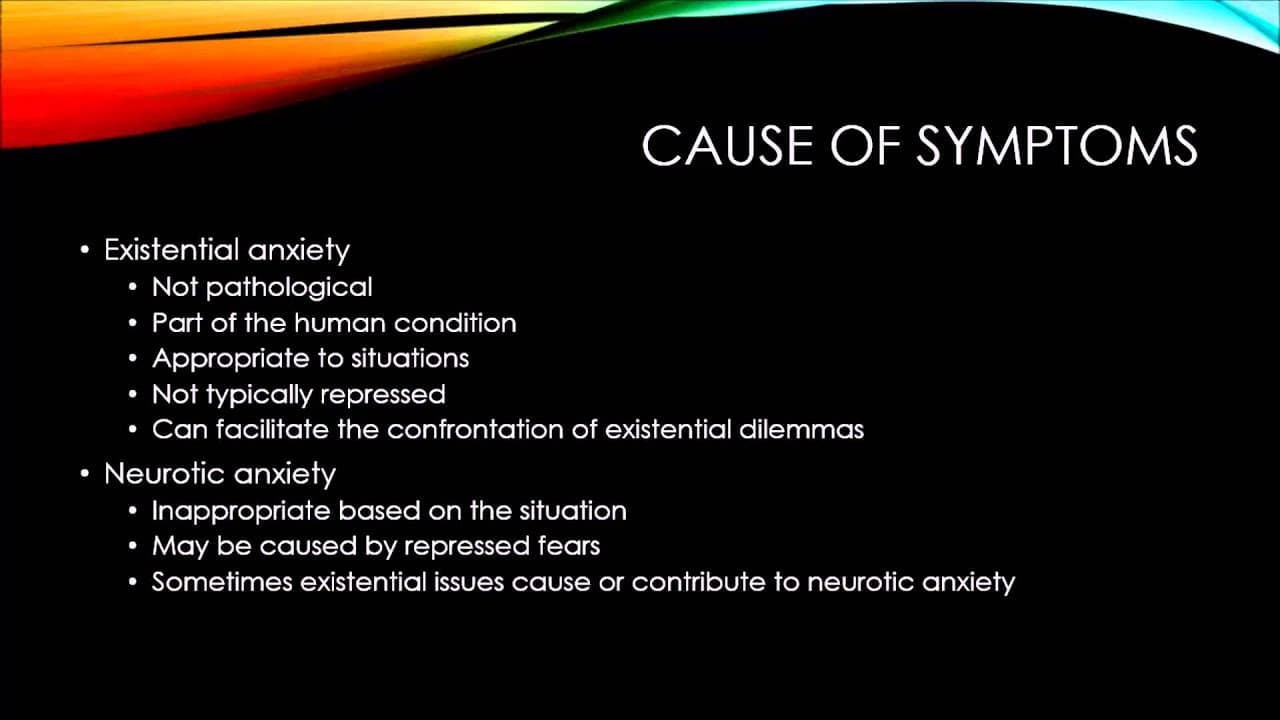
- Existential anxiety is normal, potentially positive, and not pathological.
- Four worlds of being (self, relationships, environment, and spirituality) shape experience.
- Therapists emphasize authentic modeling and genuine relationships over direct techniques.
- Resistance and transference are acknowledged and discussed openly in therapy.
- The therapy aims for authenticity, meaning, and improved interpersonal communication.
Install to Summarize YouTube Videos and Get Transcripts
Explore YouTube Video Summarizer or Get YouTube Transcript Extractor
Questions & Answers
Q: How does existential therapy view anxiety and its role in therapy?
Existential therapy treats anxiety as a normal part of the human condition and not inherently pathological. Existential anxiety can be positive because it motivates living a full and authentic life. It is accepted as an expected part of confronting existential dilemmas, and therapy works to help clients move through anxiety toward greater authenticity and self-actualization.
Q: What are the four worlds of being in existential therapy?
Existential therapy describes four worlds of being: the Igen wel, which is the subjective inner world; the Mitw, representing relationships unique to humans; the Umwelt, the physical environment and objects around us; and the Uber wel, which encompasses spiritual beliefs about the ideal world. All four are believed to influence a person simultaneously.
Q: What is the role of the therapeutic relationship in existential therapy?
The therapeutic relationship is central in existential therapy. It is built on genuineness and empathy, with both counselor and client acknowledging and appreciating each other’s subjective experiences. This alliance supports non-directive exploration, self-disclosure by the counselor, and modeling authentic behavior to help clients face existential issues.
Q: How does existential therapy approach resistance and transference?
Existential therapy acknowledges resistance and transference as relevant phenomena in therapy. Therapists discuss these experiences openly, using them to explore responsibility, authenticity, and the client’s choices. By addressing resistance indirectly, they help clients become more aware of their own feelings and promote authentic engagement in the therapeutic process.
Q: What are the main goals of existential therapy?
Main goals include achieving a high level of authenticity and self-actualization, helping clients find meaning and purpose, increasing awareness of available choices, and fostering better self-understanding and value clarity. It also aims to improve communication, encourage responsibility for decisions, and promote honest living in one’s relationships and life.
Q: How does existential therapy view the concept of safety and security?
Existential therapy does not prioritize safety and security as ultimate guarantees. It accepts uncertainty as a major factor in life and argues that safety can be short-term and illusory. By embracing uncertainty, clients can confront existential dilemmas more openly and move toward meaningful action.
Q: What role does meaning and purpose play in existential therapy?
Finding meaning and purpose is a central focus of existential therapy. Therapists help clients explore profound issues directly, discuss possible meanings, and encourage authentic choices aligned with personal values. This emphasis supports self-actualization and the development of authentic relationships and life directions.
Q: What is the therapeutic stance on presenting and exploring the past, present, and future?
Existential therapy maintains a present-focused stance while remaining willing to explore past experiences and future concerns. This balanced approach helps clients understand how past events influence current choices and how present actions shape future goals, ensuring a holistic view of the client’s life and values.
Summary & Key Takeaways
-
Existential therapy treats meaning and purposes as central to development, with authenticity and self-actualization as core goals. The approach emphasizes a genuine, empathic therapeutic relationship and modeling authentic behavior by the counselor. It also highlights the normalcy of existential anxiety and the importance of personal responsibility.
-
Therapy focuses on presenting the client with multiple ways of being and choices, while acknowledging uncertainty as a constant. It integrates present experience with past and future considerations to inform values and relationships, fostering courage to face existential dilemmas non-directively.
-
The approach critiques excessive safety and security as unrealistic, encourages acceptance of uncertainty, and uses non-directive techniques to help clients move toward self-actualization and improved communication in meaningful relationships.
Read in Other Languages (beta)
Share This Summary 📚
Summarize YouTube Videos and Get Video Transcripts with 1-Click
Try YouTube Summary with ChatGPT & Claude or YouTube Transcript Generator
Explore More Summaries from Dr. Todd Grande 📚




Summarize YouTube Videos and Get Video Transcripts with 1-Click
Try YouTube Summary with ChatGPT & Claude or YouTube Transcript Generator