How to Scale Video Ads to $8k Daily Consistently
TL;DR
To consistently scale video ads to $8k per day, focus on asset-dependent iterations by analyzing metrics like CPM, spend allocation, and rejection rates. Address issues with pages, pixels, and ad accounts before moving to script and editing-dependent iterations. Testing different hooks and disqualifiers can improve engagement and conversion rates.
Transcript
What's up, guys? I've already made a bunch of videos on the iteration process, specifically for static ads and image ads, but what I've never actually done fully in detail is how to actually iterate on video ads, right? So, it doesn't actually matter if you're working on a very script-dependent concept, a very editing-dependent concept, or whatever... Read More
Key Insights
- Asset-dependent issues in video ads can arise from high CPMs, poor spend allocation, and high rejection rates.
- Testing different pages and pixels can significantly impact ad performance, even though it shouldn't.
- If page and pixel tests fail, consider testing a new ad account as a last resort.
- Script-dependent concepts like branded VSLs often have issues with low hook rates and conversion rates.
- Editing-dependent concepts, such as UGC ads, rely more on pacing, music, and creator resonance.
- Improving hook rates in script-dependent ads involves testing higher CTR hooks and using disqualifiers early.
- For editing-dependent ads, addressing drop-offs involves faster pacing, appropriate music, and engaging visuals.
- Conversion rates can be improved by aligning disqualifiers with the target audience's personality type.
Install to Summarize YouTube Videos and Get Transcripts
Explore YouTube Video Summarizer or Get YouTube Transcript Extractor
Questions & Answers
Q: How to identify asset-dependent issues in video ads?
Asset-dependent issues in video ads can be identified by analyzing key metrics such as consistently high CPMs, improper spend allocation, and high rejection rates. If CPMs are uniformly high or spend is disproportionately allocated to bottom-of-funnel ads, it may indicate an asset problem. Additionally, if ads face frequent rejections or fatigue quickly, these are signs of underlying asset issues.
Q: What is the process for testing pages and pixels in video ads?
To test pages and pixels in video ads, create five new pages with different profiles or logos and use five different pixels. Run the same set of ads across these pages and pixels, keeping all other variables constant. Allocate a budget and optimize for purchases to see which combinations yield better performance. This helps identify which page or pixel configuration improves ad metrics.
Q: When should you consider creating a new ad account?
Creating a new ad account should be considered a last resort when both page and pixel tests fail to improve ad performance. If high CPMs, quick ad fatigue, and high rejection rates persist despite testing different pages and pixels, it may indicate deeper issues with the ad account itself. Switching to a new ad account involves losing existing data but can reset performance metrics.
Q: How can script-dependent ads improve their hook rates?
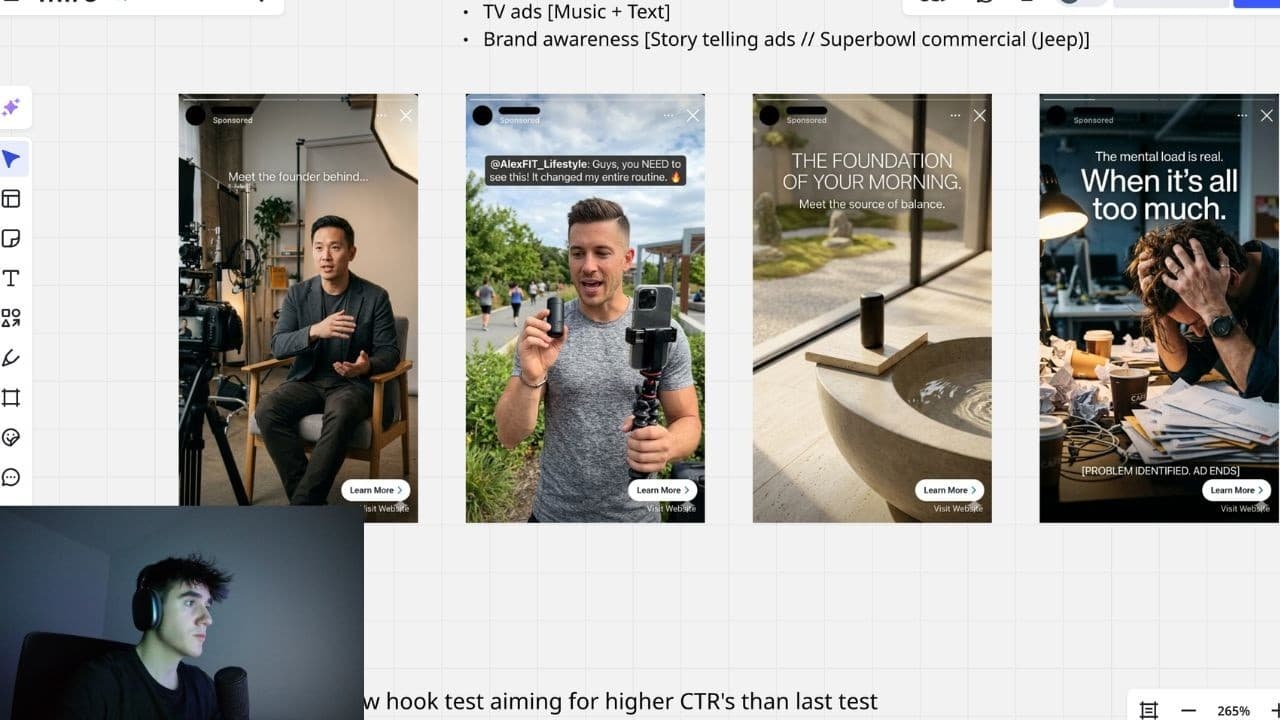
Script-dependent ads can improve hook rates by testing various hooks through a hook test, aiming for a higher CTR than previous tests. Adjust the hook's focus from solution-aware to problem-aware or story-based to engage a broader audience. Consider using disqualifiers early in the ad to filter out uninterested viewers, which can improve overall conversion rates despite a potential decrease in CTR.
Q: What editing techniques enhance engagement in UGC ads?
Enhancing engagement in UGC ads involves using dynamic editing techniques such as adding movement, motion, and split screens. Changing the background or using reaction-style edits can increase viewer retention. It's important to ensure the pacing is fast enough to maintain interest, and the music and overall vibe align with the audience's preferences. Testing different creators is crucial to find the right fit.
Q: How do disqualifiers affect conversion rates in video ads?
Disqualifiers in video ads can improve conversion rates by setting clear expectations for viewers early in the ad. By mentioning factors like price or offer details upfront, only interested viewers continue watching, leading to higher conversion rates. Placing disqualifiers earlier in the ad maximizes their impact, as it filters out uninterested viewers sooner, allowing for a more qualified audience to reach the call to action.
Q: Why is it important to align ad scripts with audience personality types?
Aligning ad scripts with audience personality types ensures the message resonates with viewers, increasing engagement and conversion rates. Different personality types respond to varying communication styles; for instance, logical thinkers prefer data-driven arguments, while emotional personalities may resonate with storytelling. Understanding the dominant personality type in your audience allows for tailored messaging that effectively captures attention and drives action.
Q: What are common drop-off points in video ads and how to address them?
Common drop-off points in video ads occur between the 25% and 50% view marks, often due to ineffective discrediting of competitor solutions or incorrect pacing. To address these, ensure the ad script discredits relevant competitor solutions that the audience is familiar with. Additionally, maintain an engaging pace with appropriate music and visuals to keep viewers interested. Testing different approaches can help identify the most effective strategy.
Summary & Key Takeaways
-
To scale video ads effectively, start by addressing asset-dependent issues such as high CPMs and poor spend allocation. Test different pages and pixels to identify the best performing combinations. If these tests fail, consider creating a new ad account.
-
For script-dependent ads, focus on improving hook rates and conversion rates by testing different hooks and strategically placing disqualifiers. Ensure that the script resonates with the target audience's personality type.
-
In editing-dependent ads, enhance viewer engagement by adjusting pacing, music, and visuals. Use dynamic editing techniques to maintain viewer interest and ensure that the creator's delivery aligns with the audience's preferences.
Read in Other Languages (beta)
Share This Summary 📚
Summarize YouTube Videos and Get Video Transcripts with 1-Click
Try YouTube Summary with ChatGPT & Claude or YouTube Transcript Generator