How to Survive Secretly Inside a Shopping Mall
TL;DR
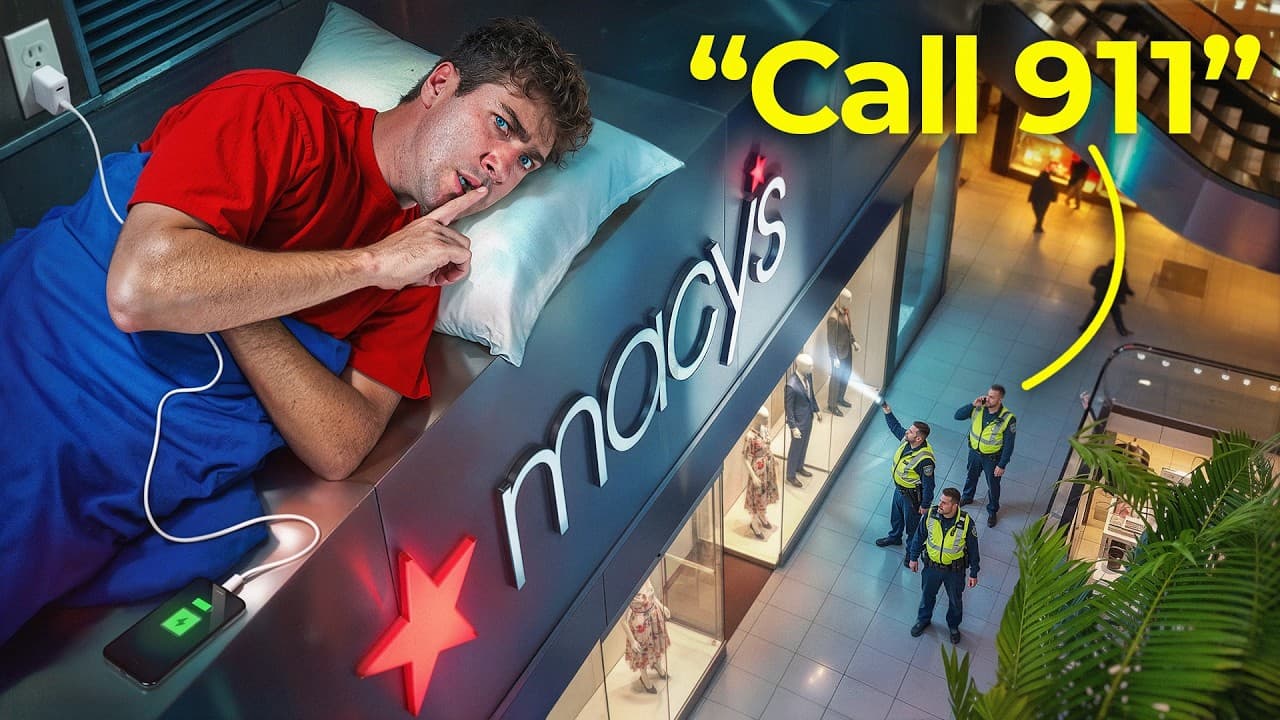
Secretly staying in the mall required completing four needs: food, shelter, love, and sleep, while avoiding detection by security. The group gathered fountain coins for food, hid inside a disguised mobile shelter, monitored exterior views with secret cameras, changed disguises after attracting attention, and planned to travel through a camera-covered underground hallway by posing as workers.
Transcript
How long could you secretly live in a mall? To find out, I went to the most extreme lengths. I'm talking secret hideouts, advanced disguises, and doing literally anything to escape security. If I could call right now, it's over. Oh my gosh. All this to answer one question. Go, go, go. And the first day of my new life starts right now. Man, this is ... Read More
Key Insights
- Food was the first survival requirement, and the participants initially funded it by using a fishing net to collect coins from a mall fountain. They gathered $4.10, requested a discount, and secured a small amount of food to share.
- The challenge was governed by three rules: the participants could not leave the mall premises, capture by security would immediately end the attempt, and they had to complete a checklist covering food, shelter, love, and sleep.
- Mall owner Dan authorized the attempt without informing other people at the property. He warned that the participants would probably be caught because the mall had 180 security cameras and at least one person continuously watching the available angles.
- Back-room doors were risky because opening them activated a silent alarm that required security to investigate. This made the mall's service corridors and hidden areas potentially useful for concealment but dangerous to enter or exit.
- The secret shelter was a mobile structure disguised as a garbage can. It contained air conditioning, snacks, drinks, and an iPad connected to hidden exterior cameras, allowing the occupants to observe nearby activity while remaining concealed.
- The old-man disguises failed after unusual behavior attracted attention from a Starbucks worker and security personnel. Guards questioned the pair about their costumes and a body camera, followed them through the mall, and eventually marked them as suspicious.
- Private stores temporarily reduced the mall security team's visibility because guards could not observe the pair as easily once they left the general mall area. The participants used the arcade and other businesses to hide, wait, shop, and attempt to break surveillance.
- Worker disguises were designed to support movement through a camera-covered underground hallway. One participant planned to hide inside the dumpster-like shelter while the other, dressed similarly to workers who moved dumpsters, pushed it toward a connected restaurant.
Install to Summarize YouTube Videos and Get Transcripts
Explore YouTube Video Summarizer or Get YouTube Transcript Extractor
Questions & Answers
Q: What rules governed the secret mall survival challenge?
The participants followed three stated rules. They could not leave the mall premises, and the attempt would end immediately if security caught them. They also had to complete a survival checklist consisting of food, shelter, love, and sleep. Mall owner Dan knew about the challenge, but other personnel were not informed, so ordinary security operations remained a genuine obstacle.
Q: How did the participants get food without money at first?
They used a fishing net to collect coins from a mall fountain while trying to avoid attention from people on the floors above. After an employee and security interrupted them, they moved upstairs and counted $4.10. They then asked about a senior discount and persuaded a food worker to provide an item they could divide and eat in a hidden corner.
Q: How was the secret mall shelter designed?
The shelter was disguised as a garbage can and referred to as the Batcave. Inside, it had air conditioning, snacks, drinks, and an iPad showing feeds from secret cameras mounted outside the structure. The cameras helped the occupants assess nearby activity without exposing themselves, while the shelter's ordinary exterior allowed another person to push it through the mall slowly.
Q: Why was avoiding mall security especially difficult?
The mall had 180 security cameras, with at least one security worker watching the angles at all times. Opening certain back-room doors also triggered silent alarms that required investigation. Once the participants attracted suspicion, guards followed them, circled their locations, questioned their costumes and recording equipment, and received enough information to mark them as suspicious targets.
Q: Why did the old-man disguises stop working?
The old-man disguises became ineffective because the participants behaved unusually while wearing them. They repeatedly paid with loose change, requested senior discounts, carried visible recording equipment, and drew attention from a Starbucks worker. Security later questioned them about the costumes and body camera, followed them across the property, and continued watching after they left stores and entered public areas.
Q: How did stores help the participants evade security?
Entering a private store reduced security's direct visibility compared with walking through the mall's general areas. The participants used the arcade as temporary cover when guards were nearby, including sitting inside an enclosed game and waiting for security to leave. This strategy did not eliminate suspicion, however, because guards could wait outside, question them, or resume following them afterward.
Q: What was the plan for reaching the connected restaurant?
The plan relied on a long underground hallway connecting the mall to a restaurant, but cameras monitored the route. One participant would hide inside the dumpster-like shelter while Tyler wore clothing resembling the workers who pushed dumpsters. Tyler would move the concealed shelter through the tunnel, leave it at the restaurant, and then retrieve the girlfriend for the planned date night.
Q: How did the participants adapt after security identified them?
They returned to the hidden Batcave after guards repeatedly followed them and made sharklike circles around their resting area. Because the old-man costumes had been compromised, they changed into worker-style disguises. They also prepared credentials and planned to exploit the shelter's dumpster appearance, allowing one person to hide while the other presented himself as someone authorized to move it.
Summary & Key Takeaways
-
The challenge began with strict conditions: the participants could not leave the mall, being caught by security would end the attempt, and survival required food, shelter, love, and sleep. Although mall owner Dan privately permitted the challenge, nobody else knew, leaving the participants exposed to employees, guards, alarms, and extensive camera surveillance.
-
Food initially depended on coins collected from a fountain with a fishing net. The participants counted $4.10, requested a discount, and bought food to share. After repeatedly paying with change drew unwanted attention, they recognized that spending their own money was not prohibited and used cash at the arcade and while preparing for date night.
-
Their shelter was disguised as a garbage can and stocked with air conditioning, snacks, drinks, and an iPad displaying secret exterior camera angles. When old-man disguises attracted security scrutiny, they returned to the shelter, changed outfits, created credentials, and planned to move through an underground hallway by impersonating workers handling dumpsters.
Read in Other Languages (beta)
Share This Summary 📚
Summarize YouTube Videos and Get Video Transcripts with 1-Click
Try YouTube Summary with ChatGPT & Claude or YouTube Transcript Generator
Explore More Summaries from Airrack 📚



Summarize YouTube Videos and Get Video Transcripts with 1-Click
Try YouTube Summary with ChatGPT & Claude or YouTube Transcript Generator