How Does Precision Support the Ancient High-Technology Theory?, Evidence for Ancient High Technology, Part 2
TL;DR
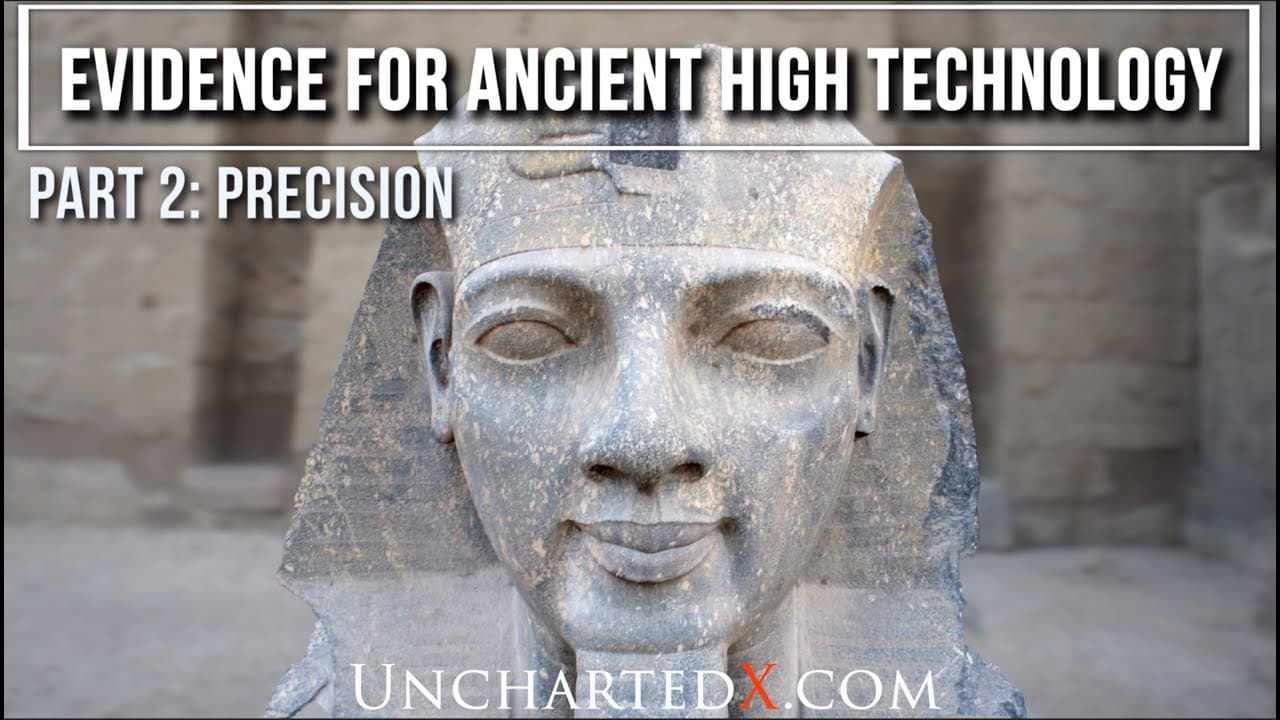
Precision in ancient Egyptian stone boxes, vases, columns, and statues is presented as evidence of manufacturing capabilities beyond those associated with a Bronze Age culture. Ben of Uncharted X connects their flatness, symmetry, parallel surfaces, and complex geometry to precision’s functional role in modern engineering, arguing that such results imply advanced tools and mechanical guidance. Read on for the specific artifacts and reasoning behind this interpretation.
Transcript
hello everyone and welcome to Uncharted X my name is Ben and this is part two of my series looking at the evidence four forms of ancient high-technology part one is worth a watch before this if you haven't seen it already in that video we set up some of the context around these claims for ancient high technology how they correlate to the story of h... Read More
Key Insights
- 🇪🇬 Precision manufacturing is a concept that modern civilization heavily relies on, and evidence of its existence in ancient Egypt suggests the presence of an advanced civilization.
- 🙈 The precision in manufacturing seen in ancient Egyptian artifacts, such as stone boxes, vases, columns, and statues, surpasses the capabilities of Bronze Age cultures.
- ❓ The precise symmetry and complex geometric engineering of the objects suggest the use of advanced tools and mechanical guidance, questioning the traditional belief that dynastic Egyptians made all ancient Egyptian objects.
Install to Summarize YouTube Videos and Get Transcripts
Explore YouTube Video Summarizer or Get YouTube Transcript Extractor
Questions & Answers
Q: How does precision support the theory of ancient high technology?
The video presents precision as a manufacturing capability developed for functional benefits rather than merely ceremonial or artistic purposes. It argues that the flatness, symmetry, parallel surfaces, and complex geometry found in ancient Egyptian artifacts imply advanced tools, measurement, and mechanical guidance.
Q: Why does the video consider precision the most convincing evidence for ancient high technology?
Precision cannot always be seen by eye or felt by hand, and producing it requires calibrated measurement instruments and controlled manufacturing. Because civilizations pursue such difficult and expensive capabilities for functional gains, the video treats highly precise artifacts as evidence of sophisticated technology.
Q: What is precise about the stone boxes in the Serapeum of Saqqara?
The Serapeum boxes are described as having flat, square, and parallel surfaces that align precisely. The video argues that this degree of precision could not have been produced with the tools traditionally associated with ancient Egyptian civilization.
Q: What features of ancient Egyptian stone jars and vases suggest advanced manufacturing?
The jars and vases display remarkable symmetry and precision, while some are thin and transparent. They were also made from hard materials such as granite and corundum, which the video presents as strengthening the case for advanced manufacturing skills.
Q: How do the statues of Ramses II demonstrate precision manufacturing?
The giant statues of Ramses II at Luxor, Karnak, and the Ramesseum are described as having complex compound surfaces and consistent symmetry. The video interprets these features as signs of advanced manufacturing and mechanical guidance beyond the expected capabilities of a Bronze Age culture.
Q: What do ancient Egyptian columns reveal about geometric engineering?
Giant flared columns made from single pieces of granite exhibit complex geometry and precise symmetry. The video argues that producing these consistent forms in granite required advanced engineering and manufacturing capabilities.
Q: Why does the video compare ancient artifacts with modern precision manufacturing?
Modern engines, chronometers, cannons, aircraft, electronics, and semiconductor microchips demonstrate how precision produces practical benefits. The comparison establishes that precise surfaces and low tolerances require deliberate manufacturing capabilities, providing a framework for evaluating ancient Egyptian artifacts.
Q: Why does the video question whether dynastic Egyptians made every precise artifact?
The record described on the page includes both highly precise and poorly made stone boxes, with artifacts attributed to earlier periods such as the Old Kingdom displaying greater precision than later examples. The video interprets this contrast as possible evidence that dynastic Egyptians inherited and imitated objects made with an earlier, more advanced capability.
Summary & Key Takeaways
-
Ancient Egyptians showcased high levels of precision in the manufacturing of artifacts such as stone boxes, vases, and statues.
-
Stone jars and vases displayed remarkable symmetry and precision, with some being thin and transparent, made from hard materials like granite and corundum.
-
Giant single-piece flared columns and statues carved from granite demonstrate complex geometric engineering and precise symmetry.
-
The technology and precision required to create these artifacts surpass the capabilities of a Bronze Age culture with primitive tools.
Read in Other Languages (beta)
Share This Summary 📚
Summarize YouTube Videos and Get Video Transcripts with 1-Click
Try YouTube Summary with ChatGPT & Claude or YouTube Transcript Generator
Explore More Summaries from UnchartedX 📚




Summarize YouTube Videos and Get Video Transcripts with 1-Click
Try YouTube Summary with ChatGPT & Claude or YouTube Transcript Generator