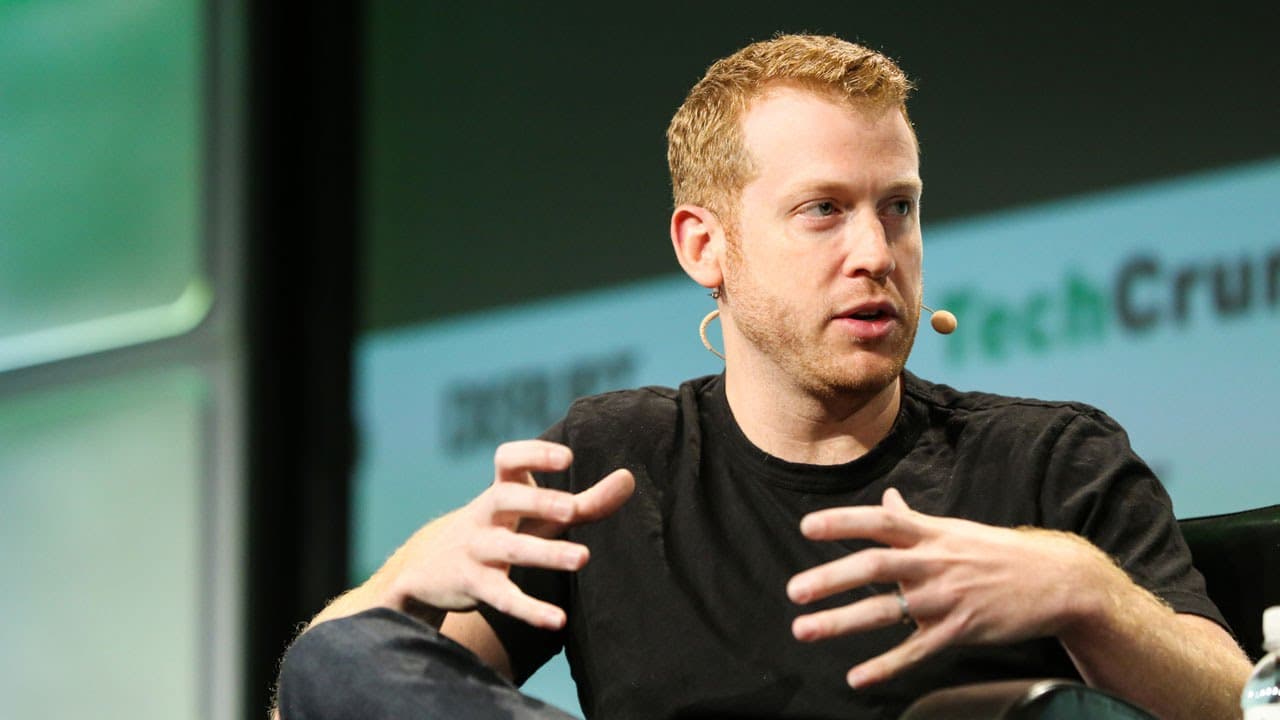
Life Tips from Kyle Vogt of Cruise at Disrupt SF
Transcript
ladies and Gentlemen please welcome your disrupt MC and Tech crunch senior writer Jordan crook the yeah you guys are my Troopers we're here it's day three it's like 6 o'clock in the morning or something right and you guys are my Troopers so screw Sam you guys are my new favorites okay um same same stuff that we've been going over # TC disrupt the b... Read More
Install to Summarize YouTube Videos and Get Transcripts
Explore YouTube Video Summarizer or Get YouTube Transcript Extractor
Summary
In this video, Kyle Vogt from Cruise discusses the journey of his startup and its partnership with GM to develop self-driving cars. He talks about the challenges of building driverless cars at scale, the importance of integrating the technology into vehicles, and the need for validation and safety testing before deployment. Vogt also addresses the timelines and hype around self-driving technology, the advantages of working with GM, and the future of transportation.
Questions & Answers
Q: How did Kyle Vogt start out in the startup world and get interested in self-driving cars?
Vogt got started in startups while he was in college at MIT. He met Justin Kahn and Emmett Shear, who had just sold their last company, and they invited him to build a camera for a reality TV show. He dropped out to start justin.tv with them. He had been interested in self-driving cars since he was 13 years old and built a small self-driving car when he was a teenager. He saw the potential of the technology and waited until it became more advanced before pursuing it further.
Q: Why did Cruise partner with GM?
GM's leadership understood the transformative impact of autonomous technology and had the manufacturing capabilities to produce self-driving vehicles at scale. In addition, GM had the Chevrolet Bolt electric vehicle platform, which had a great range, and a partnership with Lyft, which provided the demand for the driverless ride-share service. These three components were essential for launching a successful driverless ride-share service.
Q: How does the Cruise approach to self-driving cars differ from other companies?
Cruise focuses on building fully integrated and safe driverless cars that can operate without human intervention. They believe that retrofitting existing cars with self-driving technology is not scalable and won't achieve the desired societal benefits. Their approach involves extensive validation and integration of the technology into the vehicle to build a level of trust and reliability that cannot be achieved with retrofitting.
Q: Why has Cruise been more reserved with pronouncements and timelines compared to other companies?
Cruise believes in demonstrating the technology with fully driverless vehicles that operate without any human intervention. They believe that until this milestone is reached, there is no real substance behind pronouncements of timelines. They aim to focus on safety and validation before making any announcements or setting expectations for the deployment of driverless cars.
Q: What are the key hurdles remaining for Cruise to achieve fully driverless cars?
One of the key hurdles is the development of automotive-grade components. Many of the components used in the autonomous technology are not yet up to automotive standards, so further development and validation are necessary. Another challenge is the coexistence of autonomous and human-driven vehicles on the road, as autonomous vehicles need to consider unpredictable human behavior. To achieve the true potential of self-driving technology, a majority of vehicles on the road will need to be fully driverless, which will be a gradual process.
Q: How does Cruise collect driving data for testing and development?
Cruise not only collects data from their test vehicles but also has access to data from GM's connected vehicles and Maven's car-sharing service. They have a significant fleet of connected vehicles with cameras that are out in the real world, providing valuable driving data. This data helps accelerate the feedback cycle and enables them to improve the technology by addressing specific challenges observed on public roads.
Q: What benefits of the driverless car future might people overlook?
One important benefit is increased accessibility to transportation, especially for an aging population. Many elderly individuals will eventually have to give up driving, and having accessible and reliable transportation options will greatly improve their quality of life. Additionally, driverless cars have the potential to reduce traffic congestion, improve road safety, and make transportation more efficient overall.
Q: Will personal car ownership still exist in a future with driverless cars?
Personal car ownership is likely to coexist with shared mobility models in the driverless car future. While some people will still prefer to have their own vehicle for privacy or personal reasons, shared mobility will be the most cost-effective and convenient option for many. The future will likely see a mix of personal ownership and shared mobility, depending on individual preferences and circumstances.
Q: How do you address skepticism and resistance from individuals who are reluctant to trust self-driving cars?
It is expected that there will be skepticism and resistance to driverless cars, especially in the early stages. Cruise believes in demonstrating the safety and reliability of their technology through real-world tests and validation. As the technology improves and more driverless vehicles are deployed, people will witness the benefits and become more confident in the reliability and safety of self-driving cars.
Q: What is the future of transportation in 25-30 years?
In the long term, Cruise envisions a transportation system where driverless vehicles are the norm. Removing human drivers from the roads will unlock the true potential of self-driving technology, enabling benefits like improved traffic flow and increased safety. However, this transition will take time, and it is expected that a mix of human-driven and driverless vehicles will coexist for a while until the majority of vehicles are fully driverless.
Read in Other Languages (beta)
Share This Summary 📚
Summarize YouTube Videos and Get Video Transcripts with 1-Click
Try YouTube Summary with ChatGPT & Claude or YouTube Transcript Generator
Explore More Summaries from TechCrunch 📚


Summarize YouTube Videos and Get Video Transcripts with 1-Click
Try YouTube Summary with ChatGPT & Claude or YouTube Transcript Generator