How to Win Black Friday: Shopify President's Store Secrets
TL;DR
The brands crushing Black Friday build brand goodwill long before they ask for the sale, then narrow the offer hard. Gymshark strips its homepage to just three sale categories and leans on a coupon-code discount, while BarkBox turns discounts into interactive pet quizzes so buying feels like an activity, not a plain transaction.
Transcript
all right we are here Black Friday I have a special edition today with uh the man the myth the legend Harley who is president of shopy we're going to go over five to seven stores that are absolutely crushing it now here's the advantage that Harley has and that we can share that no one else can he knows what's going on in every single store across t... Read More
Key Insights
- Great brands earn the right to ask by giving value first. Gymshark builds positive associations with the right athletes and community over time, so when Black Friday arrives and it's time to ask for the sale, the ask lands because the brand means it.
- Narrowing choice raises conversion. Gymshark's Black Friday homepage shows only women's sale, men's sale, and accessory sale in the header, deliberately hiding other categories to funnel the shopper's attention toward buying rather than browsing.
- The paradox of choice hurts sales. In the referenced jam experiment, a large display of jars attracted more tasters but far fewer buyers, while a small display converted many more shoppers, showing that fewer options can drive more purchases.
- A long holiday popup is a data-gathering machine. Gymshark ran a multi-week holiday popup that started well before competitors and ended after them, and likely used the early period to pretest which items would be the season's hottest sellers.
- Data lets you weaponize resources. The creator's own team produces a huge volume of short content each week, then reworks only the proven top performers into long videos, so winners are identified from evidence rather than assumption.
- Discount presentation shapes perception. Gymshark applies savings via a code so the retail value stays visible until checkout, where the shopper realizes the discount closer to the moment of purchase, which the hosts believe feels more compelling.
- Gamified discounts beat plain coupons. BarkBox makes customers complete pet quizzes and challenges to earn discounts, creating interactive engagement so the purchase feels like doing something meaningful instead of a simple transaction.
- Marketing Easter eggs turn ads into content. Gymshark hid clues across its campaigns under a 'there will be signs' theme, prompting fans to study every ad and product and even create their own content about the marketing, multiplying reach.
Install to Summarize YouTube Videos and Get Transcripts
Explore YouTube Video Summarizer or Get YouTube Transcript Extractor
Questions & Answers
Q: How do top brands prepare customers before asking for the Black Friday sale?
They spend a long time before the sale building the brand and providing value, making positive associations with the right people and athletes at the right moments. Gymshark gives to its community, such as supporting mental health causes, when it needs to give, so that when it is finally time to ask on Black Friday, the audience is receptive and the ask feels earned rather than opportunistic.
Q: Why does Gymshark limit its Black Friday homepage to only a few categories?
Gymshark deliberately shows only women's sale, men's sale, and accessory sale in the top header, hiding its other product categories. This narrows focus and leaves customers breadcrumbs leading exactly where the brand wants them to go. During a moment when shoppers have their wallets out, reducing choices prevents them from getting lost and concentrates their attention on the items most likely to convert.
Q: What is the paradox of choice and how does it apply to selling?
The paradox of choice is that giving people too many options makes them get lost and less likely to buy. The hosts cite a supermarket jam experiment where a large set of jars drew more tasters but fewer buyers, while a small set converted many more purchasers. For entrepreneurs, it means prioritizing a focused product suite so attention translates into sales.
Q: Why did Gymshark run such a long holiday popup instead of a short one?
Gymshark ran a multi-week holiday popup rather than a few days, which meant it started before competitors and ended after them. The hosts hypothesize a bigger reason: the early stage let Gymshark pretest and figure out very quickly which items would be the hottest sellers for the season, giving it a data-driven crystal ball that rivals opening later could not match.
Q: How does BarkBox make its Black Friday discounts stand out?
BarkBox created challenges and pet quizzes that customers complete to earn discounts, rather than simply handing over a coupon. This adds interactive gamification, so the experience does not feel like a simple transaction but like the shopper is actually doing something. The hosts credit this deep understanding of its pet-owning customers as a key reason BarkBox wins against many competitors.
Q: Why does Gymshark apply its discount through a code at checkout?
By requiring a code, Gymshark keeps the full retail value visible throughout the browsing experience and only reveals the savings closer to the moment of purchase at checkout. The hosts argue this maintains brand perception and premium positioning, and they believe the discount feels different and more compelling when the shopper realizes it right before buying, though they note they lack a controlled split test to prove it.
Q: How can businesses use data to decide what to sell or produce?
Data lets businesses weaponize their resources by acting on proven winners instead of assumptions. The creator's team produces a very large volume of short content each week and reworks only the top-performing pieces into long videos, so they take many shots on goal and keep the best. Gymshark similarly used early popup data to know what would sell before competitors could.
Q: What made Gymshark's 'there will be signs' campaign effective?
Gymshark ran a mysterious 'there will be signs' campaign that hid Easter eggs across all its advertising. Because the brand and its fans are so creative, people did deep dives into every marketing campaign and new product to decode the clues, spending more time on the site. Fans even made their own content about the marketing, giving Gymshark extra impressions and turning its ads into shared entertainment.
Summary & Key Takeaways
-
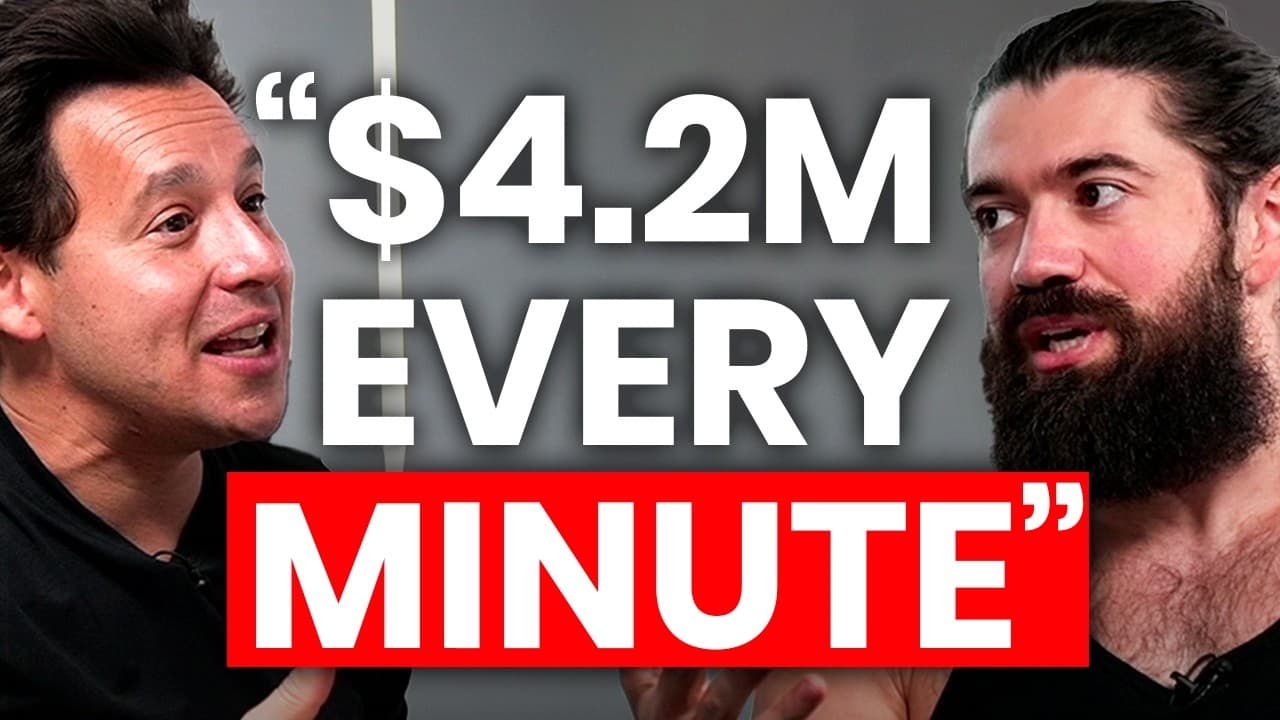
The Shopify president joins the host on Black Friday to break down real stores crushing the weekend. Using his view across every Shopify store, he highlights unobvious but highly effective tactics, projecting sales, orders, and shoppers in real time, with each firework on the map marking a brand-new entrepreneur's first sale.
-
Gymshark succeeds by building brand goodwill before it asks for the sale, expanding beyond online into a long holiday popup that outlasts competitors and gathers data. Its Black Friday site strips the header to only three sale categories, applies a coupon code, and pushes shoppers straight toward buying the top sellers.
-
BarkBox wins by understanding its pet-owning customers deeply and turning discounts into interactive quizzes and challenges rather than plain coupons. This gamification makes the purchase feel like an activity, not a transaction. The overarching lesson is that data and focus let businesses concentrate attention and resources where they convert best.
Read in Other Languages (beta)
Share This Summary 📚
Summarize YouTube Videos and Get Video Transcripts with 1-Click
Try YouTube Summary with ChatGPT & Claude or YouTube Transcript Generator
Explore More Summaries from Alex Hormozi 📚





Summarize YouTube Videos and Get Video Transcripts with 1-Click
Try YouTube Summary with ChatGPT & Claude or YouTube Transcript Generator