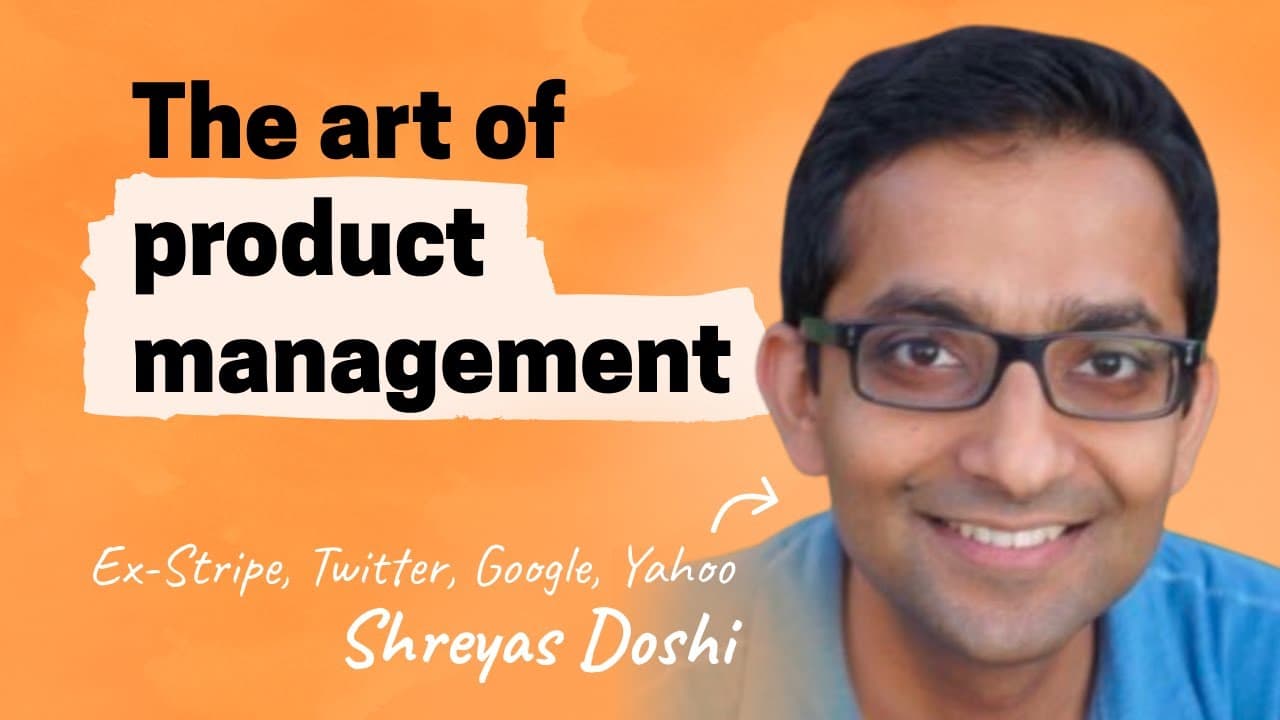
How to Master Product Management with Shreyas Doshi
TL;DR
Shreyas Doshi shares insights on mastering product management, drawing from his experiences at top tech companies. He emphasizes the importance of pre-mortems, strategic thinking, and high agency in achieving impactful results. Doshi offers frameworks for prioritizing tasks and highlights how most execution problems are rooted in strategy or culture issues.
Transcript
- You should be spending some time on internal optics because it creates energy, it can creates awareness, it creates excitement, it creates opportunities for feedback. Those are all really great things, and they will enable greater impact and better execution for you. - [Lenny] There's no one out there today who shares more wisdom more consistentl... Read More
Key Insights
- Pre-mortems help identify potential project failures before they occur, reducing the need for postmortems.
- The LNO framework categorizes tasks into leverage, neutral, and overhead to prioritize effectively.
- Three levels of product work—impact, execution, and optics—must be balanced for team alignment.
- Most execution problems are rooted in strategy or culture, not in execution itself.
- Prioritization should focus on minimizing opportunity cost rather than maximizing ROI.
- High agency involves taking ownership, creatively executing, and being resilient in the face of challenges.
- Effective product management requires thinking big, as demonstrated by Google’s approach.
- Optics are important for creating internal awareness and excitement but should not overshadow actual execution.
Install to Summarize YouTube Videos and Get Transcripts
Explore YouTube Video Summarizer or Get YouTube Transcript Extractor
Questions & Answers
Q: How to conduct a pre-mortem meeting?
A pre-mortem meeting involves imagining a project has failed and working backwards to identify potential causes. Include all relevant team members and use a structured approach to categorize risks as tigers, paper tigers, and elephants. This helps surface issues early and align the team on mitigation strategies.
Q: What is the LNO framework?
The LNO framework categorizes tasks into leverage (L), neutral (N), and overhead (O). Leverage tasks offer high impact for effort, neutral tasks offer moderate returns, and overhead tasks offer low returns. Product managers should focus on leverage tasks to maximize their impact and effectiveness.
Q: What are the three levels of product work?
The three levels of product work are impact, execution, and optics. Impact focuses on the overall effect on users and the business, execution on the practical steps to achieve goals, and optics on creating awareness and excitement. Balancing these levels helps reduce conflicts and improve team alignment.
Q: Why are most execution problems actually strategy problems?
Most execution problems are rooted in unclear strategy or cultural issues. Without a clear strategy, teams may misalign or prioritize incorrectly, leading to execution challenges. Addressing strategic clarity and fostering a supportive culture can resolve many issues mistakenly attributed to execution failures.
Q: How to prioritize tasks effectively as a product manager?
Prioritization should focus on minimizing opportunity cost rather than maximizing ROI. This means selecting tasks that offer the greatest potential impact, even if they are not the easiest or quickest to complete. This approach ensures that time and resources are allocated to the most valuable opportunities.
Q: What is high agency and why is it important for PMs?
High agency involves taking ownership, executing creatively, and being resilient. For product managers, this means finding ways to achieve goals despite obstacles and not waiting for perfect conditions. High agency PMs often exceed expectations and drive significant impact by proactively addressing challenges and seizing opportunities.
Q: How does thinking big benefit product management?
Thinking big encourages teams to pursue ambitious goals and innovate beyond incremental improvements. At Google, this approach led to groundbreaking products and significant business growth. For product managers, adopting a mindset of thinking big can unlock new opportunities and drive substantial impact.
Q: Why are optics important in product management?
Optics create internal awareness, energy, and excitement about a project, which can lead to greater feedback and support. While important, optics should not overshadow actual execution and impact. Balancing optics with execution ensures that teams are recognized for their efforts while still delivering meaningful results.
Summary & Key Takeaways
-
Shreyas Doshi discusses the importance of pre-mortems in identifying potential project failures early. This proactive approach helps teams avoid common pitfalls and enhances execution. (50 words)
-
The LNO framework is a tool for prioritizing tasks by categorizing them into leverage, neutral, and overhead. This helps product managers focus on high-impact tasks and manage their time effectively. (50 words)
-
Understanding the three levels of product work—impact, execution, and optics—can help teams align their efforts and reduce conflicts. Most execution issues are actually strategy or culture problems, and recognizing this can improve outcomes. (50 words)
Read in Other Languages (beta)
Share This Summary 📚
Summarize YouTube Videos and Get Video Transcripts with 1-Click
Try YouTube Summary with ChatGPT & Claude or YouTube Transcript Generator
Explore More Summaries from Lenny's Podcast 📚





Summarize YouTube Videos and Get Video Transcripts with 1-Click
Try YouTube Summary with ChatGPT & Claude or YouTube Transcript Generator