How Do You Build a 1-Person AI Business?
TL;DR
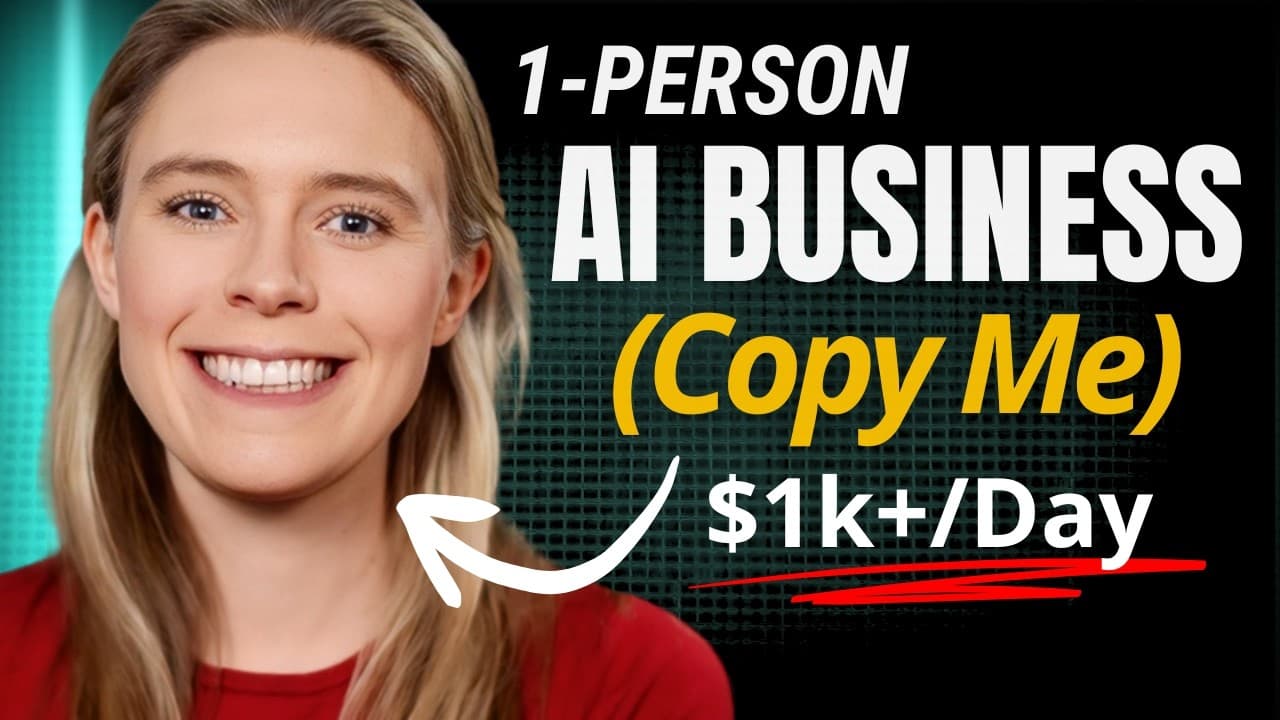
Build a one-person AI business by finding an unmet need, creating a tailored AI workflow, and using an established platform to reach customers. The featured Etsy store uses ChatGPT, Midjourney, Canva, and Printify to sell breed-specific clothing designs, earning its first two sales within two weeks. Read on for practical guidance on choosing an idea, assembling tools, automating fulfillment, and attracting free traffic.
Transcript
So, this might be a bit controversial to say, but here on YouTube, there are a lot of videos from people that talk about supposedly great ways to start a business online using AI. Yet, very few of them actually show how they themselves are using AI tools to make money. But I have I have this case study here on YouTube showing how I scaled a one-per... Read More
Key Insights
- A strong business idea is a solution to an unmet need, not merely a copy of an established seller's products. New stores lack reviews and social proof, so offering something missing from the market gives customers a clearer reason to take a chance on them.
- A market gap is a product, service, or piece of content that people want but cannot currently find in a suitable form. The featured Etsy opportunity was breed-specific clothing, while a separate YouTube opportunity came from making Shopify tutorials more engaging and easier to follow.
- ChatGPT is most useful for idea discovery when it asks structured questions instead of producing generic business ideas. Those questions can draw out products, services, or content that the entrepreneur, friends, or family would value but that does not exist or could be improved.
- An AI workflow is a sequence of tools assigned to different parts of a defined goal. The clothing workflow uses ChatGPT for slogans, Midjourney for images, and Canva for combining those elements into a finished design that can be placed on products.
- Tool selection should account for changing AI capabilities and current user experiences. The creator recommends using Perplexity to search recent discussions and reviews across sources such as Reddit and YouTube, rather than depending entirely on ChatGPT's potentially outdated recommendations for individual tools.
- Budget constraints can be included directly in AI-assisted tool research. Asking Perplexity to find tools with free access, free trials, or free account versions produces a different set of options and helps a low-budget entrepreneur assemble a workable creation process.
- Print-on-demand fulfillment removes the need for the seller to print and ship each order personally. After a customer purchases a marked-up product, the app sends the order to a print shop, which prints the design, packages the item, and ships it to the customer.
- Established platforms can provide free traffic by connecting a new business with audiences they already attract. Etsy fits customized clothing, Amazon KDP fits self-published books, TikTok, Reels, and YouTube Shorts fit mobile videos, and Pinterest can support content related to DIY products.
Install to Summarize YouTube Videos and Get Transcripts
Explore YouTube Video Summarizer or Get YouTube Transcript Extractor
Questions & Answers
Q: How do you build a one-person business with AI?
Start by identifying a product, service, or piece of content that people want but cannot find in a suitable form. Build an AI workflow for creating that solution, automate tasks such as fulfillment where possible, and sell through an established platform that already attracts the intended audience.
Q: How do you find a gap in the market for an AI business?
Ask what product, service, or content you would like but cannot currently find, or what existing option you wish were available in a better form. The featured business found many generic dog shirts on Etsy but relatively few clever designs for specific breeds such as huskies.
Q: Why is copying an existing AI business a weak strategy?
A new store that copies an established seller must compete without reviews or social proof. Customers comparing similar designs are more likely to trust the established store, so solving an overlooked problem gives them a clearer reason to try the new business.
Q: How can ChatGPT help generate an AI business idea?
Ask ChatGPT to interview you with a series of questions that draws ideas from your experiences and preferences. The questions can explore products, services, or content that you, your friends, or your family want but cannot find, rather than asking ChatGPT to supply generic ideas.
Q: What AI workflow was used for the Etsy clothing store?
ChatGPT generates possible slogans, Midjourney creates the artwork, and Canva combines the words and images into finished clothing designs. The designs are then uploaded to products through a print-on-demand service such as Printify and listed on Etsy at a markup.
Q: How does print-on-demand fulfillment work?
The seller uploads a design to a product offered through a print-on-demand app and lists it in an online store at a markup. After a customer orders, the app sends the order to a print shop, which prints the design, packages the product, and ships it to the customer while the seller keeps the difference as profit.
Q: How should you choose AI tools for a business workflow?
Use ChatGPT to outline the workflow stages, then research individual tools separately because AI products and user experiences change rapidly. The creator recommends Perplexity for finding recent discussions and reviews from sources such as Reddit and YouTube, including tools with free access, free trials, or free account versions.
Q: How can a new AI business attract traffic without paid ads?
Choose an established platform that already attracts the people most likely to want the solution. The clothing store uses Etsy, while the examples also include Amazon KDP for self-published books, TikTok, Reels, and YouTube Shorts for mobile videos, and Pinterest for DIY-related content.
Summary & Key Takeaways
-
The business began with a market gap: Etsy offered many generic animal designs but relatively few clever clothes for specific breeds such as huskies. The creator used AI-assisted design and print-on-demand fulfillment to address that gap, reporting two initial sales within two weeks and subsequent passive daily income from the listed products.
-
The creation workflow assigns a distinct role to each tool. ChatGPT generates possible slogans, Midjourney produces the required artwork, and Canva combines the words and images into finished designs. Print-on-demand services such as Printify then place those designs on products and automatically coordinate printing, packaging, and customer shipping after a purchase.
-
The broader process is to identify a problem, design a custom AI workflow, and gain free traffic through an established platform. ChatGPT can structure brainstorming and workflow planning, while Perplexity can research current tool options, reviews, and budget-friendly choices. The selected marketplace should already attract the audience most likely to want the solution.
Read in Other Languages (beta)
Share This Summary 📚
Summarize YouTube Videos and Get Video Transcripts with 1-Click
Try YouTube Summary with ChatGPT & Claude or YouTube Transcript Generator
Explore More Summaries from Wholesale Ted 📚


Summarize YouTube Videos and Get Video Transcripts with 1-Click
Try YouTube Summary with ChatGPT & Claude or YouTube Transcript Generator