How Does George Hotz Build cheapeth.org’s L1-to-L2 Bridge? | Programming, Part 2 | cTH | Science & Technology
TL;DR
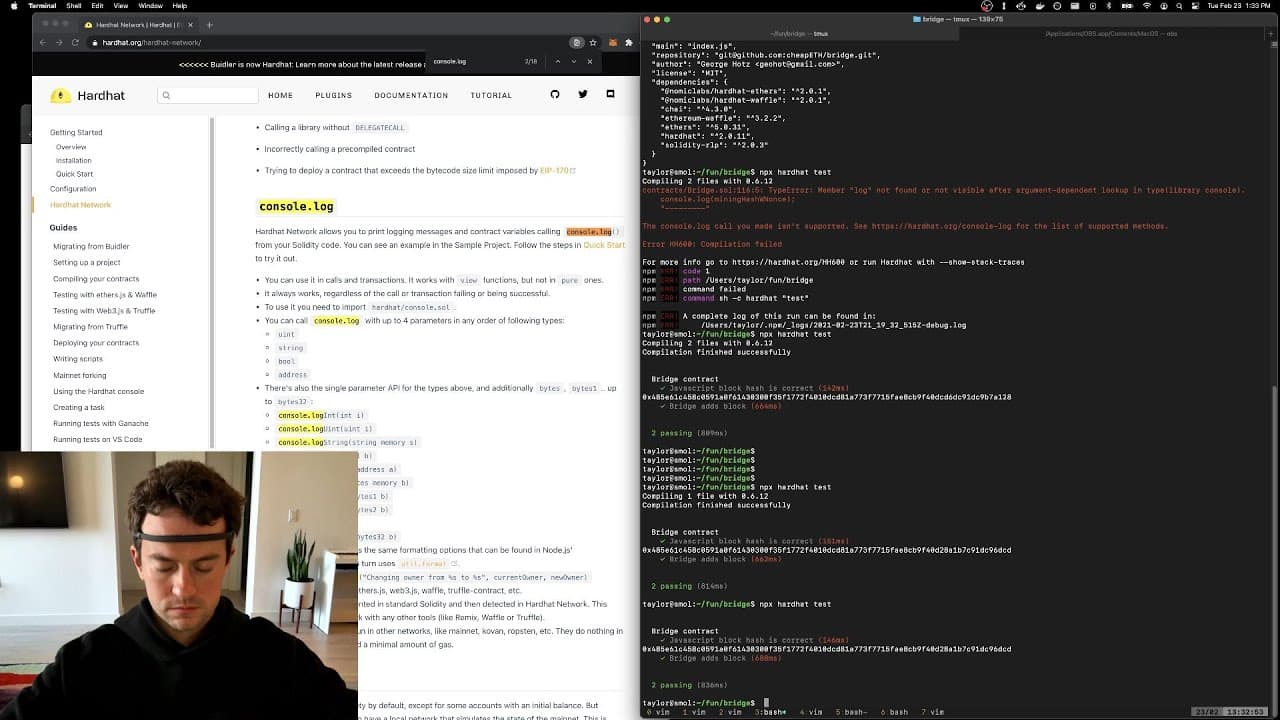
George Hotz connects Ethereum’s L1 main chain with the cheapETH L2 chain by developing the project’s bridge in JavaScript with web3js. This second bridge session also covers a simple pool contract, asynchronous-test race conditions, and a project divided among four cheapETH GitHub repositories. Read on for the bridge’s role, source locations, tooling choices, and unresolved proof-of-stake question.
Transcript
mntndew: yoooooo r4m_nando: ur mom gay Glasul_v2: good evening miloeu: first i4cc8a9morw8kfrh: hello george :) napsareessential: well look who it is falc0n_8: eeyy whats up buklao: Sup sojiroz7: First cordeliamichaelis: Yeahhhhh 0x7331: js buklao: Third SDDSDDSA: Hello there Kultiviert: sup georgy heldinhoshotgun: Sup grabherradam: hi dominant_spec... Read More
Key Insights
- cheapETH is presented as a cheaper alternative chain to Ethereum, and the bridge being built in this session is what moves assets between the L1 main chain and the L2 cheapETH side, which is why it is the central piece of the project.
- The project is split across four repositories linked in the description: cheapETH/bridge for the bridge itself, cheapETH/simplepool for a pool contract, cheapETH/go-ethereum for the forked client, and cheapETH/cheapeth-website for the public site.
- Ethereum gas cost is the stated pain point behind cheapETH. A viewer reports gas fees reached about $700 during a recent price dip, and other chat members ask directly why cheapETH fees can be so much lower.
- The session is written in JavaScript with web3js rather than Python with web3py. One viewer argues web3py is actually less documented than web3js, which is a practical reason to stay on the JavaScript side for blockchain tooling.
- Chat repeatedly suggests Vyper as an alternative contract language, and separately asks whether TypeScript would be a better choice than plain JavaScript, showing the language debate is unsettled among viewers rather than decided by the stream.
- Test asynchrony is flagged as a real hazard: a viewer warns that tests run asynchronously, so race conditions have to be actively avoided rather than assumed away when writing the bridge test suite.
- Ethereum 2.0's move to proof of stake is raised in chat as an open question for cheapETH, since a fork that tracks upstream would have to decide whether to follow the consensus change or stay on its current mechanism.
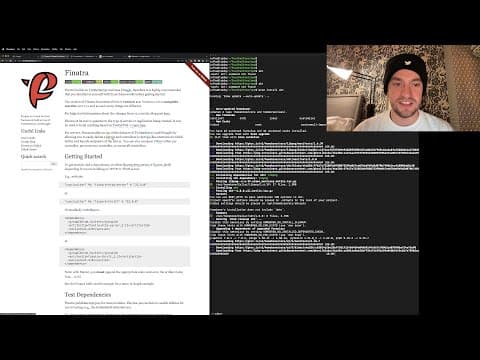
- Hotz's development setup, per the description, is tmux and Vim on a 13-inch MacBook Air with the M1 chip, 8-core CPU, 7-core GPU, and 256GB storage, with his configuration files published at github.com/geohot/configuration.
Install to Summarize YouTube Videos and Get Transcripts
Explore YouTube Video Summarizer or Get YouTube Transcript Extractor
Questions & Answers
Q: How does the cheapETH bridge connect L1 assets to the L2 chain?
The bridge connects the Ethereum L1 main chain to the cheapETH L2 chain so value can move between them. George Hotz continues building that component in this session, titled “cheapeth.org: An L1 to L2 bridge, part 2,” with the bridge maintained separately from the chain client and simple pool contract.
Q: What is cheapETH, and why was it created?
cheapETH is presented as a lower-fee alternative chain to Ethereum. Ethereum transaction cost is the motivating problem: during the stream, a viewer reports that gas fees reached around $700 during a recent price dip.
Q: Who is building the cheapETH L1-to-L2 bridge?
George Hotz builds the cheapETH bridge live during this programming session. The original title identifies the stream as part 2 of his work on the L1-to-L2 bridge at cheapeth.org.
Q: Where is the cheapETH source code located?
The project is divided among four repositories in the cheapETH GitHub organization. They are cheapETH/bridge, cheapETH/simplepool, cheapETH/go-ethereum, and cheapETH/cheapeth-website, covering the bridge, pool contract, forked client, and public website respectively.
Q: Why does the bridge use JavaScript and web3js instead of Python and web3py?
The bridge work shown here uses JavaScript with web3js rather than Python with web3py. A viewer says web3py is less documented than web3js, while chat also discusses TypeScript and Vyper as possible alternatives without settling on a change.
Q: What testing risk is identified for the cheapETH bridge?
A viewer warns that the tests run asynchronously and that developers must avoid race conditions. The transcript presents this as a specific concern to keep in mind while writing the bridge test suite.
Q: Can Hardhat connect to the cheapETH network?
The transcript does not establish that Hardhat successfully connects to cheapETH. A viewer asks about using it and says an attempt during the previous week failed to run contracts, leaving the issue unresolved in the provided material.
Q: Will cheapETH follow Ethereum 2.0 and move to proof of stake?
The stream does not provide a definitive decision. Chat raises Ethereum 2.0’s move to proof of stake and asks whether cheapETH will follow, so the project’s response remains an open question in the source material.
Summary & Key Takeaways
-
The stream, dated 23 Feb 2021 and titled "cheapeth.org : An L1 to L2 bridge, part 2", continues George Hotz's work on connecting a main Ethereum layer to the cheapETH chain. Code is split across four public repositories: bridge, simplepool, go-ethereum, and cheapeth-website, all under the cheapETH GitHub organization.
-
Development happens in JavaScript despite Hotz being better known for Python, and chat reacts throughout with jokes about the language, ES6 versus ES8, var versus const and let, node_modules size, eslint, prettier, and console.log as a debugging tool. Viewers note that everything he types intuitively still works.
-
Chat drives much of the technical discussion: whether hardhat can connect to the cheapETH network, whether web3py is less documented than web3js, whether Vyper would be a better contract language, whether cheapETH has an Etherscan equivalent, and whether cheapETH would follow Ethereum 2.0 to proof of stake.
Read in Other Languages (beta)
Share This Summary 📚
Summarize YouTube Videos and Get Video Transcripts with 1-Click
Try YouTube Summary with ChatGPT & Claude or YouTube Transcript Generator
Explore More Summaries from george hotz archive 📚

Summarize YouTube Videos and Get Video Transcripts with 1-Click
Try YouTube Summary with ChatGPT & Claude or YouTube Transcript Generator