How Did a Vineyard Owner Stop Greg Wallace and the Lakeside Bluffs HOA Cops?

TL;DR
A vineyard owner stops Greg Wallace and the Lakeside Bluffs HOA cops by denying them access, examining their false signs of authority, cooperating with a real sheriff’s officer, and setting a trap for Greg’s ego. The campaign grows from two armed trespassers into drones, hacking attempts, hidden monitoring, and false complaints before a staged drug-bag confrontation ends in handcuffs. Read on to follow how each escalation helps expose the fictional operation.
Transcript
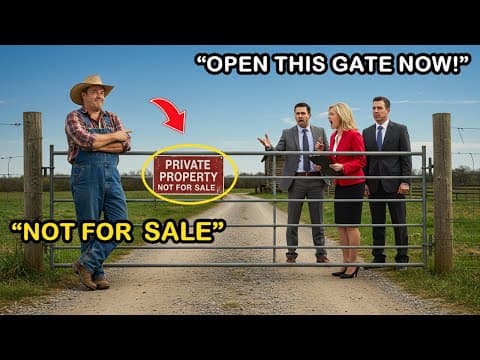
I found two armed HOA cops standing in the middle of my vineyard at sunrise. Problem is, I'm not in their HOA. Not even close. 3 days later, drones appeared over my house. Then came the hacking attempts and a fake sheriff named Greg swearing he had jurisdiction over my land. So, I set a trap, one built specifically for his ego. And when Greg showed... Read More
Key Insights
- Uniform details reveal the performance: The two men carry sidearms and wear matching dark navy clothing, but their equipment undermines their police-like appearance. Cheap holsters, wrongly positioned straps, stiff stances, and HOA patches featuring a pine tree indicate imitation rather than professional law enforcement. The owner reads those inconsistencies before accepting anything they say.
- Proximity does not persuade him: Lakeside Bluffs is about a quarter mile down the road, while the vineyard has never belonged to the HOA. The enforcement men nevertheless treat neighboring land as subject to their safety initiative. The owner refuses their premise immediately, preventing physical presence from becoming implied permission or cooperation.
- The body camera exposes incompetence: One man taps the camera on his vest as though activating an official recording. The device is off-brand, attached backward, and displays a blinking red light showing that it is not recording. That failed gesture strengthens the owner’s conclusion that the men are actors relying on symbols they do not understand.
- Controlled refusal shifts the encounter: The owner does not reveal his former role or enter a prolonged debate about HOA paperwork. He points toward the gravel drive and says, “Out.” When the taller man begins warning him about refusal to cooperate, the owner repeats the command more sharply and steps forward, causing both men to hesitate and leave.
- Experience guides close observation: The owner remembers working around people who lied directly to him and deciding who would reach court or the evening news. That background shapes his attention to stance, equipment, language, hand placement, and intimidation. He assesses behavior instead of being distracted by uniforms, weapons, official-sounding phrases, or forced confidence.
- Greg uses borrowed authority symbols: Greg Wallace arrives in an aging silver Tahoe wearing aviator sunglasses and a jacket carrying a faded sheriff’s department patch. He identifies himself as a community enforcement captain, not a current sheriff. The contrast between his presentation and his actual HOA position supports the owner’s view that Greg is attempting to revive lost authority.
- The real officer receives cooperation: When an actual sheriff’s officer investigates a possible weapons violation, the owner does not treat him like the HOA enforcers. He shows the officer the workshop and its locked, bolted steel gun cabinet. This distinction demonstrates that the owner’s resistance concerns fabricated HOA power, not a blanket refusal to deal with legitimate law enforcement.
- The complaint suggests targeted watching: The steel gun cabinet sits against the workshop’s far wall and can be observed from outside only from a precise viewing angle. That physical detail makes the weapons report appear connected to someone closely monitoring the vineyard. The complaint therefore becomes evidence of escalation rather than an isolated safety concern.
- Escalation crosses several channels: The campaign starts with armed men physically entering the vineyard, then progresses to Greg’s inspection demand. It later includes a weapons complaint, drones over the house, hacking attempts, hidden cameras, intimidation, and illegal monitoring. The changing methods indicate sustained pressure designed to reach beyond the HOA’s own community boundaries.
- Greg’s ego becomes the weakness: The owner decides that uncontrolled aggression would not be the best response to Greg’s conduct. He instead builds a trap specifically around Greg’s need to appear authoritative and correct. Greg’s certainty leads him to arrive shouting and cut open a bag he has already declared to contain drugs.
- The bag forces visible exposure: Greg does more than make another verbal jurisdiction claim. He slices open the supposed drug bag himself, turning his accusation into a physical act within the owner’s planned confrontation. When the trap explodes in his face, Greg’s behavior helps expose the operation and creates the moment when handcuffs finally appear.
- The account is explicitly fictional: The page describes the vineyard conflict as a fictional story inspired by real experiences. It also states that resemblance to actual people, places, or events is coincidental. The HOA cops, Greg Wallace’s campaign, the surveillance network, and the final trap should therefore be read as elements of that fictional narrative.
Install to Summarize YouTube Videos and Get Transcripts
Explore YouTube Video Summarizer or Get YouTube Transcript Extractor
Questions & Answers
Q: Why could the Lakeside Bluffs HOA not inspect the vineyard?
The vineyard had never been part of Lakeside Bluffs, which was located about a quarter mile down the road. The HOA men claimed that bordering the community created secondary jurisdiction for safety reviews. The owner rejected that claim as invented authority and treated their presence as trespassing. He ordered them to leave because proximity did not make his private land part of their HOA.
Q: How did the owner identify the HOA cops as fake?
Their appearance and conduct did not match the authority they were performing. They had cheap holsters, incorrectly positioned straps, stiff movements, decorative Lakeside Bluffs patches, and an off-brand body camera worn backward. Its blinking red light showed that it was not recording despite the wearer’s dramatic attempt to activate it. These details convinced the owner that they were actors rather than trained police officers.
Q: Who was Greg Wallace in the vineyard story?
Greg Wallace introduced himself as the Lakeside Bluffs community enforcement captain. He arrived in an aging silver Tahoe wearing aviator sunglasses and a jacket with a faded sheriff’s department patch. He claimed authority to inspect neighboring property when safety concerns could affect the community. The owner saw his behavior as an attempt to exercise power without presenting legitimate jurisdiction.
Q: How did the owner handle the weapons complaint?
A real sheriff’s officer came to investigate a report about firearms visible on the property. The owner cooperated and showed him the locked steel gun cabinet bolted inside the workshop. Because the cabinet could be seen from outside only at a precise angle, the report suggested close surveillance. That detail helped connect the complaint to the wider intimidation campaign.
Q: How did the conflict escalate after the trespassing?
The campaign began with two armed HOA enforcement men conducting a supposed perimeter inspection among the vines. Greg then appeared and demanded access under his secondary-jurisdiction theory. The pressure expanded into a weapons complaint, drones, hacking attempts, hidden cameras, intimidation, and illegal monitoring. These methods pointed toward a broader scheme to control properties beyond Lakeside Bluffs.
Q: Why did the owner design the trap around Greg’s ego?
The owner recognized that Greg needed to appear powerful, knowledgeable, and in control. His past experience with liars, bullies, manipulators, and interrogations helped him identify that weakness. Instead of reacting impulsively, he created circumstances in which Greg’s certainty would drive his conduct. Greg then exposed himself by arriving angrily and cutting open the bag he insisted held drugs.
Q: What happened during the final drug-bag confrontation?
Greg arrived screaming and treated the planted situation as proof of his accusation. He sliced open a bag that he swore was full of drugs. The trap then exploded in his face, exposing the operation through the action Greg had chosen to take. The confrontation ended with handcuffs finally coming out.
Q: Is the vineyard dispute presented as a true story?
No, the page explicitly identifies the channel’s stories as fictional. It says they are inspired by real experiences, but any resemblance to actual events, people, or places is coincidental. That framing applies to Greg Wallace, the Lakeside Bluffs enforcement unit, the surveillance campaign, and the trap. The events should therefore be understood as a fictional narrative rather than a documented case.
Summary & Key Takeaways
-
Armed strangers among the vines: At sunrise, the owner finds two men in dark navy uniforms standing in his Cabernet vineyard with sidearms, cheap holsters, and Lakeside Bluffs Community Enforcement Unit patches. Lakeside Bluffs sits a quarter mile down the road, and his land has never belonged to its HOA. The men call their visit a routine perimeter inspection under an HOA safety initiative, but he identifies their claimed authority as an act and demands that they leave.
-
Rejecting invented secondary jurisdiction: The taller man argues that because the vineyard borders the community, the HOA possesses secondary jurisdiction for safety reviews. The owner calls the supposed jurisdiction trespassing. He notices the men’s stiff movements, incorrectly positioned holster straps, decorative patches, and a backward off-brand body camera whose blinking red light shows it is not recording. Drawing on past experience with deceptive people, he refuses to participate in their authority game and orders both men off his property.
-
Greg Wallace claims control: Two days after the first encounter, an aging silver Tahoe stops outside the property line and Greg Wallace appears. Greg introduces himself as the Lakeside Bluffs community enforcement captain and wears aviator sunglasses and a jacket with a faded sheriff’s department patch. He claims nearby land can fall under HOA control when community safety is involved. The owner rejects the demand, allows no inspection, and concludes that Greg is performing authority rather than demonstrating legitimate jurisdiction.
-
Pressure expands into surveillance: The dispute moves beyond face-to-face trespassing. A weapons complaint brings a real sheriff’s officer to the vineyard, where the owner cooperates and shows a locked steel gun cabinet bolted inside his workshop. Because the cabinet is visible from outside only at a precise angle, the report suggests close observation. Drones later appear over the house, accompanied by hacking attempts, hidden monitoring, intimidation, and allegations of a broader HOA network seeking control outside Lakeside Bluffs.
-
Building the ego-driven trap: Instead of reacting impulsively, the owner uses his experience with liars, bullies, manipulators, and interrogations to focus on Greg’s ego. He prepares a confrontation that encourages Greg to expose himself through his own certainty and aggression. Greg arrives screaming and slices open a bag he insists contains drugs, only for the trap to explode in his face. The resulting exposure reveals the operation, ends the fake enforcement campaign, and finally brings out real handcuffs.
Read in Other Languages (beta)
Share This Summary 📚
Summarize YouTube Videos and Get Video Transcripts with 1-Click
Try YouTube Summary with ChatGPT & Claude or YouTube Transcript Generator
Explore More Summaries from HOA Case 📚




Summarize YouTube Videos and Get Video Transcripts with 1-Click
Try YouTube Summary with ChatGPT & Claude or YouTube Transcript Generator