Tony Robbins on Limiting Beliefs and Steady Progress
TL;DR
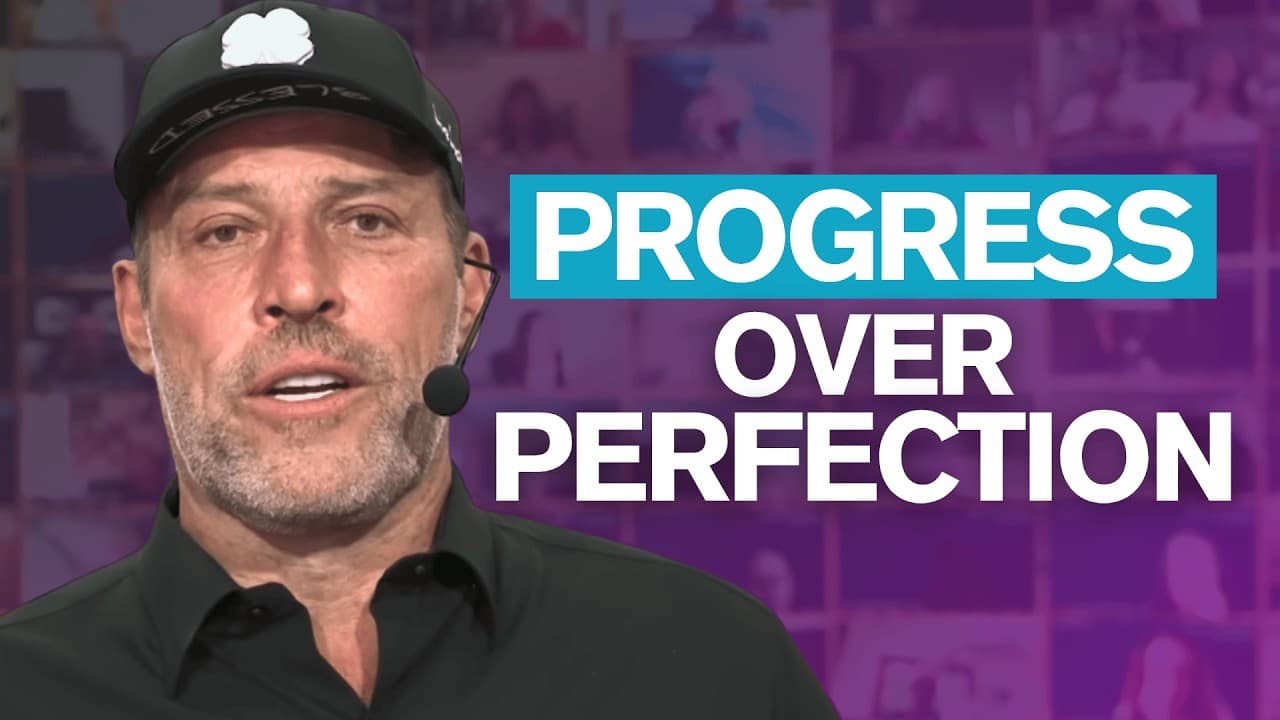
Steady daily progress, not perfection, is what leads to success. Tony Robbins says waiting until you know everything breeds procrastination, and that perfection is the lowest standard on earth. Lasting persistence rests on three beliefs: the treasure is out there, you will find it, and it is worth the effort. Treat a drop after a growth spurt as a normal plateau, not a failure.
Transcript
It doesn't matter how little it is, baby steps. If you keep making progress, you're going to get where you really want to go. It sounds impossible because some of the things in my life today, if you would have told me way back then they'd be possible, I wouldn't have thought so. And so, I've had this blessed life. I've done my part, but it's still ... Read More
Key Insights
- Progress is the single most important driver of success, according to Tony Robbins. Taking small steps every day, even when they do not look like progress, means you learn something each time and eventually reach where you want to go.
- Perfection is the lowest standard on earth because nothing is ever perfect. Waiting for perfection makes people procrastinate, put things off, and gradually lose belief in themselves because they have not followed through on what they planned.
- Actions come from emotions, and emotions come from beliefs. To keep acting with no positive feedback, a person needs a belief system strong enough to produce the emotional drive that keeps them getting up and trying again.
- The three beliefs that sustain long-term persistence are that the treasure is out there, that you will find it by persisting, and that it is worth it for your freedom, family, and time.
- Mel Fischer searched for a Spanish galleon that sank in 1622 for 16 years with no results, raising money with no evidence of success, and eventually found half a billion dollars in gold.
- Thinking you are not ready is the biggest mistake you can make. Robbins's core belief is that when he does not know what to do is exactly when he knows what to do: put himself on the line and learn.
- Growth follows a pattern of rising, hitting a plateau, and dropping slightly. Even after the drop you are higher than where you started, so the dip is a natural part of growth rather than a sign of failure.
- Investing in yourself and learning from people who already have next-level results can save a decade or two of trial and error. Robbins credits seminars and mentors for compressing years of learning into hours.
Install to Summarize YouTube Videos and Get Transcripts
Explore YouTube Video Summarizer or Get YouTube Transcript Extractor
Questions & Answers
Q: Why does waiting for perfection hold you back?
Tony Robbins says perfection is the lowest standard on earth because nothing is ever perfect. Most people do not want to begin until they know everything or have it perfect, and that mindset makes them procrastinate and put things off. Over time they start losing belief in themselves because they have not followed through, which weakens their ability to make progress at all.
Q: What three beliefs do you need to persist toward a big goal?
Robbins draws three beliefs from Mel Fischer's 16-year treasure hunt. First, you must believe the treasure is out there, meaning your idea or small business can provide what you want. Second, you must believe you will find it by persisting until you do. Third, you must believe it is worth it, for your freedom, your family, and owning your own time.
Q: How did Mel Fischer keep going for 16 years without results?
Mel Fischer searched for a Spanish galleon that crashed in 1622 and was supposedly filled with gold. After one, two, and five years he had found nothing, and he had to keep raising money with no evidence he was succeeding. He promised himself that every trip brought him closer to the target, and after 16 years he found half a billion dollars in gold.
Q: How do beliefs, emotions, and actions connect according to Tony Robbins?
Robbins explains that results come from actions, actions come from feelings or emotions, and emotions come from beliefs. To get results you need emotional drive or passion, but that drive depends on what you believe. He asks what someone would have to believe to keep going for 16 years with zero positive feedback, which points to the beliefs underneath persistent action.
Q: What should you do when you hit a plateau after learning something new?
Robbins describes growth as a rapid rise after training, followed by a plateau and a small drop when you go home and apply only part of what you learned. Many people conclude they failed, but you are still higher than where you started. The right response is to retrain yourself and keep going, because each later drop leaves you higher than the one before.
Q: What is the difference between a dabbler, a stressor, and a master?
Robbins says a dabbler should simply leave, and a stressor will stress out of their mind over the natural ups and downs of growing. A master treats the process as learning, accepts that it does not always feel good, and relies on repetition. At a plateau the master does not stress, notices how much progress they have made, and asks what the next level is.
Q: How can investing in yourself save years of trial and error?
Robbins recalls a friend explaining that a seminar lets someone teach you in three or four hours the most important things they learned over 20 years, saving you a decade or two. Even earning $40 a week as a janitor, he invested in himself. He says he got around the best people at different things, learned what they did differently, and saved himself decades of trial and error.
Q: Why is it easier to start a business today than in the past?
Robbins says he and Dean started when mailers and brochures were expensive and not very effective. His first free seminar at the LA Hilton drew seven people instead of the 500 he expected. Today social media, email, and Zoom let people act with much less risk and learn faster, and AI puts knowledge at your fingertips, so steady forward movement makes success far more achievable.
Summary & Key Takeaways
-
Tony Robbins argues that consistent forward movement, however small, is the key to success. He recalls his first free seminar at the LA Hilton, where he expected 500 people and seven showed up, and notes that social media, email, Zoom, and AI now make starting far less risky.
-
Robbins warns that waiting for perfection leads to procrastination and lost self-belief. He describes earning $40 a week as a janitor and hesitating over a $35 seminar, then choosing to invest in himself and keep putting himself in environments where learning would stick.
-
Using Mel Fischer's 16-year search for sunken gold, Robbins explains that persistence requires three beliefs: the treasure exists, you will find it, and it is worth it. He frames growth as rises, plateaus, and small drops, overcome through repetition and learning from those who came before.
Read in Other Languages (beta)
Share This Summary 📚
Summarize YouTube Videos and Get Video Transcripts with 1-Click
Try YouTube Summary with ChatGPT & Claude or YouTube Transcript Generator
Explore More Summaries from Tony Robbins 📚



Summarize YouTube Videos and Get Video Transcripts with 1-Click
Try YouTube Summary with ChatGPT & Claude or YouTube Transcript Generator