Why Did Bitcoin Rise After Weak Payroll Data?
TL;DR
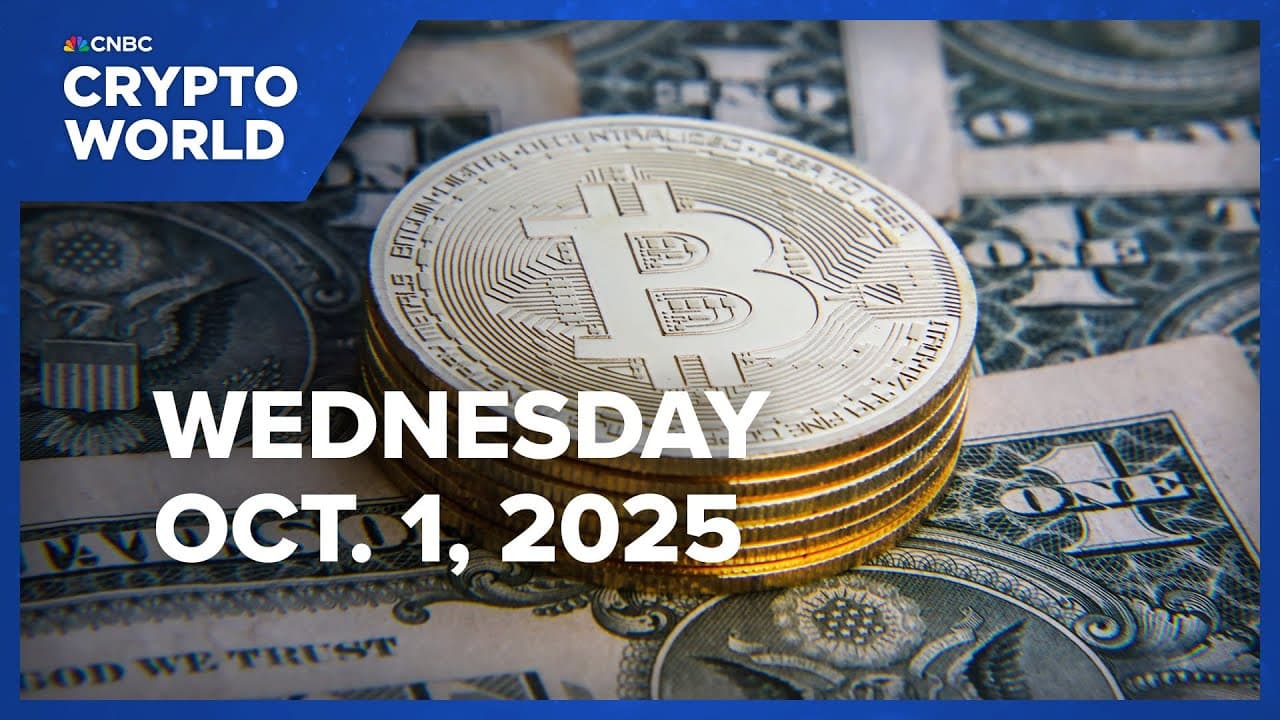
Bitcoin rose nearly 4% to the $17,000 level after ADP reported a seasonally adjusted loss of 32,000 private-sector jobs, increasing expectations for additional interest-rate cuts. The report also covers crypto miners diversifying into AI, SEC guidance for state trust custodians, Roman Storm’s legal challenge, and the Blockchain Association’s defense of the GENIUS Act.
Transcript
Today, Bitcoin and Ether climb after private payroll saw their biggest drop in more than two years. The co-founder of Tornado Cash asks a federal judge to dismiss conspiracy charges. And Summer Mercinger, the CEO of the Blockchain Association, explains a letter sent to lawmakers warning against efforts to roll back the Genius Act. Welcome to CNBC's... Read More
Key Insights
- Bitcoin’s rise followed unexpectedly weak private-employment data, with ADP reporting that companies eliminated a seasonally adjusted 32,000 jobs last month. The labor-market weakness increased investor expectations that the Federal Reserve could deliver additional interest-rate cuts.
- The government shutdown created an economic-data problem because the September jobs report and unemployment figures might not be released during the month if the shutdown continued through Friday. The Federal Reserve closely watches unemployment when making rate decisions.
- Major cryptocurrencies moved higher alongside Bitcoin, with Ether gaining 5% and Solana’s SOL token rising about 7% as of noon Eastern. Bitcoin climbed nearly 4% to the $17,000 level following the ADP private-payroll release.
- Bitcoin miners with AI or high-performance computing exposure performed better than many pure mining businesses. JPMorgan reported that 12 of 14 tracked mining companies outperformed Bitcoin by about 6% in September, while aggregate miner market capitalization grew faster than Bitcoin for a sixth consecutive month.
- Mining economics remained difficult despite stronger equity performance, as JPMorgan said miners experienced a 17% month-over-month decline in gross profit per exahash. Shrinking mining rewards and growing AI demand have encouraged some companies to diversify toward high-performance computing operations.
- The SEC’s no-action position allows advisers to use certain state trust companies for crypto custody when listed criteria are satisfied. Commissioner Hester Peirce emphasized that the guidance has a limited scope covering client crypto assets and regulated-fund investments subject to applicable custody provisions.
- Roman Storm’s lawyers argued that prosecutors presented no evidence showing he took steps to help bad actors use Tornado Cash. They claimed the evidence failed to establish essential elements of three conspiracy counts, while the Justice Department alleged the protocol handled criminal proceeds connected to the Lazarus Group.
- The Blockchain Association’s central position is that the GENIUS Act provides settled legal clarity and should proceed to implementation. Summer Mersinger argued that reopening the law would create uncertainty, delay stablecoin innovation, and risk pushing digital-asset activity outside the United States.
Install to Summarize YouTube Videos and Get Transcripts
Explore YouTube Video Summarizer or Get YouTube Transcript Extractor
Questions & Answers
Q: Why did Bitcoin rise after the ADP payroll report?
Bitcoin rose because ADP reported weaker-than-expected private employment conditions, which increased investor expectations for additional interest-rate cuts. Companies shed a seasonally adjusted 32,000 jobs last month, and August’s figure was revised from a reported gain of 54,000 to a loss of 3,000. As of noon Eastern, Bitcoin had climbed nearly 4% to the $17,000 level.
Q: How did the government shutdown affect economic data?
The government shutdown threatened to interrupt the publication of important federal labor statistics. If it continued through Friday, the September jobs report and unemployment data from the Bureau of Labor Statistics would not be released during the month. That gap matters because the Federal Reserve closely monitors unemployment when making rate decisions, and its next meeting was scheduled for the end of the month.
Q: How did Ether and Solana perform alongside Bitcoin?
Ether and Solana’s SOL token both advanced as major cryptocurrencies moved into positive territory following the private-payroll report. As of noon Eastern, Ether was up 5%, while SOL had gained about 7%. Their increases accompanied Bitcoin’s nearly 4% climb as investors interpreted the weak employment numbers as raising the likelihood of more interest-rate cuts.
Q: Why are Bitcoin mining companies expanding into AI?
Bitcoin mining companies are expanding into AI and high-performance computing as mining rewards shrink and demand for AI infrastructure grows. JPMorgan found that miners with high-performance computing exposure, or plans to develop such operations, helped drive stronger sector valuations. The shift also comes as miners face pressure on their core business, including a 17% monthly decline in gross profit per exahash.
Q: What did JPMorgan report about Bitcoin mining stocks?
JPMorgan reported that 12 of the 14 mining companies it tracked outperformed Bitcoin by about 6% in September. Companies with high-performance computing exposure, such as Cipher Mining, and businesses exploring such operations, including Bitfarms and CleanSpark, led the group. Aggregate market capitalization among the tracked miners also grew faster than Bitcoin for the sixth consecutive month, driven by AI diversification.
Q: What does the SEC guidance mean for crypto custody?
The SEC’s Division of Investment Management said it would not recommend enforcement action when advisers use certain state trust companies as crypto custodians, provided the arrangements satisfy listed criteria. The response followed a request from law firms seeking assurance for registered advisers and regulated funds. Commissioner Hester Peirce noted that the position only covers assets and investments governed by the relevant custody provisions.
Q: Why does the Blockchain Association oppose reopening the GENIUS Act?
The Blockchain Association opposes reopening the GENIUS Act because it views the law as settled and believes implementation should move forward. Summer Mersinger said the law gives innovators legal certainty to issue dollar-backed stablecoins in the United States. Reconsidering its provisions would remove that certainty, delay industry activity, weaken domestic innovation, and potentially push businesses and ideas outside the country.
Q: What is the dispute over stablecoin rewards and bank deposits?
Bank advocacy groups argue that stablecoin rewards could encourage customers to withdraw funds from community banks, while crypto firms want consumers to keep receiving those rewards. Summer Mersinger said there was no evidence that stablecoin growth caused a corresponding decline in bank deposits. She characterized the dispute as competition because some stablecoin holdings offer around 4% rewards while many savings accounts offer less than 1%.
Summary & Key Takeaways
-
Major cryptocurrencies advanced after ADP reported that companies shed a seasonally adjusted 32,000 jobs last month, the largest private-payroll decline in two and a half years. The weak reading increased expectations for further rate cuts, while the government shutdown threatened to delay federal employment and unemployment reports used by the Federal Reserve.
-
Several industry developments accompanied the market rally. JPMorgan found that Bitcoin miners with high-performance computing or AI exposure generally performed better than pure mining businesses. The SEC provided limited no-action guidance for certain state trust crypto custodians, while Tornado Cash co-founder Roman Storm sought acquittal on conspiracy charges related to the mixer.
-
Blockchain Association CEO Summer Mersinger argued that lawmakers should implement the GENIUS Act without reopening it. She disputed claims that stablecoin rewards drain community-bank deposits, characterized the conflict as a competitive issue, and said legal certainty supports dollar-backed stablecoin issuance and domestic innovation. She also expressed optimism about bipartisan market-structure legislation.
Read in Other Languages (beta)
Share This Summary 📚
Summarize YouTube Videos and Get Video Transcripts with 1-Click
Try YouTube Summary with ChatGPT & Claude or YouTube Transcript Generator
Explore More Summaries from CNBC Television 📚





Summarize YouTube Videos and Get Video Transcripts with 1-Click
Try YouTube Summary with ChatGPT & Claude or YouTube Transcript Generator