How to Practice a Powerful Self-Love Guided Meditation
TL;DR
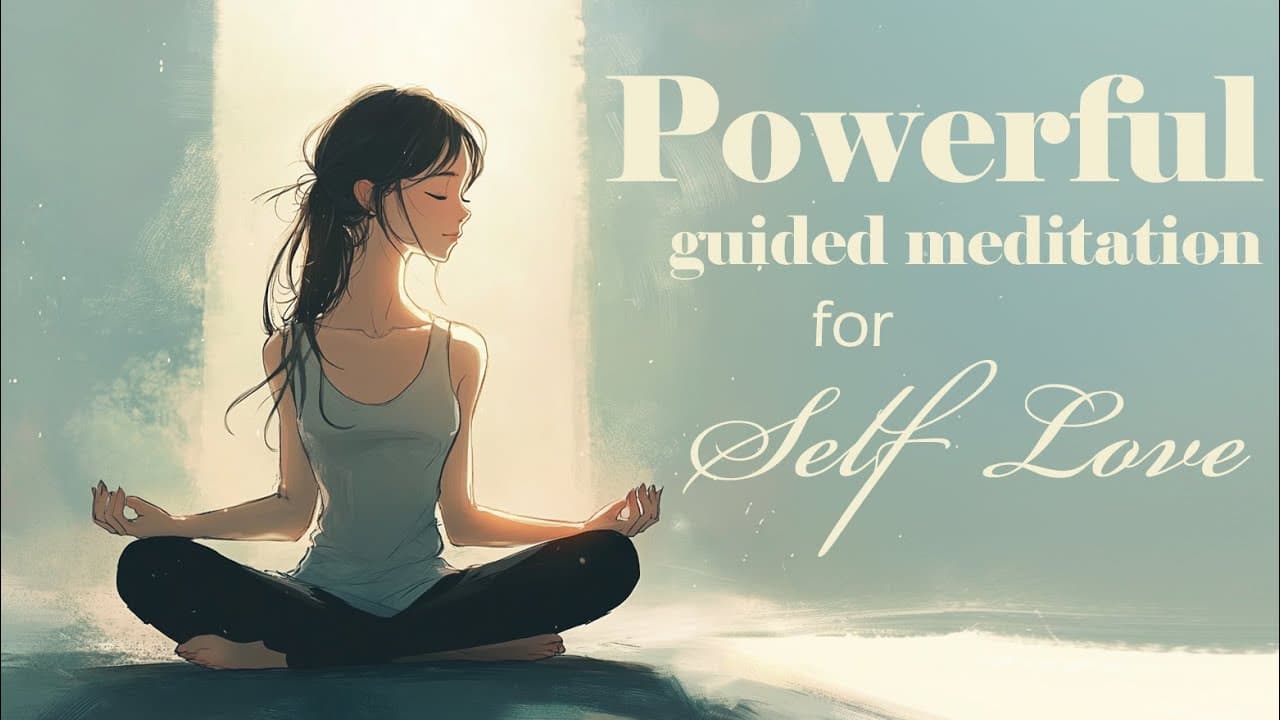
Practice this self-love meditation by settling into a comfortable position, gently focusing on your breath and body, and visualizing pink light filled with unconditional love. Notice sensations in your nostrils, belly, and even your toes, allowing thoughts and feelings to flow without resistance. Gratitude and self-guided choices help your muscles relax before you slowly return, so read on for the complete sequence.
Transcript
allow yourself to get into whatever position makes you feel happiest right now softly closing your eyes if that feels right to you and guiding your own awareness to drift in now pulling it all inward to your own inner experience of breath and body you may observe thoughts and feelings too however the more you do that the more you choose again to ju... Read More
Key Insights
- The starting instruction is to allow yourself into whatever position makes you feel happiest right now, rather than a prescribed posture. Closing the eyes is offered as optional, framed as something to do only if it feels right to you.
- The primary role throughout the practice is to allow the experience of breath and body to feel as good and satisfying as they can to you personally. That personal standard, not an external technique, is what the session treats as correct.
- Thoughts and feelings are expected to appear during the practice. The instruction is not to suppress them: the more you observe them, the more you simply choose again to focus on breath and body while letting thoughts and feelings flow.
- Breath exploration is directed to three specific places: sensations in the nostrils, sensations in the belly, and the breath circulating all the way down to the toes. The last one is acknowledged to require a bit of imagination.
- There is no right or wrong in whether you can feel the breath reach your toes. The guidance is explicit that you should trust your own experience either way, which removes any pass or fail element from the visualization.
- Body awareness is built by sensing the body as a whole and letting it sink down with the weight of gravity as feels best to you. The breath is kept so soft and gentle rather than deep or forced.
- Gratitude is used as a relaxation trigger. Saying thank you to yourself, or simply tuning into the feeling of gratitude for yourself and your body, is paired with inviting the muscles to relax even more on the next in breath.
- The pink light visualization has a specific sequence: on the in breath, breathe in a column of pink light from above the head; on the exhale, watch that column flow down over you until you sense yourself encapsulated in it, basking in the brightest frequency of the color.
- The love described in the meditation is presented as a feeling rather than a person or an object. It asks nothing in return, it just is even when all else is lost, and it is characterized as ancient and always existing.
- The practice is called only a semi-guided one because you are doing so much of your own inner guidance. The exit is equally self paced: stay with the feeling as long as you wish, ask your body what it wants, listen, and open your eyes very slowly only when ready.
Install to Summarize YouTube Videos and Get Transcripts
Explore YouTube Video Summarizer or Get YouTube Transcript Extractor
Questions & Answers
Q: How do you practice this powerful self-love guided meditation?
Choose whatever position feels happiest, close your eyes if that feels right, and bring your awareness to your breath and body. Explore the breath, express gratitude toward yourself, and imagine pink light flowing from above your head until it surrounds you. Rest in the feeling of love, then finish slowly when your body feels ready.
Q: What should you do when thoughts or feelings arise during meditation?
Observe thoughts and feelings without treating them as mistakes or trying to suppress them. Let them flow while choosing to return your attention to your breath and body. Your central task is to make that inner experience feel as satisfying as it can to you personally.
Q: How do you explore your breath during this meditation?
Begin by noticing sensations in your nostrils and belly. Then get curious about whether you can imagine the breath circulating all the way down to your toes. There is no right or wrong experience, and the breath should remain soft and gentle.
Q: How does gratitude support relaxation in this practice?
You may say thank you to yourself if that feels right, or simply connect with gratitude for yourself and your body. While feeling that gratitude, invite your muscles to relax further on your next in breath. The practice connects appreciation for the body with physical release.
Q: How do you perform the pink-light visualization?
On an in breath, imagine breathing in a column of pink light from above your head. As you exhale, watch it flow down over you until you feel encapsulated by the light. Imagine yourself resting and basking in its brightest frequency while allowing your body and heart to feel its energy.
Q: What does the pink light represent in this self-love meditation?
Every particle of the imagined pink light contains what the meditation calls the greatest love that has ever existed. This love asks for nothing in return and is presented as ancient and always existing. The guidance emphasizes feeling this energy rather than thinking about it.
Q: Why is this described as a semi-guided meditation?
It is semi-guided because you provide much of your own inner direction. You decide which position feels happiest, whether to close your eyes, how to experience the visualization, and how long to remain with the feeling. The practice asks you to trust your experience because there is no right or wrong.
Q: How should you end this self-love meditation?
Stay with the feeling for as long as you wish. When you are ready to finish, take your time, ask your body what it wants, and listen. Open your eyes very slowly only when you feel ready.
Summary & Key Takeaways
-
The practice opens with permission to choose any position that feels happiest, softly closing the eyes if that feels right, and drawing awareness inward to the personal experience of breath and body. Thoughts and feelings may appear, and the instruction is to let them flow while returning attention to breath and body.
-
Breath exploration comes next: tuning into sensations in the nostrils and the belly, then getting curious about whether the breath can be felt circulating all the way down to the toes. That last part takes imagination, and the guidance says to trust your own experience because there is no right or wrong.
-
The visualization asks you to breathe in a column of pink light from above the head, then watch it flow down on the exhale until you are encapsulated in it. Within every particle of that light is described the greatest love that has ever existed, a love that asks nothing in return.
-
The session is called semi-guided because the practitioner supplies much of their own inner direction. Gratitude toward yourself and your body invites the muscles to relax further, and the closing instruction is to stay as long as you wish, ask the body what it wants, listen, and open the eyes slowly.
Read in Other Languages (beta)
Share This Summary 📚
Summarize YouTube Videos and Get Video Transcripts with 1-Click
Try YouTube Summary with ChatGPT & Claude or YouTube Transcript Generator
Explore More Summaries from Great Meditation 📚
Summarize YouTube Videos and Get Video Transcripts with 1-Click
Try YouTube Summary with ChatGPT & Claude or YouTube Transcript Generator