Why Was a Driver Arrested After Sobriety Tests?
TL;DR
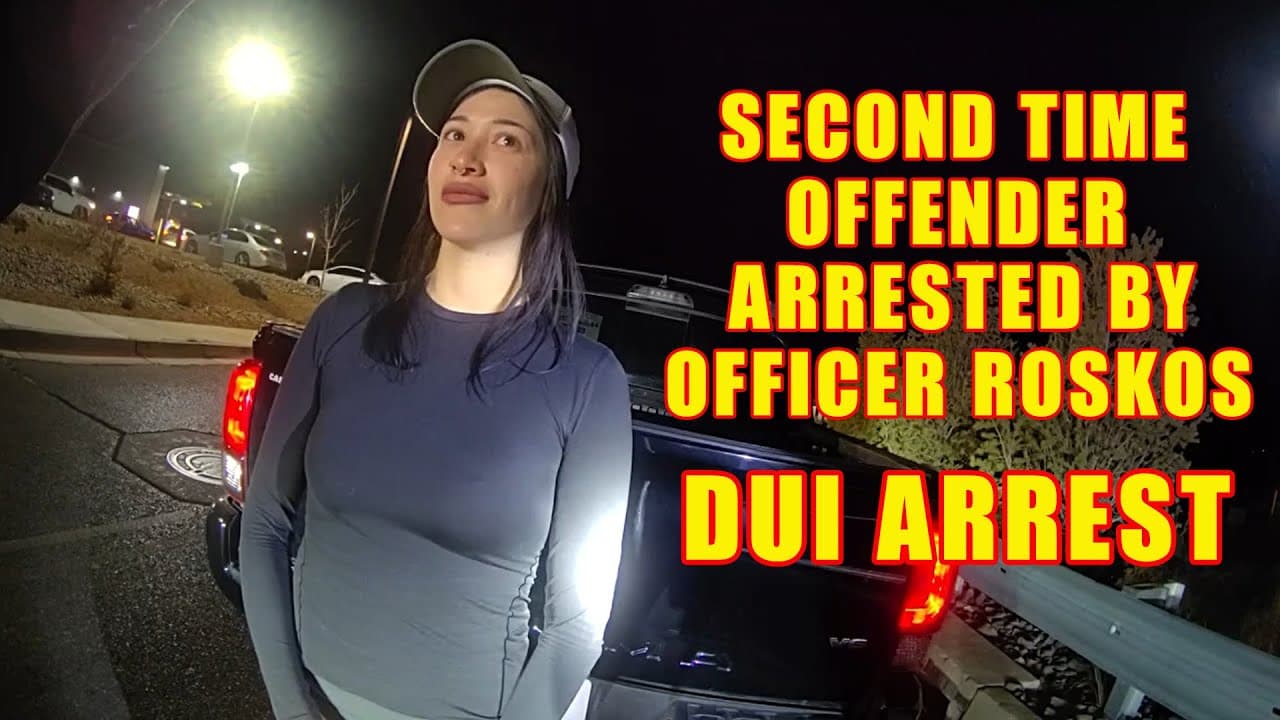
Police arrested the driver for DWI after observing weaving, slow and delayed responses, eye-test indicators, and serious difficulty with counting and alphabet tasks. She denied drinking that day, maintained that she completed the tests successfully, and later refused an evidential breath test. Her case remained open, and she is presumed innocent unless proven guilty.
Transcript
Oh, my name's Officer Barcel with the Rear Wrench Police Department. The reason I stopped you is you seem to be swerving in the lanes and stuff. You kind of went over the white line like twice there. No, you familiar with this area? I felt it when like you were telling me that and I was like, "Oh, cuz I was just crying right now. I just happened to... Read More
Key Insights
- The traffic stop began after an officer observed the vehicle traveling slowly, weaving within its lane, and crossing the white line more than once. These driving observations prompted the officer to investigate whether the driver could safely continue operating the vehicle.
- The driver denied consuming alcohol that day and said her last drink was the previous day. She explained that she had been crying, felt very sad, and was experiencing a difficult emotional period following a recent crash and the purchase of a replacement vehicle.
- The initial officer reported that the driver's responses seemed slow and delayed. Because the officer said his sense of smell was impaired after having COVID, he relied on the driving pattern, conversation, and assistance from an officer assigned to DWI enforcement.
- The field investigation included an eye examination, a walk-and-turn exercise, a one-leg stand, backward counting, and a partial-alphabet task. The officer described these as divided-attention tests intended to require the driver to follow instructions while performing physical or mental tasks.
- The driver completed nine heel-to-toe steps in each direction during the walk-and-turn exercise. She also raised one foot and counted while balancing, although her counting format changed from the specific sequence demonstrated by the investigating officer.
- The clearest difficulties appeared during the mental tasks. The driver lost her place while counting backward from 72 to 51, repeated numbers, reversed direction, forgot the stopping point, and struggled to recite the alphabet from I through Q.
- The arrest decision reflected the combined investigation rather than a single test result. The investigating officer cited the eye examination and the driver's performance across the exercises, then told her that the tasks were difficult because he believed she was impaired.
- The case remained unresolved when the description was written. The driver was arrested for DWI and reportedly refused an evidential breath test at the station, but an arrest is not a finding of guilt, and she is presumed innocent until proven guilty in court.
Install to Summarize YouTube Videos and Get Transcripts
Explore YouTube Video Summarizer or Get YouTube Transcript Extractor
Questions & Answers
Q: Why did police stop the driver in Rio Rancho?
Police stopped the driver after an officer observed her vehicle moving about five miles under the speed limit, weaving slowly, and crossing the white line with the tires on the right side. The officer also described an earlier lane deviation where the road allowed passing. With no vehicle directly ahead explaining the movement, he initiated the traffic stop to investigate.
Q: What explanation did the driver give for her driving?
The driver said she had been crying and was going through an emotional and difficult period. She mentioned a recent car accident, bruising on her back, and having purchased the vehicle about two days earlier. She said she was taking her friend home before going home herself, and she denied consuming alcohol on the day of the stop.
Q: What field sobriety tests did the officer administer?
The DWI enforcement officer examined the driver's eyes and administered a walk-and-turn exercise, a one-leg stand, backward counting from 72 to 51, and an alphabet exercise beginning at I and ending at Q. Before the physical exercises, he asked about injuries, contact lenses, traumatic brain injuries, prescription medications, footwear, and anything in her mouth.
Q: How did the driver perform on the walk-and-turn test?
The driver was instructed to take nine heel-to-toe steps along an imagined straight line, pivot using short steps, and return with nine more heel-to-toe steps while looking at her feet and counting aloud. She counted nine steps in each direction. The transcript does not provide a complete itemized scoring of every possible observation made during that exercise.
Q: Why did the counting and alphabet tasks concern the officer?
The driver repeatedly lost her sequence while counting backward from 72 to 51. She repeated numbers, moved in the wrong direction, forgot the instructed stopping point, and continued beyond it. During the alphabet task from I to Q, she mixed letters, restarted, and repeated letter groups. The officer treated these difficulties as evidence supporting his impairment assessment.
Q: Did the driver admit to drinking alcohol before driving?
No. The driver denied drinking alcohol that day and said the last time she had consumed something alcoholic was possibly the previous day. She also denied street-drug use when questioned. The transcript records no admission of alcohol consumption before driving, although the officers continued the investigation based on her driving, responses, eye examination, and test performance.
Q: Why was the driver arrested even though she believed she passed?
The driver focused on completing the instructed steps and argued that she had done what the officer requested. The officer evaluated more than task completion, including the reported weaving, slow and delayed responses, observations from the eye examination, and difficulties with divided-attention and mental exercises. Based on the combined observations, he arrested her for DWI despite her disagreement.
Q: What happened after the field sobriety investigation?
After telling the driver that he believed the tests showed impairment, the DWI enforcement officer placed her under arrest for DWI. According to the description, she later refused to submit to an evidential breath test at the police station. Her case was still open when described, and the allegations had not produced a final determination of guilt.
Summary & Key Takeaways
-
On February 27, 2025, a Rio Rancho police officer stopped a 30-year-old driver after observing slow travel, weaving, and repeated crossings of a white line. The driver said she was taking her friend home, denied drinking that day, and attributed her driving and emotional state to sadness and recent difficulties.
-
A DWI enforcement officer examined the driver's eyes and administered several divided-attention exercises. She completed the walk-and-turn and one-leg stand, but had substantial difficulty counting backward from 72 to 51 and reciting the alphabet from I through Q. The officer repeatedly described the results as signs of impairment.
-
The driver insisted that she followed the physical-test instructions and did not accept the officer's conclusion that she was impaired. She was arrested for DWI and later refused an evidential breath test at the police station. The case was still open, so the allegations had not been resolved in court.
Read in Other Languages (beta)
Share This Summary 📚
Summarize YouTube Videos and Get Video Transcripts with 1-Click
Try YouTube Summary with ChatGPT & Claude or YouTube Transcript Generator
Explore More Summaries from California Bodycam 📚




Summarize YouTube Videos and Get Video Transcripts with 1-Click
Try YouTube Summary with ChatGPT & Claude or YouTube Transcript Generator