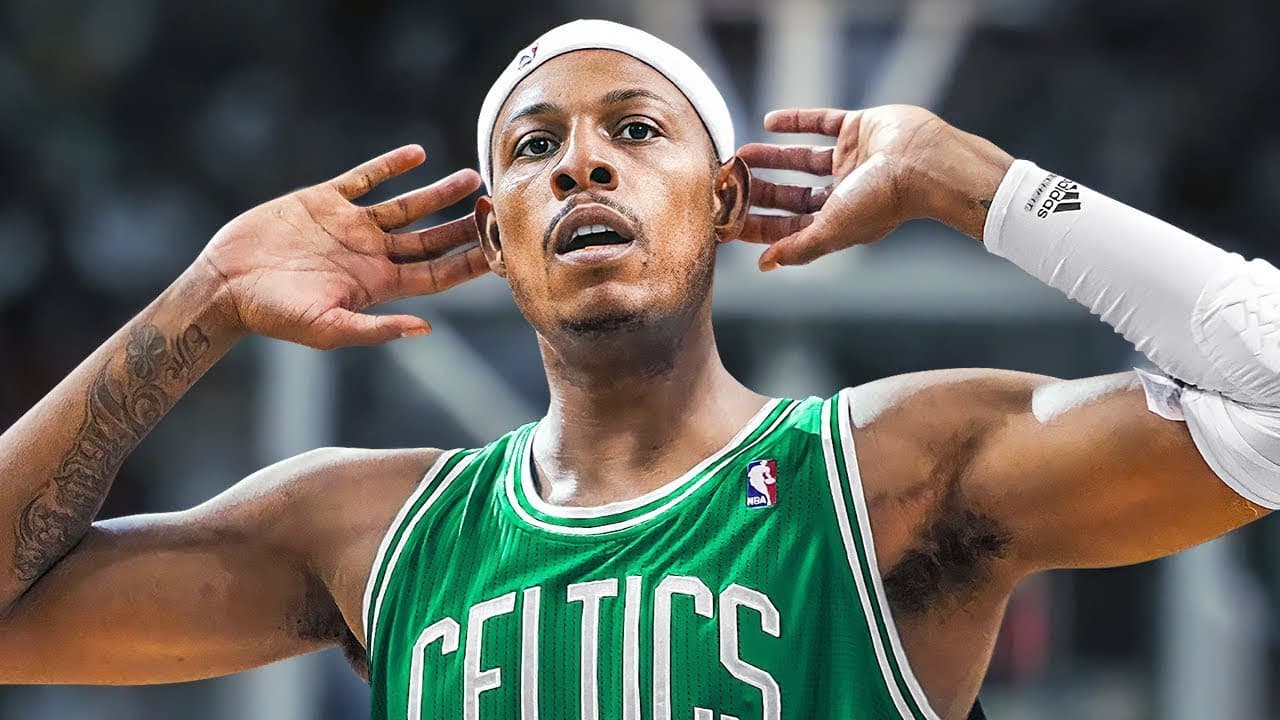
How Did Paul Pierce Become an NBA Superstar?
TL;DR
Paul Pierce became an elite scorer through footwork, strength, shooting, patience, and an ability to create separation without exceptional speed. After surviving 11 stab wounds, he returned for the season opener five weeks later, developed a reputation for toughness and clutch scoring, and eventually reached the NBA Finals after Boston surrounded him with Kevin Garnett, Ray Allen, and a strong supporting cast.
Transcript
Paul Pierce was the basketball truth and LeBron's greatest rival ears may not know how to use Instagram live but he knows how to get Buckets on anybody Pierce is considered one of the most clutch players ever but where does he rank among the greatest small forwards of all time and how good was he actually all peers grew up in Inglewood California o... Read More
Key Insights
- Paul Pierce developed from a five-foot-eight, overlooked high school player into a six-foot-seven elite prospect after a major growth spurt. As a junior, he led Inglewood to a 30-win season and division title, then became California's number one high school prospect as a senior.
- Pierce's college career established him as a leading NBA prospect. Kansas won 97 of 108 games during his three seasons, and he entered the 1998 draft after averaging 20 points as a junior, winning Big 12 MVP, and becoming a consensus first-team All-American.
- Pierce's draft position became a lasting source of motivation. Boston selected him 10th in 1998 after several prominent players went ahead of him, and he reportedly named those players while taking extra practice shots to remind himself that he wanted to prove he was the best.
- Pierce's resilience was demonstrated after he survived 11 stab wounds to his back and neck in September 2000. One wound stopped three millimeters from his heart, yet he returned for the season opener five weeks later and became the only Celtic to play every game that year.
- Pierce's scoring success was based on skill, pace, footwork, and physical leverage rather than exceptional speed. His strong shoulders helped him create separation by absorbing contact, while his patient approach allowed him to respond effectively to different defensive strategies.
- Pierce earned the nickname "The Truth" after scoring 42 points on 13-of-19 shooting against the defending champion Lakers in March 2001. Shaquille O'Neal praised him after the game, giving Pierce the nickname that remained associated with him throughout his career.
- Pierce established his clutch reputation during the 2002 playoffs. He averaged 30 points in Boston's first-round victory over Philadelphia, then scored 19 of his 28 points in the fourth quarter as the Celtics erased a 21-point deficit against New Jersey.
- Boston's roster transformation changed the direction of Pierce's career. After years of losing, the arrivals of Kevin Garnett and Ray Allen helped the Celtics improve from 24 wins in 2007 to 66 wins in 2008, the biggest turnaround described in the transcript.
Install to Summarize YouTube Videos and Get Transcripts
Explore YouTube Video Summarizer or Get YouTube Transcript Extractor
Questions & Answers
Q: How did Paul Pierce become a top basketball prospect?
Paul Pierce improved through persistent early-morning shooting and dribbling work despite initially being short, heavy, and overlooked. He was cut from his high school's varsity team during his first two years, but a major growth spurt changed his trajectory. As a junior, he led Inglewood to 30 wins and a division title. By his senior year, he had reached six foot seven and become California's number one prospect.
Q: Why did Paul Pierce choose to play college basketball at Kansas?
Paul Pierce chose Kansas because he wanted to play for Roy Williams, the legendary coach who had recruited him most persistently and believed Pierce could lead the Jayhawks to an NCAA championship. Kansas did not win that championship during Pierce's three seasons, but the team won 97 of 108 games. Pierce later averaged 20 points as a junior, won Big 12 MVP, and earned consensus first-team All-American recognition.
Q: Why did the Boston Celtics draft Paul Pierce?
The Celtics did not initially plan to draft Paul Pierce because they expected the talented small forward to be selected before their turn. Pierce, who had grown up disliking Boston, had not worked out for the franchise either. When he remained available with the 10th selection in the 1998 draft, Boston chose him. He quickly rewarded that decision by scoring at least 19 points in 10 of his first 11 games.
Q: How quickly did Paul Pierce recover from being stabbed?
Paul Pierce survived an attack in September 2000 in which at least three people jumped him, struck him with a champagne bottle, and stabbed him 11 times in the back and neck. One wound stopped three millimeters from his heart. Although doctors warned him against raising his arms for a period, he resumed shooting and played in the season opener five weeks later. He then appeared in every Celtics game that season.
Q: What made Paul Pierce difficult for defenders to stop?
Paul Pierce combined refined footwork, strong shoulders, shooting ability, patience, and basketball knowledge. He was not portrayed as exceptionally fast or overwhelmingly explosive, but he played at his preferred pace and found ways to score against different defensive approaches. His shoulders were especially important because he could lower one into a nearby defender, create contact, and generate separation even when quicker opponents stayed close with their feet.
Q: How did Paul Pierce get the nickname The Truth?
Paul Pierce received the nickname after a March 13, 2001 game against the defending champion Los Angeles Lakers. He scored 42 points while making 13 of 19 shots, producing such an impressive performance that Shaquille O'Neal praised him afterward and called him "The Truth." The nickname fit Pierce's growing reputation as a fearless scorer who could produce against elite opponents despite Boston's broader struggles.
Q: Why was Paul Pierce considered a clutch playoff performer?
Paul Pierce repeatedly delivered in high-pressure postseason situations. During the 2002 playoffs, he averaged 30 points in Boston's first-round victory over Allen Iverson and Philadelphia. In Game 3 of the conference finals against New Jersey, he scored 19 of his 28 points during the fourth quarter. That surge helped Boston overcome a 21-point deficit and complete one of the major playoff comebacks described in the transcript.
Q: How did Boston build a contender around Paul Pierce?
Boston general manager Danny Ainge transformed the roster by bringing Kevin Garnett and Ray Allen to play beside Paul Pierce. The Celtics also had point guard Rajon Rondo, center Kendrick Perkins, and role players including Tony Allen, James Posey, and Sam Cassell. With that group, Boston improved from 24 wins and the league's second-worst record in 2007 to an NBA-best 66 wins in 2008, eventually reaching the NBA Finals.
Summary & Key Takeaways
-
Paul Pierce progressed from an overlooked, undersized high school player into California's top prospect after a major growth spurt. He attended Kansas, where the Jayhawks won 97 of 108 games during his three seasons, then entered the 1998 NBA draft after averaging 20 points and earning major collegiate honors as a junior.
-
Boston selected Pierce with the 10th pick despite neither side initially expecting the partnership. He immediately emerged as a productive scorer, but weak supporting casts limited the Celtics. His career nearly ended after he was stabbed 11 times in 2000, yet he returned five weeks later and played every game that season.
-
Pierce relied on footwork, strong shoulders, controlled pacing, shooting, and basketball knowledge rather than exceptional athleticism. He delivered major playoff performances but endured years of inconsistent team results. Boston's additions of Kevin Garnett and Ray Allen transformed a 24-win team into a 66-win contender that reached the 2008 NBA Finals.
Read in Other Languages (beta)
Share This Summary 📚
Summarize YouTube Videos and Get Video Transcripts with 1-Click
Try YouTube Summary with ChatGPT & Claude or YouTube Transcript Generator
Explore More Summaries from Nonstop 📚


Summarize YouTube Videos and Get Video Transcripts with 1-Click
Try YouTube Summary with ChatGPT & Claude or YouTube Transcript Generator