How to Build a $5K Monthly Workshop Business
TL;DR
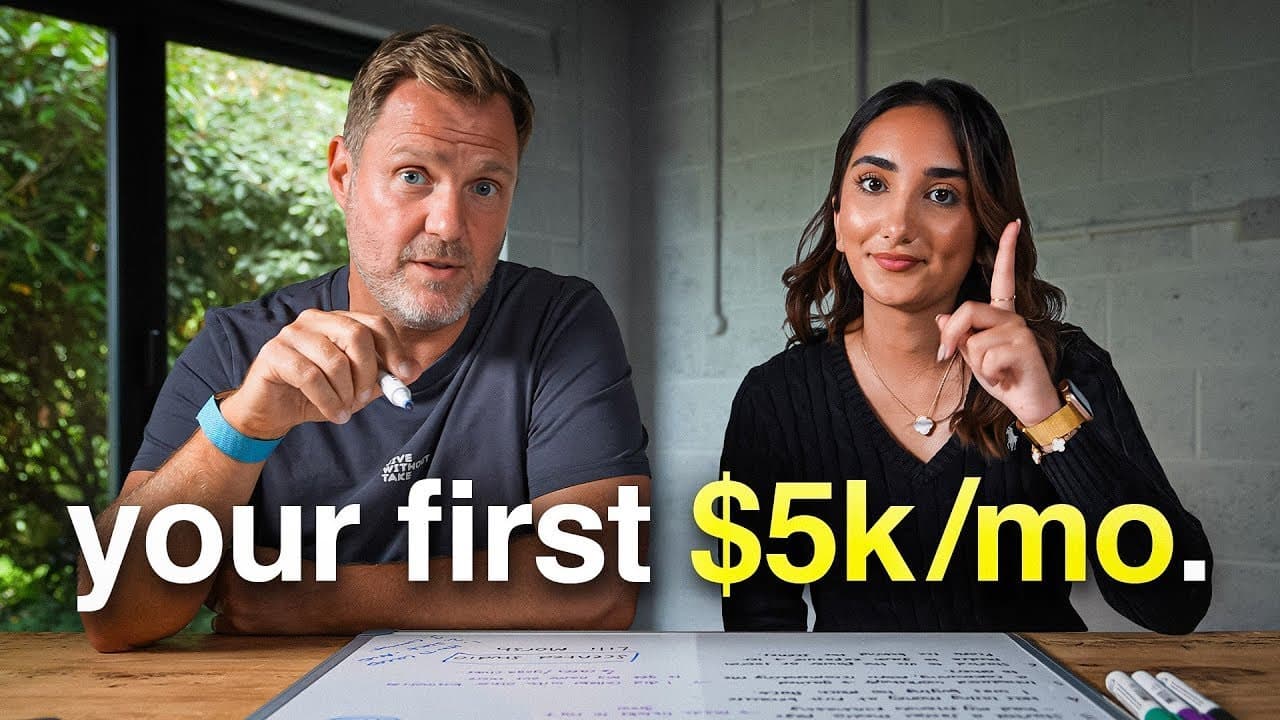
Start with one paying customer, test demand through low-cost pop-ups, and shift resources toward the offer producing the strongest margins. Lily turned a candle-making hobby into a profitable wellness business by approaching venues, controlling inventory, using social media authentically, and making workshops her primary offer after discovering they generated profit margins above 85%.
Transcript
This is Lily, an entrepreneur who owns a $5,000 per month business working entirely for herself. And my name is Simon Squib, and I've been in business for over 35 years, with my most recent startup being valued at over $50 million. In this episode, Lily is going to explain the exact steps she took to quit her 9to-5 and start her dream business. And... Read More
Key Insights
- A first paying customer is enough to begin testing a business idea. Lily listed her first candle on a basic Shopify website for £5.99 after her mother offered to buy it, then gained additional early orders from friends.
- Low-cost pop-ups can validate retail demand without committing to a permanent shop. Lily contacted numerous local venues, secured space at her gym, and generated £850 in sales during a single day at her first pop-up.
- Direct outreach can overcome assumptions about being too inexperienced. Although Lily doubted Westfield would accept a brand that had operated for only about six months, she sent an email, received an available date, and ran a multi-day pop-up.
- Revenue growth does not automatically create profitability. Lily was selling products but continued losing money because excitement led her to purchase more inventory than she could sell, consuming savings and producing a cash flow problem.
- Smaller inventory orders reduce early-stage financial risk. The recommended approach is to sell a manageable quantity first, understand how those units sell, and increase subsequent orders only after demand and the sales process have been demonstrated.
- New formats can reveal a stronger business model. Lily accepted a cafe collaborator's suggestion to teach candle making, researched what she needed, bought the supplies, and discovered through a small workshop that she enjoyed teaching customers.
- Workshops became the core offer because they produced profit margins above 85%. Recognizing that services were more profitable than physical candle sales allowed Lily to focus her effort on workshops and operate them from a studio behind her home.
- Scale should reflect the founder's desired role and lifestyle. Simon warns that expansion can produce an organization the founder does not personally want, so Lily must define why she wants several physical wellness centers before pursuing them.
Install to Summarize YouTube Videos and Get Transcripts
Explore YouTube Video Summarizer or Get YouTube Transcript Extractor
Questions & Answers
Q: How did Lily start her candle and wellness business?
Lily began after buying a candle-making kit from Amazon while experiencing a difficult period and wanting an activity for herself. Her mother offered to purchase the first candle, so Lily created a Shopify website without prior experience and listed it for £5.99. After her mother and a friend bought candles, Lily ordered wholesale stock, posted the products online, and gradually developed the idea into a business.
Q: How can one customer help validate a business idea?
One paying customer turns an idea into a real commercial test and creates a reason to establish a basic sales process. Lily's mother became her first customer, leading Lily to create a Shopify store and complete an actual transaction. A friend then purchased another candle. Those early orders provided enough evidence and momentum for Lily to obtain more stock, promote the products, and seek additional customers.
Q: How did pop-up stores help Lily grow her business?
Pop-up stores allowed Lily to meet customers and test physical retail without immediately taking on a permanent location. She messaged numerous venues and asked her local gym for permission to sell there. The gym agreed, and the resulting pop-up generated £850 in one day. She later operated at Westfield for several days, where she gained customers and expanded her social media following.
Q: Why did Lily have cash flow problems despite making sales?
Lily experienced cash flow pressure because she bought more candle inventory than she could sell. Her excitement caused the original £400 budget discussed in the conversation to expand beyond control, consuming the savings she had available. The experience showed that incoming revenue is not the same as profit and that purchasing stock too quickly can weaken a growing business even when customers like the product.
Q: How should a small product business manage inventory risk?
A small product business can reduce inventory risk by ordering a limited quantity, selling those units, and learning which sales methods work before increasing the order. Simon contrasts this staged approach with buying a very large quantity before demand is proven. Lily adopted the lesson after excessive stock purchases depleted her savings, and she began reducing how much inventory she bought.
Q: Why did Lily shift from selling candles to running workshops?
Lily shifted her focus after a cafe collaborator suggested that she teach a candle-making workshop. Although she had never run one, she researched the required materials, purchased the supplies, and taught an initial group of about seven people. She enjoyed teaching and discovered that workshops generated profit margins above 85%, making them a more attractive source of income than relying primarily on physical product sales.
Q: What social media strategy did Lily use for her brand?
Lily's stated social media approach was to be herself rather than present a manufactured persona. She maintained social media activity alongside pop-up stores, and her Westfield appearance helped her gain more followers. Her broader mindset also supported outreach: she treated rejection as redirection, continued approaching possible venues and opportunities, and did not allow the possibility of rejection to prevent her from asking.
Q: How should an entrepreneur decide what scaling means?
An entrepreneur should define the desired outcome before expanding because scale can create a company that does not fit the founder's preferred role or lifestyle. Lily initially described scaling as opening about five wellness centers in major cities where people could create candles and connect. Simon challenged her to clarify why she wanted five locations, noting that operating several physical centers could become overwhelming and should be tied to a clear personal purpose.
Summary & Key Takeaways
-
Lily began making candles during a difficult period after buying a candle kit from Amazon. When her mother offered to purchase one, Lily created a Shopify website and listed the candle for £5.99. Friends then became customers, prompting her to place a wholesale stock order and begin posting her products online.
-
She expanded beyond online sales by contacting local venues and asking to operate temporary stores. A pop-up at her gym generated £850 in one day, while a later Westfield opportunity brought customers and social media followers. Although sales grew, excessive inventory purchases consumed her savings and created a cash flow problem.
-
A collaboration with a cafe introduced Lily to candle-making workshops. After researching the required supplies and teaching an initial group of about seven people, she discovered that workshops produced profit margins above 85%. She made them the business focus, established a garden studio, hired assistance, and began paying herself a healthy salary.
Read in Other Languages (beta)
Share This Summary 📚
Summarize YouTube Videos and Get Video Transcripts with 1-Click
Try YouTube Summary with ChatGPT & Claude or YouTube Transcript Generator
Explore More Summaries from Simon Squibb 📚


Summarize YouTube Videos and Get Video Transcripts with 1-Click
Try YouTube Summary with ChatGPT & Claude or YouTube Transcript Generator