Hydration of Alkenes Reaction Mechanism
TL;DR
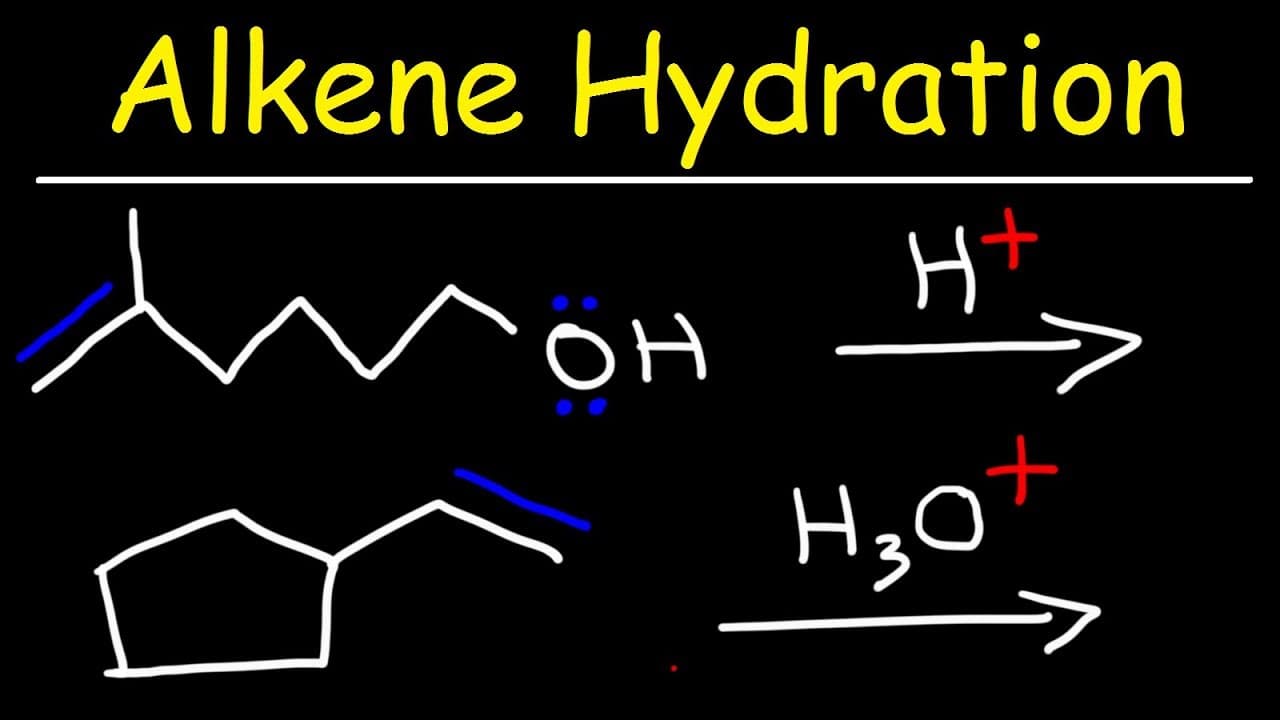
Adding an acidic solution to an alkene results in the formation of alcohols through a mechanism involving carbocation intermediates.
Transcript
in this video we're going to go over the acid catalyzed hydration of alkanes so let's start with one butane and we're going to react it with an acidic solution of water so basically a mixture of water and sulfuric acid now when you combine water and sulfuric acid sulfuric acid is a very strong acid and so it's going to protonate the water molecule ... Read More
Key Insights
- 💁 Acid catalyzed hydration of alkenes involves the addition of an acidic solution to an alkene, resulting in the formation of alcohols.
- 💁 The reaction proceeds through the formation of a carbocation intermediate.
- ❓ The reaction is reversible and can be influenced by the concentration of acid and the temperature.
- 😋 The presence of a tertiary carbon adjacent to a carbocation can lead to rearrangement reactions, such as ring expansion or hydride shifts.
- 🤲 Adding an alcohol to an alkene under acidic conditions can result in the formation of ethers.
- 🖐️ Temperature plays a crucial role in determining the direction of the reaction.
- 🥺 Concentrated sulfuric acid can lead to the dehydration of alcohols, forming alkenes.
Install to Summarize YouTube Videos and Get Transcripts
Explore YouTube Video Summarizer or Get YouTube Transcript Extractor
Questions & Answers
Q: How does acid catalyzed hydration of alkenes proceed?
Acid catalyzed hydration involves the addition of an acidic solution to an alkene, where the acidic solution protonates water to form H3O+ and the bisulfate ion. The double bond of the alkene then attacks a hydrogen atom, forming a carbocation. Water adds to the carbocation, followed by the removal of a hydrogen atom, resulting in the formation of an alcohol.
Q: Is the acid catalyzed hydration of alkenes reversible?
Yes, the reaction is reversible. The direction of the reaction depends on the concentration of the acid and the temperature. Increasing the concentration of water shifts the reaction towards the alcohol formation, while decreasing the concentration of water favors the formation of the alkene.
Q: How does temperature affect the acid catalyzed hydration of alkenes?
Higher temperatures favor E1 dehydration, converting the alcohol back into an alkene. Lower temperatures, on the other hand, favor addition reactions, promoting the formation of alcohols.
Q: Can the addition of an alcohol to an alkene under acidic conditions result in the formation of ethers?
Yes, when an alcohol is added to an alkene under acidic conditions, the double bond reacts with an acidic hydrogen, resulting in a carbocation. The alcohol can then attack the carbocation, leading to the formation of an ether.
Summary & Key Takeaways
-
Acid catalyzed hydration of alkenes involves the addition of an acidic solution to an alkene, resulting in the formation of alcohols.
-
The reaction proceeds through the formation of a carbocation intermediate, followed by the addition of water to the carbocation.
-
The reaction is reversible and can be influenced by the concentration of acid and the temperature.
Read in Other Languages (beta)
Share This Summary 📚
Summarize YouTube Videos and Get Video Transcripts with 1-Click
Try YouTube Summary with ChatGPT & Claude or YouTube Transcript Generator
Explore More Summaries from The Organic Chemistry Tutor 📚




Summarize YouTube Videos and Get Video Transcripts with 1-Click
Try YouTube Summary with ChatGPT & Claude or YouTube Transcript Generator