What Mark Zuckerberg Thinks About The Social Dilemma
TL;DR
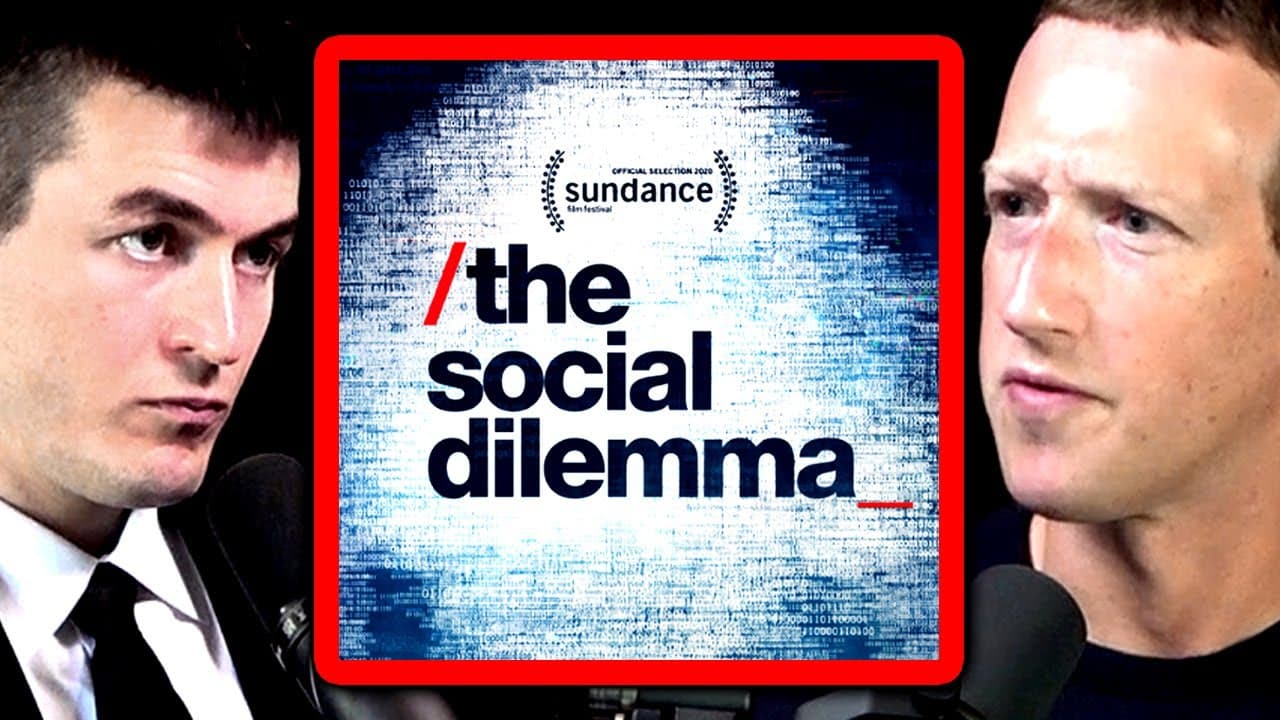
Mark Zuckerberg counters the claims made by 'The Social Dilemma,' arguing that social media isn't the main cause of societal polarization. He emphasizes a long-term vision focused on user value and well-being, and cites research showing that social media use may actually reduce negative feelings between groups.
Transcript
social dilemma is a popular documentary that raised concerns about the effects of social media and society you responded with a point-by-point rebuttal titled what the social dilemma gets wrong people should read that i would say the key point they make is because social media is funded by ads algorithms want to maximize attention and engagement an... Read More
Key Insights
- 🫠 Social media platforms prioritize attention and engagement to generate revenue from ads.
- 👤 Design decisions focus on long-term user value and positive experiences rather than manipulating users' emotions.
- 👥 Academic studies show that social media use is correlated with lower polarization, and it can decrease affective polarization, negative feelings towards different groups.
- 🎙️ More videos with Mark Zuckerberg:
Install to Summarize YouTube Videos and Get Transcripts
Explore YouTube Video Summarizer or Get YouTube Transcript Extractor
Questions & Answers
Q: Do social media companies have an incentive to make people use their services more?
Yes, as a business, they want users to engage more, but their long-term focus is on providing value and improving the user experience rather than solely maximizing short-term profits.
Q: Does promoting provocative content guarantee higher engagement?
While it may grab attention in the short term, long-term user satisfaction is a priority. The goal is to create products that make people feel good, not angry, and that foster connection, not division.
Q: Are issues with ads unique to social media platforms?
No, other business models like subscription-based news can also have pitfalls, such as incentivizing partisan content. Ads enable free access to platforms, allowing more people to connect and have a voice.
Q: Is social media responsible for increasing polarization?
Research suggests that social media is not a significant driver of polarization. Other factors, like partisan politics and media, have a more substantial influence on polarization trends across countries.
Summary & Key Takeaways
-
The documentary argues that social media platforms are funded by ads, so algorithms prioritize attention and engagement, often by promoting divisive content.
-
The response acknowledges the concern but disagrees with the assumptions made in the documentary and highlights the long-term focus and user experience considerations in building the platform.
-
The response also points out that issues raised in the documentary are not exclusive to ad-funded models and highlights research suggesting social media is not a major driver of polarization.
Read in Other Languages (beta)
Share This Summary 📚
Summarize YouTube Videos and Get Video Transcripts with 1-Click
Try YouTube Summary with ChatGPT & Claude or YouTube Transcript Generator
Explore More Summaries from Lex Clips 📚


Summarize YouTube Videos and Get Video Transcripts with 1-Click
Try YouTube Summary with ChatGPT & Claude or YouTube Transcript Generator