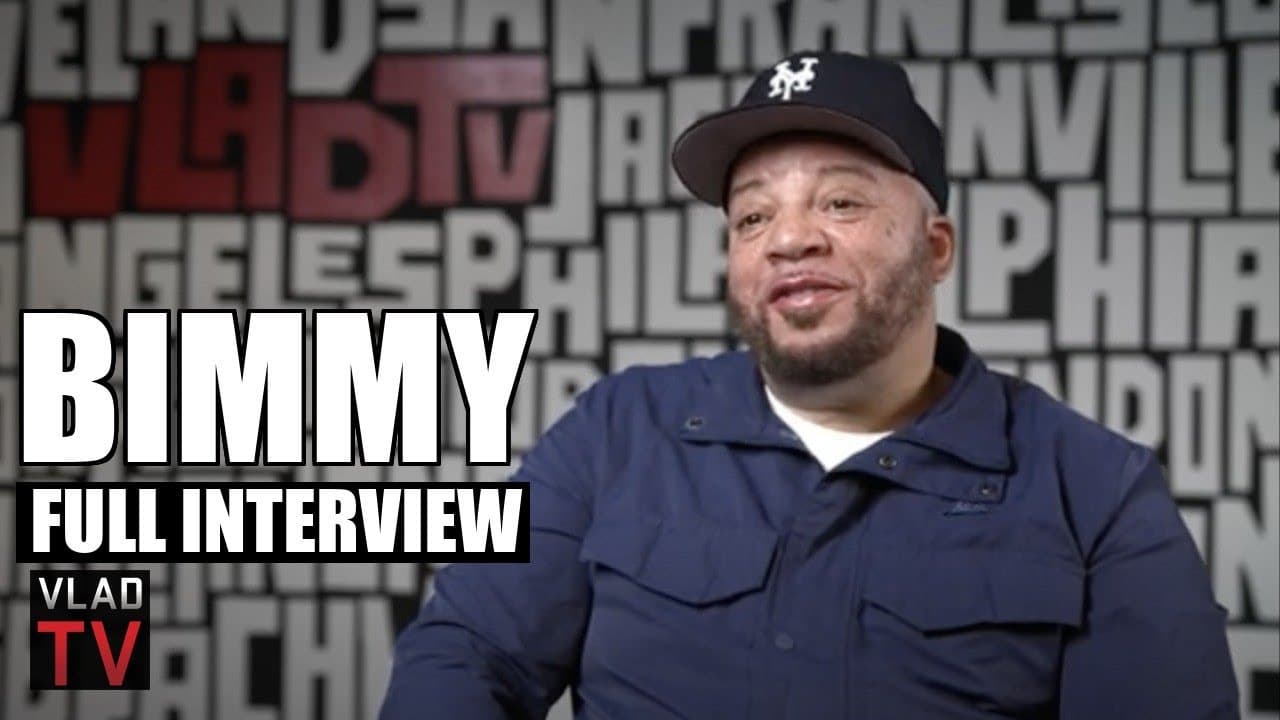
How Did Bimmy Go From Queens Streets to Def Jam?
TL;DR
Bimmy moved from selling heroin on Queens streets at age 16 to working as an A&R representative at Def Jam after prison and a Christian conversion. His account connects that transformation to a childhood marked by poverty, an absent father, family exposure to drugs, lost basketball opportunities, and the efforts of his mother, siblings, and extended family.
Transcript
all right here we go we have a queen street legend in the building bimmy welcome to vlad tv yeah a long time right black long time we haven't seen each other in a while too it's been oh man the girls video the wacka flock of grills video we have perfections right i think so the strip club and queen club yeah it was a strip club there we go there we... Read More
Key Insights
- Bimmy was raised between the south and north sides of Queens in a family of eight children. His father left when he was four, so his mother and maternal relatives provided the care, discipline, and emotional support that shaped his childhood.
- Bimmy's father was a former military parachutist who became deeply involved in street activity. Bimmy says conflicts involving mob suppliers, unpaid money, and drug use forced his father to leave the family and eventually relocate to South Carolina.
- Heroin affected Bimmy's family before he entered the drug trade himself. His sister accidentally overdosed after finding heroin that their father described as baby powder, and Bimmy also recalls that his father and multiple uncles developed serious heroin problems.
- Bimmy felt little grief at his father's funeral because he barely knew him. He viewed his mother as both mother and father, regarded his uncles as paternal figures, and associated his maternal grandmother with the nurturing love he felt was missing elsewhere.
- Basketball initially gave Bimmy structure and recognition during high school. When poor grades made him ineligible to play, he stopped attending consistently, remained in ninth grade for four years, and increasingly spent time around neighborhood drug dealers.
- Bimmy began selling heroin at age 16 after initially being refused by dealers who wanted him to continue playing basketball. Once someone supplied him, he worked on the same corner every day, used his first earnings to buy a radio, and made dealing his life.
- Bimmy says crack reached Queens in 1985, after a period when freebase was present. He recalls that police initially did not recognize crack and sometimes crushed it underfoot because they were searching for powder rather than the unfamiliar substance.
- Bimmy's life changed after his street involvement and imprisonment. The description states that he became a Christian and moved into the music business, eventually working as an A&R representative at Def Jam with artists including Method Man, Slick Rick, and LL Cool J.
Install to Summarize YouTube Videos and Get Transcripts
Explore YouTube Video Summarizer or Get YouTube Transcript Extractor
Questions & Answers
Q: How did Bimmy's childhood in Queens shape his life?
Bimmy grew up between the south and north sides of Queens as one of eight children. His father left when he was four, and his mother worked three jobs while raising the family. He relied on his mother, maternal grandmother, and uncles for stability, while poverty, neighborhood drug activity, and family exposure to heroin shaped his understanding of street life.
Q: What happened to Bimmy's father?
Bimmy says his father was a former military parachutist who became heavily involved in street activity and later used the drugs he handled. After owing money to mob suppliers, he left the family and eventually lived in a trailer in South Carolina. According to the account Bimmy received, the trailer was burned with his father inside, resulting in a closed-casket funeral.
Q: Why did Bimmy feel little grief at his father's funeral?
Bimmy says he did not feel much at the funeral because his father had left when he was four and had not formed a meaningful relationship with him. His mother filled both parental roles, while his uncles acted as father figures. He contrasted that emotional distance with the grief he later felt for his maternal grandmother, who had consistently nurtured him.
Q: How did heroin affect Bimmy's family?
Heroin was present in Bimmy's family before he sold it himself. He says his father and several uncles used the drug. His older sister once encountered a pile of heroin that their father told her was baby powder, sniffed it, and overdosed. Bimmy also says his father sometimes concealed drug packages beneath his daughter's clothing to avoid detection.
Q: Why did Bimmy start selling drugs as a teenager?
Bimmy began drifting toward the streets after poor grades made him ineligible for high school basketball. Without the structure of the team, he skipped school, remained in ninth grade for four years, and spent more time near local dealers. Although some refused to supply him because they wanted him to keep playing, another person eventually gave him heroin to sell at age 16.
Q: What role did basketball play in Bimmy's early life?
Basketball gave Bimmy a constructive focus and made established neighborhood figures interested in supporting him. One respected man refused to let dealers give him drugs, drove him to games, and encouraged his athletic path. When academic failure removed Bimmy from the team, that structure disappeared, and he began avoiding school and moving more deeply into street activity.
Q: How did Bimmy describe the arrival of crack in Queens?
Bimmy distinguishes the early heroin trade from the later arrival of crack, saying crack reached Queens in 1985 and that freebase preceded it. He recalls that officers initially did not understand what crack was. Because they were looking for powder, they sometimes threw the unfamiliar substance onto the ground and stepped on it rather than treating it as evidence.
Q: How did Bimmy transition from the streets to the music industry?
According to the description, Bimmy's path changed after street dealing, association with the drug lord known as Supreme, and imprisonment. Following his release, he became a Christian and entered the music business. He eventually worked as an A&R representative at Def Jam and worked with artists including Method Man, Slick Rick, and LL Cool J, while expressing regret about selling drugs.
Summary & Key Takeaways
-
Bimmy grew up between the north and south sides of Queens as one of eight children. His father left when Bimmy was four, while his mother worked three jobs and became both parents to the family. He instead regarded his maternal uncles as father figures and remained especially close to his maternal grandmother.
-
His family history was deeply affected by heroin. Bimmy says his father sold and used drugs, accumulated a debt to mob suppliers, fled to South Carolina, and later died when his trailer was burned. His older sister also accidentally overdosed after encountering heroin that their father had claimed was baby powder.
-
After failing academically and losing eligibility for high school basketball, Bimmy drifted toward neighborhood drug dealers. He began selling heroin at 16, later became associated with Supreme, and served time in prison. According to the description, he subsequently became a Christian and transitioned into music as a Def Jam A&R representative.
Read in Other Languages (beta)
Share This Summary 📚
Summarize YouTube Videos and Get Video Transcripts with 1-Click
Try YouTube Summary with ChatGPT & Claude or YouTube Transcript Generator
Explore More Summaries from djvlad 📚




Summarize YouTube Videos and Get Video Transcripts with 1-Click
Try YouTube Summary with ChatGPT & Claude or YouTube Transcript Generator