What Role Does Bioelectricity Play in Organ Development?
TL;DR
Bioelectricity is crucial in the development and shape of organisms, acting as an underlying language that cells use to communicate and coordinate their actions. By manipulating electrical signals, researchers can induce the growth of complex organs and alter developmental patterns, paving the way for breakthroughs in regenerative medicine, including treatments for birth defects and cancer.
Transcript
Chris Anderson: Mike, welcome. It's good to see you. I'm excited for this conversation. Michael Levin: Thank you so much. I'm so happy to be here. CA: So, most of us have this mental model in biology that DNA is a property of every living thing, that it is kind of the software that builds the hardware of our body. That's how a lot of us think about... Read More
Key Insights
- 🧬 DNA is not the sole determinant of an organism's development; there is an additional layer of bioelectricity that controls the formation of body structures.
- 🧫 Cells communicate with each other using electrical signals, which play a crucial role in the development and regeneration of organisms.
- 🧠 This bioelectric network functions similarly to the neural networks in the brain, processing information and storing pattern memories.
- ⚡️ Understanding the bioelectric code can lead to significant advancements in regenerative medicine, allowing for the targeted repair and regeneration of organs and tissues.
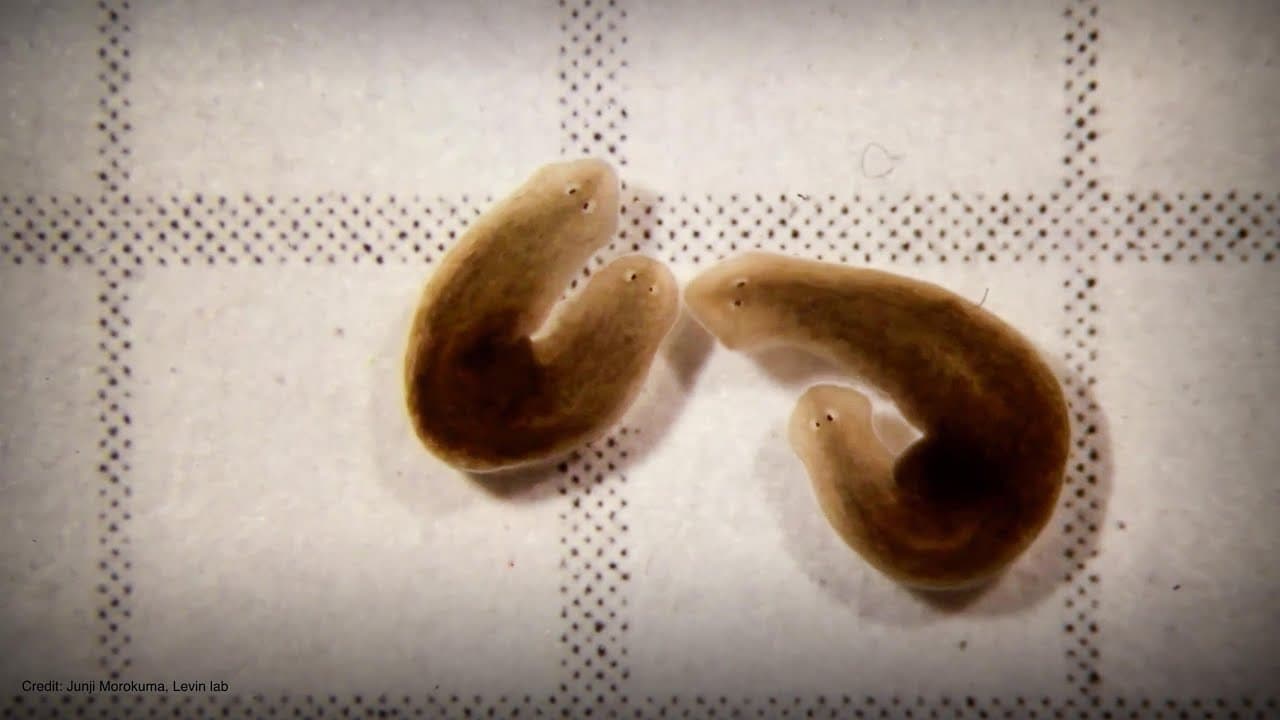
- 🔬 Manipulating electrical gradients in organisms can result in altered anatomical outcomes, such as two-headed flatworms or extra limbs in tadpoles.
- 🧪 By harnessing bioelectricity, scientists have created novel life-forms, called xenobots, that can exhibit behaviors and navigate their environment.
- 💉 Cracking the bioelectric code has immense implications for medicine, offering potential solutions for birth defects, degenerative diseases, aging, traumatic injuries, and cancer.
- 🤖 The principles of bioelectricity and cellular intelligence have the potential to inspire new approaches in machine learning and artificial intelligence, beyond just brain-based systems.
- 🎙️ More videos with Michael Levin:
Install to Summarize YouTube Videos and Get Transcripts
Explore YouTube Video Summarizer or Get YouTube Transcript Extractor
Questions & Answers
Q: What are some of the mysteries surrounding DNA and its role in biology?
One mystery is how cells rearrange themselves during development, such as tadpoles transforming into frogs. It was previously believed that this transformation was a result of predetermined movements, but it has now been discovered that there is a flexible decision-making process that involves reducing the error between the current state and the correct frog face configuration.
Q: What is bioelectricity and how does it play a role in cellular communication?
Bioelectricity refers to the electrical signals used by all cells in the body to communicate with each other. While cells do communicate through biochemical signals and physical forces, bioelectricity is another layer of communication that plays a vital role in coordinating large-scale anatomical structures. It allows cells to cooperate with each other and work towards specific goals, such as the development of an embryo or the regeneration of a limb.
Q: How does the understanding of bioelectricity challenge traditional models of biology?
The traditional model of biology focused on genetic control through DNA, specifically the biochemical signals between cells. However, the discovery of bioelectricity has shown that there is another layer of information and control within cells. This challenges the notion that DNA is solely responsible for controlling the final shape and development of organisms, highlighting the need to understand the electrical language that cells use to communicate and coordinate their actions.
Q: How has research on bioelectricity led to the creation of novel life-forms called xenobots?
Research on bioelectricity has allowed scientists to understand how cells can be reprogrammed to form new and functional structures. This led to the creation of xenobots, which are living organisms made from genetically unaltered frog cells. These cells are capable of coalescing together and forming small bodies with their own behavior. By manipulating the electrical signals within these cells, researchers can trigger the formation of complex organs or structures, opening up possibilities for various applications in biomedicine and regenerative medicine.
Q: How can understanding bioelectricity revolutionize regenerative medicine?
By understanding the electrical signals and communication within cell collectives, scientists can potentially manipulate these signals to guide cells in building healthy organs and repairing damaged tissues. This has the potential to greatly improve regenerative medicine, allowing for the normalization of tumors, repair of birth defects, and regeneration of limbs and other organs. The goal is to communicate with cell collectives and rewrite their bioelectric pattern memories, offering new approaches to treat various biomedical needs.
Summary & Key Takeaways
-
DNA is not the sole determinant of the development and shape of organisms, as there is an underlying electrical language that cells use to communicate and coordinate their actions.
-
Through manipulating electrical signals, scientists have been able to induce the growth of complex organs and alter the developmental patterns of organisms.
-
This understanding of the bioelectric code has the potential to revolutionize regenerative medicine, leading to advancements in treating birth defects, cancer, aging, and traumatic injuries.
Read in Other Languages (beta)
Share This Summary 📚
Summarize YouTube Videos and Get Video Transcripts with 1-Click
Try YouTube Summary with ChatGPT & Claude or YouTube Transcript Generator
Explore More Summaries from TED 📚


Summarize YouTube Videos and Get Video Transcripts with 1-Click
Try YouTube Summary with ChatGPT & Claude or YouTube Transcript Generator