Nick Fuentes on His Two Personas and Immigration

TL;DR
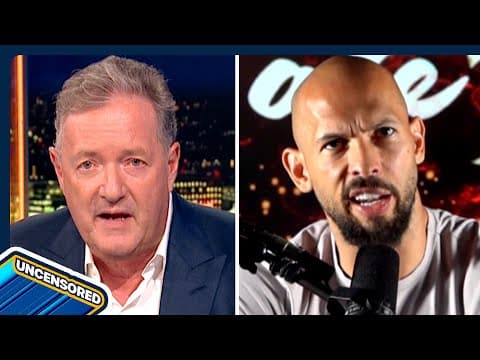
Fuentes concedes he runs two personas: a joking, hyperbolic, devil's advocate version on his own live stream, and a literal one in interviews where he states precisely what he believes. He denies any plan to seize power and pivot to extremism. Piers Morgan's stated case for hosting him is that Fuentes already has a platform often bigger than his critics', so talking to him beats only talking about him.
Transcript
Whether you're a New York Times reader, an NPR fan, a Daily Wire subscriber, or an avid consumer of all things Tucker Carlson, for several months now, there's been no avoiding the subject of Nick Fuentes. And let's be clear, the main reason you're hearing about him is because he's popular. A large number of people, especially young men, are interes... Read More
Key Insights
- Fuentes explicitly confirms he operates two registers. On his own live stream he jokes, uses rhetoric, is hyperbolic and plays devil's advocate for an in-group audience; in a good faith interview he says he drops all of that and states precisely what he believes.
- The double game charge came from Coleman Hughes, who argued Fuentes is consciously building popularity to take the reins of power, then pivoting to the extreme and unpopular policies he advocates daily on Rumble. Fuentes calls the power-grab half insane while accepting the two-personas half.
- Fuentes's first move against criticism is to attack the funding and alignment of the source. He labels Hughes a propagandist for the Free Press, run by Bari Weiss, describes Weiss as a pro-Israel partisan, and notes CBS bought the outlet for $150 million.
- Fuentes denies wanting political office, reasoning that if he wanted to run he would not say most of what he says, and that he offends nearly everyone, including many people who like him. He instead describes his role as a truth teller running a live stream.
- Morgan's stated rationale for the booking is that no-platforming fails on its own terms. Fuentes already owns a distribution channel frequently bigger than that of the people objecting, and uses it to address his followers without challenge, so silence outsources the argument to him.
- Fuentes traces his politics to a contrast between his mostly white, roughly half Catholic and half Protestant baseball town and the rest of the country he encountered after starting at Boston University in 2016. He frames American nationalism as preserving what was familiar about home.
- Fuentes's own family arrived through immigration, by his account his mother's Italian ancestors in the 1860s and his father's around 1900, making him fourth and third generation respectively. He has three European grandparents from Ireland and Italy and one from Mexico.
- The core of Fuentes's immigration argument is a qualitative distinction rather than a volume one. He claims pre-1965 arrivals came from a shared European ancestry, religion and civilization, while post Hart-Celler arrivals come from a different place, culture and religion.
- The interview format itself was contested before it aired. Fuentes had publicly worried it would be a hostile ambush, and Morgan opened by stating his goals: examine Fuentes's record, examine what he says he believes, and examine what his rise says about the conservative movement.
Install to Summarize YouTube Videos and Get Transcripts
Explore YouTube Video Summarizer or Get YouTube Transcript Extractor
Questions & Answers
Q: Does Nick Fuentes admit he has two different personas?
Yes. Asked about Coleman Hughes's claim that he plays a double game, Fuentes said Hughes is right about the two personas. He explained that on his own show he makes jokes, uses rhetoric, is hyperbolic, and plays devil's advocate, a style that grew out of years with a small following on a dissident streaming platform where the audience shared an in-group sense of humor and memes. In a sit-down interview where someone asks a good faith question about what he actually believes, he says he clarifies and states precisely what he believes without joking or hyperbole.
Q: What exactly did Coleman Hughes accuse Nick Fuentes of?
Hughes said Fuentes knows exactly what he is doing and is consciously playing a double game as part of a long-term strategy: become popular enough to take the reins of power, then pivot toward the extreme and unpopular policies he advocates daily on Rumble. Fuentes split his response in two. He dismissed the source, calling Hughes a propagandist for the Free Press, which he described as a pro-Israel outlet run by Bari Weiss and bought by CBS for $150 million. He accepted the two-personas description but called the idea that he would gain power and then turn into Hitler totally insane.
Q: Why did Piers Morgan decide to interview Nick Fuentes at all?
Morgan argued that it makes no sense to spend enormous amounts of airtime talking about Fuentes but never to him. His central point against the no-platforming objection is that Fuentes already has his own platform, often bigger than that of most of the people complaining, and uses it to speak unchallenged to his many followers. On that basis Morgan invited him to appear live and uncensored. Morgan also stated three goals at the top: examine what Fuentes has said on the record, examine what he says he believes, and examine what his rising popularity says about the state of the conservative movement in America.
Q: Does Nick Fuentes want to run for political office?
He says not really. His reasoning is practical: if he wanted to run for office he would not say a lot of the things he says, and he doubts many people would vote for him because he tends to offend everybody, including a lot of people who like him. He instead described himself as a truth teller who likes to tell the truth and do his live stream. This answer is his direct rebuttal to the theory that his current content is a stepping stone toward taking power and then shifting to more extreme positions.
Q: What was Nick Fuentes's upbringing and family background?
Fuentes grew up in LaGrange Park in the suburbs of Chicago. His father is half Mexican and half Irish, his mother is Italian. Both parents were raised by single mothers, not because of divorce but because both of their fathers had died, and both endured what he called a lot of dysfunction. He says that shared experience drew them together and made them determined to give their children a normal family life, with his mother quitting her job to stay home and raise him and his sister. He describes the family as very tight and credits this upbringing for his family and Christian values.
Q: How does Nick Fuentes describe his political awakening?
He traces it to leaving what he calls his bubble when he went to Boston University in 2016. He grew up in a mostly white Chicago suburb that was roughly half Catholic and half Protestant, a baseball town he loved. After reading a lot of things online and seeing more of the country, he concluded that the United States does not look like LaGrange Park, Western Springs, Hinsdale or Elmhurst, and that it is undergoing a radical transformation because of immigration. He decided that change was not desirable and that he wanted to preserve his home and what was familiar to him, which is how he describes becoming an American nationalist.
Q: How does Nick Fuentes square his immigration views with his own immigrant ancestry?
Asked whether his views are affected by the fact that without immigration he would not exist as an American, Fuentes conceded it influences him in some measure, then argued the comparison does not hold. By his account his mother is fourth generation, with Italian ancestors arriving in the 1860s during the first wave of Italian immigration, and his father is third generation, with ancestors arriving around 1900. He has three European grandparents from Ireland and Italy and one from Mexico. He claims a qualitative difference: earlier arrivals came from societies sharing a common ancestry, religion and civilization, while those arriving since the 1965 Hart-Celler act come from a different place, culture and religion.
Q: What topics does Piers Morgan cover in the full Nick Fuentes interview?
According to the video description, Morgan asks Fuentes about his most controversial past comments on race, religion, women, Hitler and the Holocaust, along with his real thoughts on his conservative peers, including Tucker Carlson, Candace Owens and the late Charlie Kirk. The published version carries an editor's note stating that on this platform only, two short uses of the n-word were cut after the livestream ended so that the interview remains accessible. The timestamps show the opening runs to 04:16, where Fuentes responds to Coleman Hughes's double game claim, followed at 06:46 by discussion of how his background shaped him.
Q: Why is Nick Fuentes being discussed across so many different outlets?
Morgan's framing is that the main reason people are hearing about Fuentes is that he is popular, with a large number of people, especially young men, interested in what he has to say. He notes the subject is unavoidable whether you read the New York Times, listen to NPR, subscribe to the Daily Wire or consume Tucker Carlson. What that popularity says about society and culture is fiercely disputed: some see a grave indictment of an insidious immorality, others see a product of a culture that turned on its own and left young people listless and bitter. Morgan adds that Fuentes is a better illustration of the Streisand effect than Streisand herself.
Summary & Key Takeaways
-
Piers Morgan opens by arguing that the reason Nick Fuentes dominates coverage across the New York Times, NPR, the Daily Wire and Tucker Carlson's orbit is simple popularity, especially among young men. He says refusing to platform Fuentes ignores that Fuentes already runs a platform often larger than the people complaining, where he speaks unchallenged.
-
Confronted with Coleman Hughes's claim that he plays a double game to gain power before pivoting to extreme policies, Fuentes attacks the source, calling Hughes a propagandist for the Free Press, run by Bari Weiss and bought by CBS for $150 million. He then concedes the two-persona point while calling the power-grab theory insane.
-
Fuentes describes growing up in LaGrange Park in the Chicago suburbs with a half Mexican, half Irish father and an Italian mother, both raised by single mothers after their own fathers died. He says leaving that bubble for Boston University in 2016 triggered his political awakening and his self-description as an American nationalist.
Read in Other Languages (beta)
Share This Summary 📚
Summarize YouTube Videos and Get Video Transcripts with 1-Click
Try YouTube Summary with ChatGPT & Claude or YouTube Transcript Generator
Explore More Summaries from Piers Morgan Uncensored 📚

Summarize YouTube Videos and Get Video Transcripts with 1-Click
Try YouTube Summary with ChatGPT & Claude or YouTube Transcript Generator