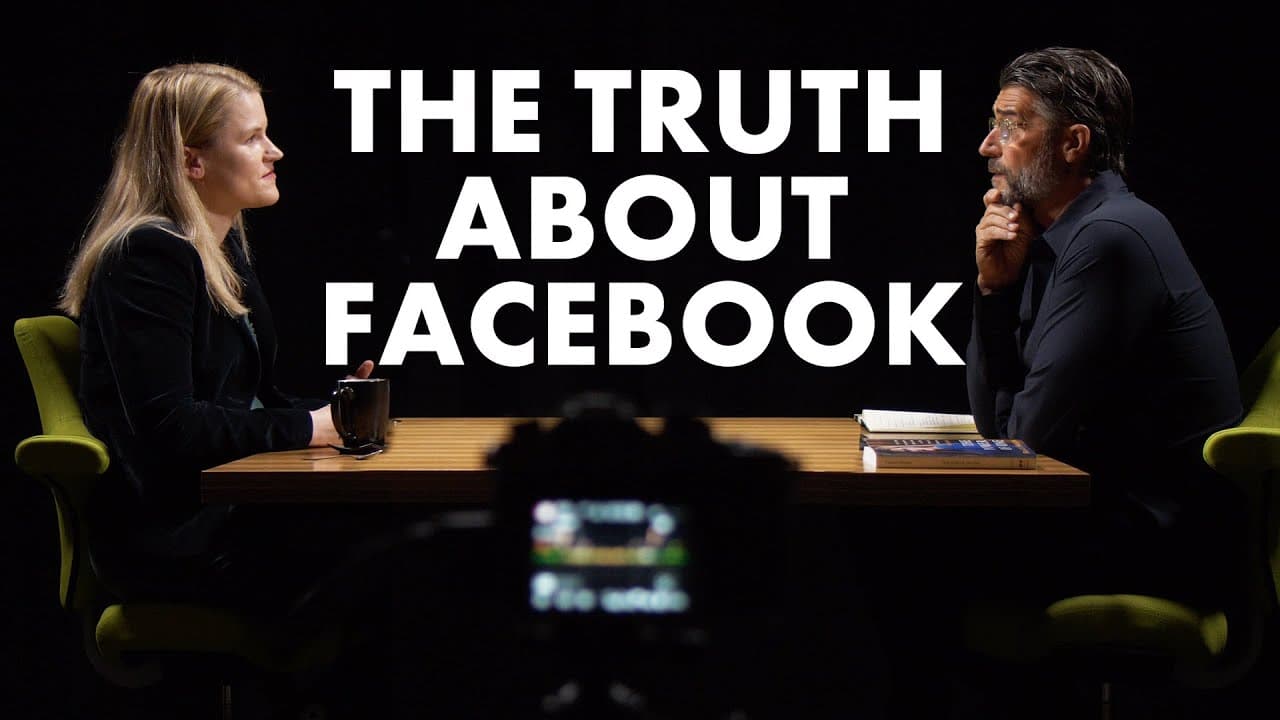
Frances Haugen on Why Facebook Is Worse Than You Think
TL;DR
Kids who use social media more than three hours a day face double or triple the risk of depression or anxiety, and the average US kid uses these products three and a half hours daily. Facebook algorithms give far more distribution to posts that start fights than to calm responses, and in countries without fact-checkers, users new to the internet treat everything as true.
Transcript
Facebook was so much worse than I had any idea could be no one actually gets to see how Facebook is functioning you start a fight in a post you're gonna get much much more distribution than someone who does a calm response if your kid uses social media for more than three hours a day they're at double or triple the risk of getting depression or anx... Read More
Key Insights
- Facebook's algorithm rewards conflict: starting a fight in a post earns much more distribution than posting a calm response, structurally amplifying extreme and divisive content over measured discussion.
- Heavy social media use correlates with mental health harm. Kids who use these products more than three hours a day face double or triple the risk of depression or anxiety, yet the average US kid uses them three and a half hours daily.
- Concentration of power is a core problem. Frances Haugen argues we are 'not citizens on our social platforms, we are subjects of a king,' pointing to Zuckerberg being CEO since age 19, his own boss, living in an echo chamber.
- Haugen's motivation was personal. A close friend, smart and college-educated, spiraled into conspiratorial thinking after 2016, believing claims about George Soros and space lasers, which showed her the human cost of misinformation.
- She joined Facebook in 2019 to work only on misinformation, believing that with only hundreds of people worldwide who truly understand these algorithmic systems, she had an obligation to serve a 'tour of duty.'
- Facebook operates without fact-checkers across most of the world. It concentrates third-party fact checking on the US and Europe, doing after-the-fact cleanup, while the majority of countries have no such coverage.
- New internet users lack discernment tools. In India, people with master's degrees asked 'why would someone put something fake on the internet, that sounds like a lot of work,' because they came online through Facebook without maturing through internet skepticism.
- Trust from friends amplifies false belief. In many places people believe Facebook information is more trustworthy because it came from a friend, so misinformation spreads through personal connections rather than being questioned.
Install to Summarize YouTube Videos and Get Transcripts
Explore YouTube Video Summarizer or Get YouTube Transcript Extractor
Questions & Answers
Q: Why does Facebook's algorithm promote extreme content?
Facebook's distribution system rewards conflict. According to Frances Haugen, if you start a fight in a post you get much, much more distribution than someone who posts a calm response. This structural incentive means divisive, combative, and extreme content spreads further than measured or thoughtful contributions, because the algorithm optimizes for engagement, and fights generate more of it than calm conversation does.
Q: How much does social media use raise the risk of depression in kids?
Haugen states that if a kid uses social media for more than three hours a day, they are at double or triple the risk of getting depression or anxiety. This is significant because the average kid in the United States uses these products for three and a half hours a day, meaning the typical young user already exceeds the threshold associated with heightened mental health risk.
Q: Why did Frances Haugen decide to join Facebook?
Haugen joined Facebook in 2019 motivated by a personal experience. After Bernie Sanders lost the 2016 primary, a close friend who was essential to her health recovery fell into conspiratorial thinking, divorcing himself from shared reality over claims like George Soros controlling the economy. Watching this was excruciating, so when a recruiter reached out, she said the only thing she would work on was misinformation.
Q: What is the main argument in Frances Haugen's book The Power of One?
The book centers on accountability and the dangerous concentration of power in social platforms. Haugen argues that 'we're not citizens on our social platforms, we are subjects of a king,' pointing to Zuckerberg having been CEO since age 19, being his own boss, and living in an echo chamber. She emphasizes that no one outside gets to see how Facebook is actually functioning, making transparency essential.
Q: How does Facebook affect people who are new to the internet?
Haugen explains that in many countries people become literate to the internet through Facebook and Facebook only, without adequate discernment tools. In India, people with master's degrees asked why anyone would put something fake on the internet, calling it a lot of work. Lacking twenty years of internet skepticism, these users often believe information because it came from a friend and is therefore trusted.
Q: Why doesn't Facebook fact-check content in most countries?
Haugen notes that Facebook mostly does after-the-fact cleanup with third-party fact checking in places like the United States and Europe. Her team was specifically working anywhere in the world where there were no fact checkers, which is actually most of the world. So while Facebook proudly announces spending on fact checking, that effort does not cover the majority of countries where its platform operates.
Q: What was Frances Haugen's experience joining Facebook like?
Haugen, who holds an MBA from Harvard with a focus on organizational health, described immediate red flags. Placed in a two-week product manager boot camp meant to prevent burnout, she was pulled out after four days and told to produce a six-month plan for Civic misinformation. Her team had mostly front-end engineers and a data scientist new to the company, and no one knew what was going on.
Q: Why is trusting information from friends on Facebook a problem?
Haugen explains that in many places people believe information on Facebook is more trustworthy because it came from a friend, reasoning that a personal connection means it should be trusted. Unlike cultures shaped by twenty years of shitposting and online doubt, these users have not gone through the maturation process of distinguishing jokes and falsehoods from reality, so misinformation spreads unchallenged through personal networks.
Summary & Key Takeaways
-
Frances Haugen, the 2021 Facebook Files whistleblower and author of 'The Power of One,' joined Facebook in 2019 to work on misinformation. Her motivation was personal: after 2016, a close, college-educated friend spiraled into conspiratorial thinking, moving to Indiana with people holding extreme political beliefs, which she found excruciating to witness.
-
Haugen recounts progressive disillusionment. With an MBA from Harvard focused on organizational health, she found Facebook chaotic. Pulled from a two-week onboarding boot camp after four days, her small team of mostly front-end engineers and a new data scientist was expected to plan six months of Civic misinformation work with almost no knowledge.
-
A central concern is how Facebook functions as the internet itself in new countries. Users coming online through Facebook lack the skepticism built over twenty years of internet culture, treating information as true because it came from a friend, especially where Facebook provides no fact-checkers, which is most of the world.
Read in Other Languages (beta)
Share This Summary 📚
Summarize YouTube Videos and Get Video Transcripts with 1-Click
Try YouTube Summary with ChatGPT & Claude or YouTube Transcript Generator
Explore More Summaries from Rich Roll 📚



Summarize YouTube Videos and Get Video Transcripts with 1-Click
Try YouTube Summary with ChatGPT & Claude or YouTube Transcript Generator