How Does AI Reshape Human Creative Thinking?
TL;DR
AI already performs exploratory and combinational creativity well, but transformational creativity remains its hardest challenge because machine models learn statistical patterns from existing work. Humans retain an important role by setting intentions, recognizing meaningful discoveries, and explaining why results hold, while AI acts as augmented intelligence that searches vast possibility spaces and exposes patterns or counterexamples people may overlook.
Transcript
My name is Marcus Dotoy. I'm a professor of mathematics at the University of Oxford and also the Simony professor for the public understanding of science. My role is a bridge between the world of academia where a lot of these things are developed and society who are going to be impacted by these new technologies. In particular, one of the things I'... Read More
Key Insights
- Creativity is divided into three forms: exploratory creativity develops possibilities within established rules, combinational creativity connects ideas from different domains, and transformational creativity breaks earlier conventions to establish a substantially different approach.
- Exploratory creativity is well suited to AI because statistical learning can absorb an existing style or rule set and search its possibilities extensively. Bach exemplifies the human version by pushing the established musical language of the Baroque to its limits.
- Combinational creativity works by transferring structures or methods between areas. A number theorist can borrow a geometric way of analyzing objects, while fusion cooking can combine Asian ingredients with European cooking methods to produce something new.
- Transformational creativity is the rarest and most difficult form because it requires abandoning or breaking accepted structures. Serialism illustrates this process by discarding conventional harmonic organization and introducing a 12-tone row as a different musical framework.
- Mathematics is a creative discipline because its imagined structures do not always need physical counterparts. Mathematicians can change geometric rules and explore worlds where triangles behave differently, resembling writers who invent premises and investigate their consequences.
- AI is comparable to a digital telescope because it can reveal patterns in a large possibility space that human researchers cannot readily see. In one long-standing mathematical challenge, it found a counterexample that disproved a conjecture without supplying a proof of why the pattern occurred.
- AlphaGo's Move 37 was genuine machine creativity because it was unconventional, initially appeared weak to human commentators, and ultimately helped win the game. The strategy emerged through the system's learning process rather than from an explicitly programmed human instruction.
- Human intention remains distinct from machine-generated behavior because AlphaGo did not independently want to play Go. People selected the objective, while the statistical system learned strategies for pursuing it, supporting the description of AI as augmented intelligence rather than an autonomous creative agent.
- More videos from this channel:
- More from this channel: EO
Install to Summarize YouTube Videos and Get Transcripts
Explore YouTube Video Summarizer or Get YouTube Transcript Extractor
Questions & Answers
Q: What are the three types of creativity?
The three types are exploratory, combinational, and transformational creativity. Exploratory creativity pushes an existing rule set toward new possibilities. Combinational creativity brings methods, styles, or materials from separate areas together. Transformational creativity breaks established conventions and creates a different framework. The final type is described as both the rarest form and the greatest challenge for artificial intelligence.
Q: Why is exploratory creativity suitable for AI?
Exploratory creativity suits AI because it operates inside an established set of rules or styles, precisely the kind of structure a statistical model can learn from past examples. Once it has learned that structure, the system can search many possible developments. Bach provides a human comparison: he remained within Baroque musical conventions while pushing that style to extraordinary limits.
Q: How does combinational creativity produce new ideas?
Combinational creativity produces new ideas by applying a structure, method, or style from one domain to another. Marcus du Sautoy describes attending geometry seminars as a number theorist and asking whether geometric methods offer a new way to view his own work. Fusion cooking provides another example, combining Asian ingredients with European approaches to cooking.
Q: Why is transformational creativity difficult for AI?
Transformational creativity is difficult for AI because it involves breaking the conventions contained in past work, while AI learns statistical patterns from that work. Exploratory and combinational tasks can build upon learned styles, but transformation may require discarding a basic assumption. Serialism illustrates this by abandoning traditional harmonic structure and organizing music through a 12-tone row.
Q: Why is mathematics considered a creative subject?
Mathematics is creative because mathematicians can invent rule-governed worlds and explore their consequences without requiring those worlds to describe physical reality. Euclidean geometry treats space as flat, while spherical and hyperbolic geometries make triangles behave differently. This resembles fiction writing, where an author establishes the rules of an imagined universe and investigates what follows from them.
Q: How can AI help solve difficult mathematical problems?
AI can help by searching large digital spaces and detecting structures that human researchers may not notice. In the example discussed, a conjecture had remained open for decades, and AI found a counterexample showing that the conjecture was false. It did not prove the conjecture or explain the deeper reason, so skilled human interpretation remained necessary after the computational discovery.
Q: Why does AlphaGo's Move 37 count as machine creativity?
Move 37 counts as machine creativity because it departed from accepted early-game practice, surprised human commentators, and ultimately contributed to AlphaGo winning the second game. The unusual strategy was not directly inserted by a programmer. It emerged from the code's learning process, and du Sautoy argues that a human reviewing it beforehand might have rejected it as a bad direction.
Q: What does the local maximum analogy explain about AI?
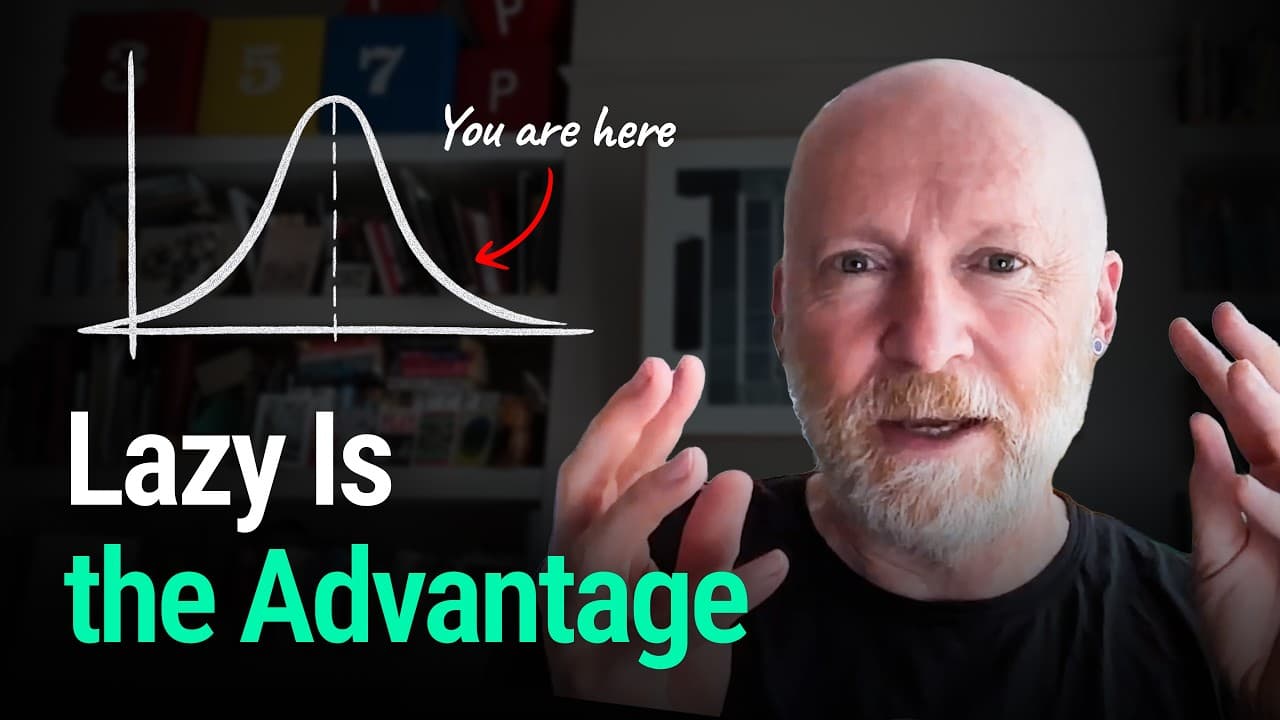
The local maximum analogy explains how experts can mistake the best familiar solution for the best possible solution. Human Go players believed they had reached a high strategic peak, but AlphaGo revealed a higher one beyond a conceptual valley obscured by established habits. AI can therefore expose valuable alternatives by exploring regions that conventional human judgment has dismissed or failed to see.
Summary & Key Takeaways
-
Creativity can be divided into exploratory, combinational, and transformational forms. Exploratory creativity extends an existing rule set, while combinational creativity transfers ideas between different areas. Transformational creativity is rarer because it breaks established conventions and creates a new framework, making it the form that presents the greatest challenge for artificial intelligence.
-
Mathematics is creative because mathematicians can construct and investigate imaginary worlds without requiring them to match physical reality. Euclidean, spherical, and hyperbolic geometries illustrate how changing foundational rules produces different mathematical universes, much as novelists and science fiction writers explore the consequences of invented premises.
-
AI can augment human thought by searching digital spaces, identifying patterns, and finding counterexamples to conjectures. AlphaGo's Move 37 demonstrated how machine learning can discover a valuable strategy outside accepted human practice. Humans still provide intention, interpret significance, and develop explanations for why machine-discovered results work.
Read in Other Languages (beta)
Share This Summary 📚
Summarize YouTube Videos and Get Video Transcripts with 1-Click
Try YouTube Summary with ChatGPT & Claude or YouTube Transcript Generator
Explore More Summaries from EO 📚


Summarize YouTube Videos and Get Video Transcripts with 1-Click
Try YouTube Summary with ChatGPT & Claude or YouTube Transcript Generator