What Makes Gyroscopes Defy Gravity?
TL;DR
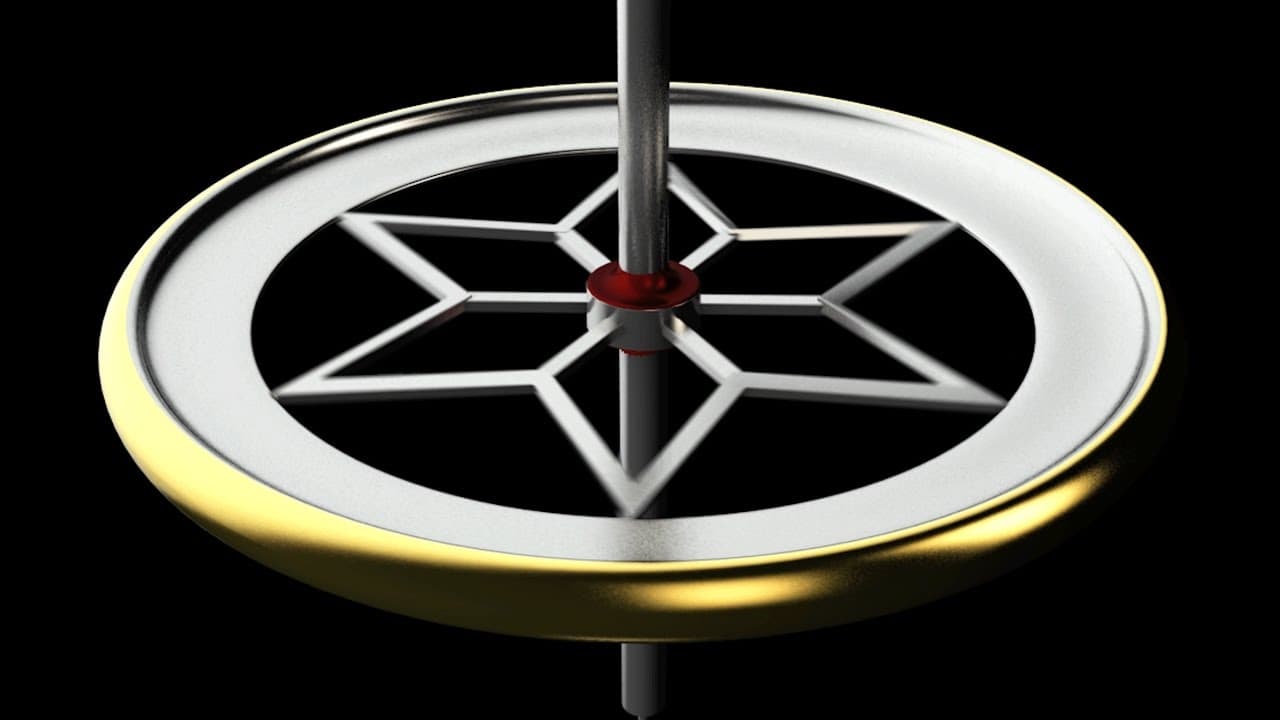
Gyroscopes defy gravity through centripetal forces and exhibit stability when spinning. This stability results from precession, where gravitational torque causes the gyroscope to tilt and process. The Coriolis effect further illustrates how Earth's rotation influences the movement of objects.
Transcript
hey Vsauce Michael here do you want my head delivered to your door in a box well too bad I only have one head and I already called dibs on it plus my neck is like pure muscle this head ain't never coming off the next best thing is what actually comes in the curiosity box by Vsauce it is chock full of science gear designed by us it's pretty amazing ... Read More
Key Insights
- 👻 Gyroscopes maintain stability through centripetal forces provided by external factors, allowing for their unique abilities in defying gravity.
- 🔍 Circular motion induces precession, causing a gyroscope to tilt and process due to the torque created by gravity and other forces.
- 🏋️ The Coriolis effect explains the apparent deflection of objects on Earth due to its rotation, while the Buys-Ballot effect affects weight due to changes in velocity.
Install to Summarize YouTube Videos and Get Transcripts
Explore YouTube Video Summarizer or Get YouTube Transcript Extractor
Questions & Answers
Q: How does a gyroscope defy gravity when spun?
When the gyroscope is spun with the string wrapped around it, the centripetal force provided by the tension in the string keeps it in a stable, upright position, seemingly defying gravity.
Q: What is the Coriolis effect?
The Coriolis effect explains the apparent deflection of moving objects on Earth due to its rotation. Objects moving towards the poles appear to drift eastward in relation to Earth's spin, while objects moving towards the equator appear to drift westward.
Q: How does the Buys-Ballot effect affect weight?
The Buys-Ballot effect refers to the change in weight experienced when traveling east or west on Earth. Traveling east adds to an object's velocity and provides a lifting effect, making it weigh slightly less. Conversely, traveling west reduces velocity and makes an object weigh slightly more.
Q: Why do objects on a spinning Earth experience centrifugal force?
Objects on a spinning Earth experience centrifugal force, which is actually their tendency to move in a straight line tangent to their circular path. This apparent outward force is the object's inertia and not an actual force acting on it.
Summary & Key Takeaways
-
The Curiosity Box by Vsauce contains science gear, including a gyroscope that appears to defy gravity when spun correctly.
-
Objects in circular motion experience a centripetal force that keeps them on their path, provided by external forces like gravity or tension in a string.
-
Gyroscopes exhibit precession, where the spinning object tilts and processes due to the torque created by gravity and other forces, leading to eventual slowdown.
Read in Other Languages (beta)
Share This Summary 📚
Summarize YouTube Videos and Get Video Transcripts with 1-Click
Try YouTube Summary with ChatGPT & Claude or YouTube Transcript Generator
Explore More Summaries from Vsauce 📚

Summarize YouTube Videos and Get Video Transcripts with 1-Click
Try YouTube Summary with ChatGPT & Claude or YouTube Transcript Generator