What Is Hegel's Philosophy of Consciousness and Spirit?
TL;DR
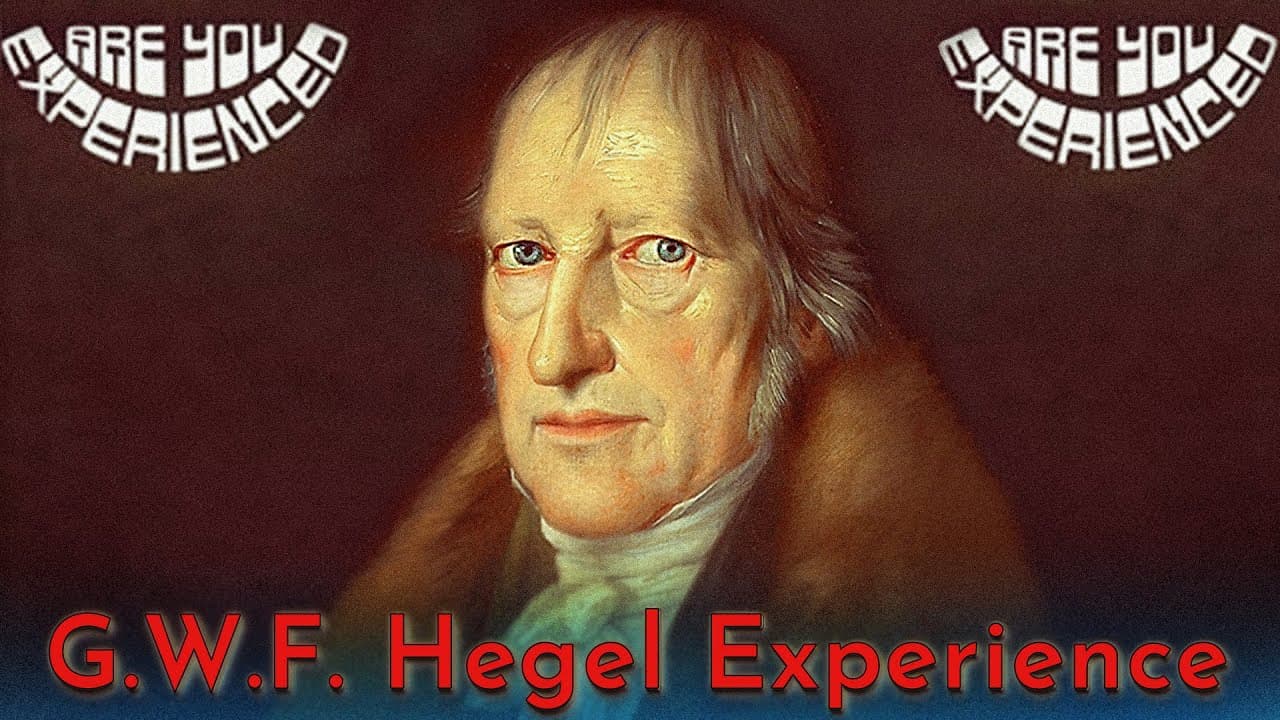
Hegel's philosophy emphasizes the dynamic and evolving nature of consciousness and spirit, viewing them as integral to understanding reality. He posits that knowledge is not just passive but involves an active process of development through negation and dialectical movement. This perspective redefines truth and reality as emerging from appearance, reflecting a continuous interplay between the subjective and objective realms.
Transcript
higgle is one of the most notoriously difficult but also most fascinating philosophers and in addition to that i think his works have almost a kind of a psychedelic quality to them i also have to admit i'm not really an expert or specialist on hegel but more of a fan and his thinking has deeply influenced my own take on philosophy so there are two ... Read More
Key Insights
- ❓ Hegel's philosophy focuses on dynamic growth, emphasizing the subjective, evolving nature of consciousness and spirit.
- 💦 The dialectical movement of experience in Hegel's work involves negation, growth, and a complex interplay between subjective consciousness.
- ✋ Hegel introduces the concept of "Sublation" to illustrate how evolving ideas maintain essential qualities while progressing to higher levels of complexity.
- ❓ Hegel's advocacy for a speculative sentence structure reflects a desire to capture the evolving, subjective nature of philosophical concepts.
Install to Summarize YouTube Videos and Get Transcripts
Explore YouTube Video Summarizer or Get YouTube Transcript Extractor
Questions & Answers
Q: What is Hegel's perspective on consciousness and spirit?
Hegel's philosophy highlights an active, evolving consciousness, encompassing spirit's role in shaping individual and collective experiences.
Q: How does Hegel view the relationship between truth and appearance?
Hegel emphasizes finding truth within appearance, rejecting the distinction between truth and appearance present in traditional Western philosophy.
Q: What is the significance of Hegel's concept of "Alfiem" or sublation?
Alfiem represents Hegel's notion of development through negation, where evolving concepts maintain the essence of what preceded them, highlighting growth and complexity.
Q: How does Hegel advocate for a speculative sentence structure in philosophy?
Hegel suggests a speculative sentence format to capture the dynamic and evolving nature of philosophical concepts, emphasizing subjective control and interaction with ideas.
Summary & Key Takeaways
-
Hegel's philosophy is intricate, focused on consciousness, spirit, and experience's active development.
-
He views philosophy as a scientific, systematic, and dynamic study of consciousness.
-
Hegel's approach involves negation, growth, and a dialectical movement of experience.
Read in Other Languages (beta)
Share This Summary 📚
Summarize YouTube Videos and Get Video Transcripts with 1-Click
Try YouTube Summary with ChatGPT & Claude or YouTube Transcript Generator
Explore More Summaries from Carefree Wandering 📚



Summarize YouTube Videos and Get Video Transcripts with 1-Click
Try YouTube Summary with ChatGPT & Claude or YouTube Transcript Generator