How Does Presence Weaken Identification With Ego?
TL;DR
Awareness weakens ego by letting thoughts and emotions be recognized as conditioned patterns rather than accepted as personal truth. Even slight awareness can reduce the power of recurring judgments to create unhappiness, although inner presence may take time to become integrated with work, relationships, responsibilities, and the rest of a person's form identity.
Transcript
When you completely identify with your form identity, the the physical body and even more importantly the psychological form of you, the invisible you that consists of thought and emotion, the mental emotional invisible mental emotional entity that is who you are on a certain level. When you're clo completely identified with every arising thought a... Read More
Key Insights
- Ego is complete identification with the physical body and the psychological form composed of thought, emotion, and reaction. Thoughts and emotions can still arise without constituting ego when awareness prevents a person from investing their entire sense of self in them.
- Slight awareness is enough to create distance from recurring thoughts. When a person notices familiar judgments about failure, futility, or repeated difficulties as mental patterns, those judgments gradually lose their ability to produce unhappiness because they are no longer believed completely.
- Conditioned thoughts can become less frequent after they are recognized without total identification. Awareness does not require suppressing or arguing with a thought. It reveals the thought as an old pattern, which allows the pattern to subside gradually rather than dominate experience.
- Presence may develop internally before it changes a person's external life. Tolle describes experiencing peace in the background while continuing in the academic world for several years, showing that recognition of a deeper state and practical changes in form identity may occur at different speeds.
- Unhappy thoughts can behave like invitations back into mind identification. A thought may seem to pull a person toward negative conclusions about the self or life, but noticing that pull creates the possibility of not following it and becoming lost in the pattern.
- A completely healthy ego does not exist because every ego contains some elements of dysfunction. Form identity still develops throughout life, however, and a person's stage of development may affect how readily arising presence becomes integrated into ordinary responsibilities, relationships, and behavior.
- Physical and psychological maturity may support spiritual integration, but they are not universal prerequisites. Gurdjieff's view connected spiritual work with meaningful work, family responsibility, and establishment in the physical realm, while Tolle emphasizes that many exceptions prevent this from becoming a general rule.
- Sudden openings can reveal transcendent presence without transforming the whole personality. A shock may crack the ego shell and allow spiritual truths to emerge in certain situations, while emotional immaturity and familiar behavior continue at other times because the form identity remains largely unchanged.
Install to Summarize YouTube Videos and Get Transcripts
Explore YouTube Video Summarizer or Get YouTube Transcript Extractor
Questions & Answers
Q: What is ego according to Eckhart Tolle?
Ego is complete identification with form identity, including the physical body and the invisible psychological identity made of thoughts, emotions, and reactions. The defining issue is not that thoughts or emotions arise, but that a person treats every mental and emotional event as the self. When awareness appears in the background, identification is no longer complete, even though form identity and mental activity remain.
Q: How does awareness reduce the power of negative thoughts?
Awareness lets a person recognize negative thoughts as familiar mental patterns rather than unquestioned truths about the self or life. Recurring judgments about futility, failure, or repeated hardship can still appear, but they lose some capacity to create unhappiness when they are not believed completely. With continued recognition, these conditioned patterns may also arise less frequently and eventually begin to subside.
Q: Do thoughts have to disappear for the ego to weaken?
Thoughts do not have to disappear for ego identification to weaken. A person may continue experiencing thoughts without knowing why they suddenly arise. The important shift is the presence of even slight awareness that recognizes them as thoughts. This background awareness means the person's entire sense of self is no longer invested in each thought, emotional response, or judgment that appears.
Q: What should you do when an unhappy thought appears?
An unhappy thought can be noticed without being followed. Tolle describes such a thought as a pull toward unhappiness, inviting a person to return to negative conclusions about the self or life. Recognizing the invitation creates space to decline it. Following the thought can lead back into mind identification, while observing it preserves the peace and awareness already present in the background.
Q: Does spiritual presence immediately change your external life?
Spiritual presence does not necessarily produce immediate external change. Tolle says his own transition was sudden and drastic, yet he remained engaged in the academic world for several more years and did not immediately realize that it was no longer right for him. Peace was present in the background, but understanding how that inner change related to his circumstances and form identity required time.
Q: Do you need a healthy ego before transcending the ego?
A fully healthy ego is not presented as a realistic prerequisite because every ego contains some element of dysfunction. Form identity does develop as a person grows older, and the stage of that development may influence how presence becomes integrated into life. However, Tolle rejects a single rule requiring complete physical or psychological establishment before spiritual awakening can occur, since many exceptions exist.
Q: Why can personal maturity matter in spiritual development?
Personal maturity can matter because arising presence must eventually interact with a person's existing form identity, responsibilities, work, relationships, and emotional development. Tolle discusses Gurdjieff's view that meaningful work, family responsibility, and establishment in the physical realm should precede spiritual work. He sees some truth in that position, but says it cannot apply universally because awakenings can occur under very different conditions.
Q: Can a sudden shock create a spiritual awakening?
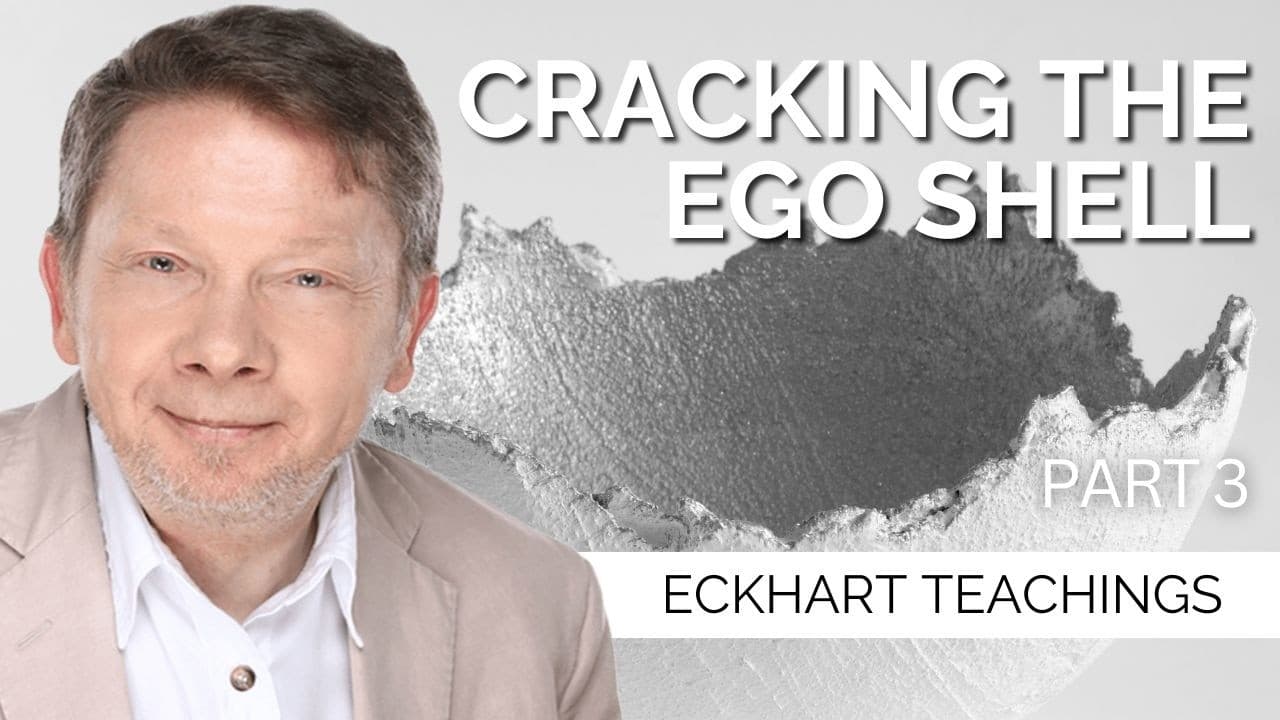
A sudden shock can create an opening in form identity. Tolle gives the example of an emotionally immature young person being seriously injured by a car, awakening in a hospital, and discovering an unexpected inner power. Spiritual truths may then emerge naturally in some interactions. However, the person's ordinary identity may remain mostly unchanged, so transcendent presence appears intermittently through a crack in the ego shell.
Summary & Key Takeaways
-
Ego is complete identification with the physical body and the psychological identity made of thoughts, emotions, and reactions. When awareness appears behind mental activity, thoughts can be observed as thoughts. This distance reduces total investment in recurring judgments, allowing their emotional influence and frequency to diminish gradually over time.
-
Presence may arise before external circumstances or personal development change. Tolle describes remaining in the academic world for several years after his sudden inner transition because he did not immediately recognize that it was no longer right for him. Peace existed in the background while practical integration unfolded more slowly.
-
Spiritual awakening does not follow one universal developmental rule. Maturity, meaningful work, and responsibility may support the integration of presence, but exceptions exist. A sudden shock can create a crack in an immature form identity, allowing transcendent insight to emerge intermittently even while emotional patterns and ordinary behavior remain largely unchanged.
Read in Other Languages (beta)
Share This Summary 📚
Summarize YouTube Videos and Get Video Transcripts with 1-Click
Try YouTube Summary with ChatGPT & Claude or YouTube Transcript Generator
Explore More Summaries from Eckhart Tolle 📚





Summarize YouTube Videos and Get Video Transcripts with 1-Click
Try YouTube Summary with ChatGPT & Claude or YouTube Transcript Generator