What Were the Crusades and Their Impact?
TL;DR
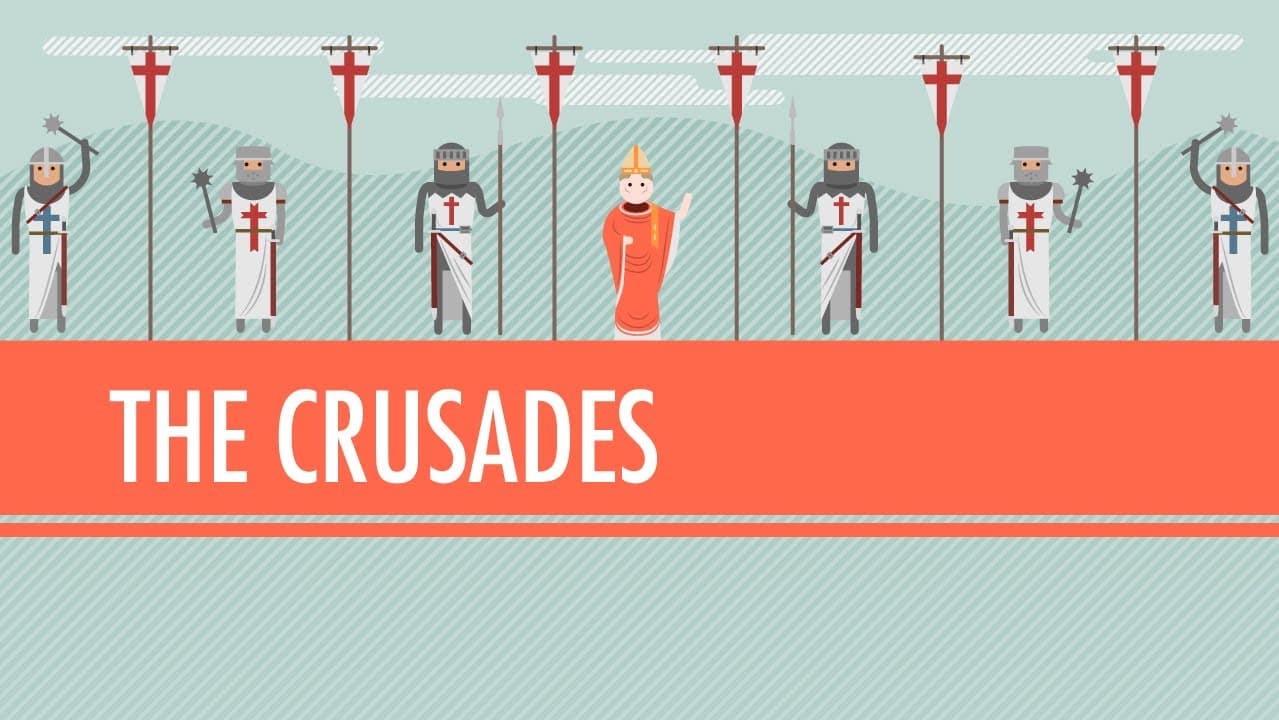
The Crusades were military expeditions from Europe to the Eastern Mediterranean, driven by religious faith and political motivations. Initially aimed at aiding the Byzantines and liberating Jerusalem, they evolved into complex campaigns with mixed successes. Although they failed to establish long-term Christian kingdoms, the Crusades deeply influenced medieval society and highlighted the era's unique religious fervor.
Transcript
Hi there! My name is John Green; this is Crash Course World History, and today we’re going to talk about the Crusades. Ohhh, Stan, do we have to talk about the Crusades? I hate them... Here’s the thing about the Crusades, which were a series of military expeditions from parts of Europe to the Eastern coast of the Mediterranean. The real reason they... Read More
Key Insights
- The Crusades were a series of military expeditions from Europe to the Eastern Mediterranean.
- Initially, the Crusades were not a 'holy war' against Islam but were driven by religious faith.
- Pope Urban II's call in 1095 CE marked the official start of the First Crusade.
- The Crusades were pitched as pilgrimages with a touch of warfare, not purely military operations.
- The First Crusade was surprisingly successful, capturing Jerusalem by 1100 CE.
- The Third Crusade was led by notable figures like Richard the Lionheart but failed to recapture Jerusalem.
- The Fourth Crusade resulted in the sacking of Constantinople, a Christian city, highlighting internal conflicts.
- The Crusades were a significant drain on European resources and failed to establish lasting Christian kingdoms in the Holy Land.
Install to Summarize YouTube Videos and Get Transcripts
Explore YouTube Video Summarizer or Get YouTube Transcript Extractor
Questions & Answers
Q: What were the primary motivations behind the Crusades?
The primary motivations behind the Crusades were religious faith and political ambitions. Initially, they were not intended as a 'holy war' against Islam but were driven by a desire to aid the Byzantine Empire and liberate Jerusalem. Pope Urban II's call in 1095 CE framed the Crusades as pilgrimages with military undertones, appealing to both spiritual and temporal incentives.
Q: How did the First Crusade achieve its goals?
The First Crusade achieved its goals by capturing Jerusalem by 1100 CE, despite internal rivalries and disorganization among the crusaders. The success was partly due to the lack of unity among Muslim forces, as the Turkish Muslims did not assist the Egyptian Shia against the crusaders. This division allowed the crusaders to capitalize on the situation and secure key territories for Christendom.
Q: Why was the Third Crusade considered a failure?
The Third Crusade was considered a failure because it did not achieve its primary objective of recapturing Jerusalem. Despite the involvement of prominent leaders like Richard the Lionheart, the crusaders could not overcome Saladin's forces. The crusade did, however, shift the focus to Egypt, as Richard recognized its strategic importance, but he could not rally support for this new target.
Q: What was the outcome of the Fourth Crusade?
The Fourth Crusade resulted in the sacking of Constantinople, a Christian city, rather than achieving its intended goal of reclaiming the Holy Land. Financial difficulties and political maneuvering led the crusaders to attack Constantinople, which weakened the Byzantine Empire and diverted the crusade from its original religious purpose. This event highlighted the evolving nature of crusading and internal Christian conflicts.
Q: Did the Crusades establish long-term Christian kingdoms in the Holy Land?
The Crusades did not establish long-term Christian kingdoms in the Holy Land. While the First Crusade successfully captured Jerusalem and established Latin Christian kingdoms, these gains were not sustainable. Subsequent crusades failed to maintain control, and the region eventually remained under Muslim rule, particularly after the rise of the Ottoman Empire, which solidified Muslim dominance in the area.
Q: How did the Crusades impact European resources?
The Crusades were a significant drain on European resources, as they required immense financial and human investment. Many crusaders spent several times their annual income to participate, and the campaigns diverted attention and resources from domestic affairs. Despite the initial enthusiasm, the long-term benefits were minimal, and the expeditions often resulted in economic strain and political complications for European societies.
Q: What role did religious motivations play in the Crusades?
Religious motivations played a crucial role in the Crusades, as participants believed they were undertaking a sacred mission to protect Christ and his kingdom. The idea of pilgrimage, combined with the promise of spiritual rewards, motivated many to take up arms. This religious fervor was a defining characteristic of the medieval world, influencing the actions and decisions of those involved in the Crusades.
Q: How did the Crusades affect Christian-Muslim relations?
The Crusades did not significantly alter Christian-Muslim relations, as lines of communication and interaction between the two worlds were already established. However, the Crusades intensified hostilities and left a legacy of mistrust and conflict. The campaigns were often romanticized or vilified in later narratives, shaping perceptions and contributing to long-standing tensions between the Christian and Muslim worlds.
Summary & Key Takeaways
-
The Crusades began as religiously motivated military expeditions from Europe to the Eastern Mediterranean. Pope Urban II's call in 1095 CE marked the start, with the First Crusade capturing Jerusalem by 1100 CE. Despite some successes, the Crusades ultimately failed to establish lasting Christian kingdoms and were a significant drain on European resources.
-
The Third Crusade, led by figures like Richard the Lionheart, failed to retake Jerusalem but shifted focus to Egypt. The Fourth Crusade, however, ended in the sacking of Constantinople, a Christian city, showcasing internal conflicts and the evolving nature of crusading.
-
The Crusades highlight the medieval world's unique religious fervor, with participants believing in the sacrality of their mission. Despite failing to create long-term Christian kingdoms, the Crusades profoundly impacted medieval society, illustrating the era's distinct motivations and complexities.
Read in Other Languages (beta)
Share This Summary 📚
Summarize YouTube Videos and Get Video Transcripts with 1-Click
Try YouTube Summary with ChatGPT & Claude or YouTube Transcript Generator
Explore More Summaries from CrashCourse 📚






Summarize YouTube Videos and Get Video Transcripts with 1-Click
Try YouTube Summary with ChatGPT & Claude or YouTube Transcript Generator