What Really Happened in Operation Red Wings?
TL;DR
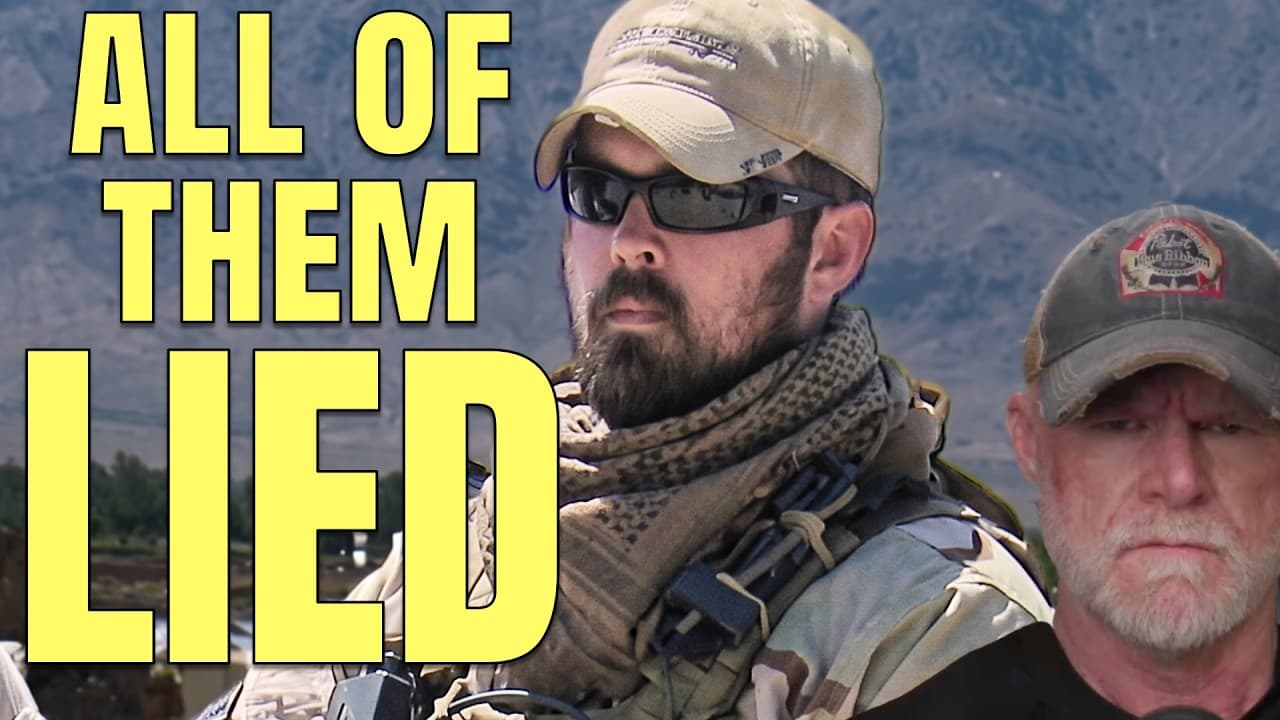
Available debriefs and competing accounts challenge major elements of the Lone Survivor narrative, including the alleged vote about the goat herders, the reported number of militants, and how much ammunition Marcus Luttrell fired. The discussion concludes that uncertainty and institutional pressure may shape military stories, but named authors remain responsible for claims published under their names.
Transcript
No, that takes agency away from the authors who choose to lie. >> Gulab found him 100% with full mags and you know he never fired a shot and all this stuff. He in the book says that he shot all but one magazine basically >> which I'm sure they sit in a room and say you know what for the greater good we can get more people interested in joining >> a... Read More
Key Insights
- The published Lone Survivor story is challenged by debriefs, official reports, intelligence material, and testimony discussed in the interview. The disputed elements include the mission’s name, a purported team vote, the presence of goat herders, enemy-force estimates, and claims about Marcus Luttrell’s ammunition use.
- Authorship carries personal responsibility for factual claims, according to Andy Stumpf and the host. Institutional pressure, political objectives, publishers, or military leadership may influence a book, but those factors do not remove the responsibility of people who approve and publish assertions under their own names.
- The alleged vote to release goat herders is absent from the typed version of Luttrell’s debrief discussed in the interview. Michael Murphy’s father also reportedly said the vote never happened, while Luttrell later described it as a mechanism for explaining a fast exchange of individual assessments.
- Enemy-force estimates differ substantially among the accounts presented. Luttrell reportedly described 30 to 40 militants and claimed six or seven personal kills in one account, while the book raised the opposing force as high as 200, a figure portrayed as geographically implausible by the interview participants.
- An intelligence source connected to Shah’s militia reportedly described the engagement without mentioning goat herders. The discussion cautions that any single source may have observed only part of a complex event, so conflicting testimony should not automatically be treated as conclusive proof that another participant lied.
- The Newsweek article did not state that Luttrell never fired a shot, according to its author. He said readers inferred that conclusion from reporting that Gulab found Luttrell with full magazines, while the available information did not establish precisely how much ammunition Luttrell carried, fired, replaced, or recovered.
- The ammunition question remains unresolved because the discussion lacks a verified inventory of what Luttrell carried into the mission and brought back. The host calculates that 11 magazines holding 30 rounds each, plus one chambered round, would total 331 rounds, but treats that calculation as context, not proof.
- The Lone Survivor narrative is characterized as political and potentially useful for recruitment, but the discussion does not establish a single institutional explanation for every discrepancy. It distinguishes deliberate authorship choices from poor intelligence, incomplete observation, trauma, memory problems, and assumptions added by audiences or later storytellers.
Install to Summarize YouTube Videos and Get Transcripts
Explore YouTube Video Summarizer or Get YouTube Transcript Extractor
Questions & Answers
Q: Did the Operation Red Wings team vote to release the goat herders?
The discussion concludes that the formal vote portrayed in Lone Survivor was probably not an accurate description of events. The typed version of Marcus Luttrell’s debrief reportedly contains no mention of a vote, and Michael Murphy’s father has said it never occurred. Luttrell later explained that he used the idea of a vote as a mechanism to help readers understand a rapid exchange of assessments.
Q: How many militants attacked the SEAL team during Operation Red Wings?
The source material presents no uncontested figure. Marcus Luttrell reportedly described 30 to 40 militants in one account, while Lone Survivor increased the number as high as 200. An intelligence source who was allegedly involved described approximately eight to 10 men and allowed that several more could have participated. People reviewing that account considered roughly 12 to 20 plausible.
Q: Did Marcus Luttrell fire his weapon during Operation Red Wings?
The discussion does not establish whether Marcus Luttrell fired or how many rounds he used. A claim that Gulab found him with full magazines led some readers to infer that he never fired, but the Newsweek article’s author explicitly says he did not publish that conclusion. Without verified records of Luttrell’s starting and recovered ammunition, the question remains unresolved.
Q: How much ammunition could Marcus Luttrell have carried?
The host discusses 11 magazines as a possible load and calculates that 11 fully loaded magazines at 30 rounds each, plus one round already chambered, would equal 331 rounds. He also notes that Luttrell might have acquired other magazines after firing. Because no exact ammunition log is presented, the calculation cannot determine how many rounds he actually fired.
Q: Why is the Lone Survivor account described as misinformation?
The account is described as misinformation because several important details reportedly conflict with debriefs, intelligence material, and later testimony. Examples include the mission’s name, the purported vote about releasing goat herders, enemy numbers that rose as high as 200, and disputed implications about ammunition. The discussion still distinguishes false claims from honest mistakes, incomplete observations, and unreliable intelligence.
Q: Who is responsible for inaccurate claims in Lone Survivor?
Andy Stumpf’s position is that the authors remain responsible for what they place on paper, even if military leaders, government officials, publishers, or political objectives influenced the project. The host agrees that a person whose name appears on a book should review and challenge questionable claims. Trauma and delegation may provide context, but they do not automatically remove authorial agency.
Q: Was Lone Survivor created as military recruitment propaganda?
The discussion raises the possibility that Lone Survivor functioned as a political or recruitment-oriented story, especially because a compelling heroic account could encourage public support and military enlistment. However, it does not present definitive proof of a coordinated propaganda program. Its firmer conclusion is that published choices added misinformation and that institutional influence does not excuse authors from checking their claims.
Q: Why do accounts of Operation Red Wings conflict so sharply?
The discussion identifies several possible causes: poor military intelligence, limited viewpoints, political incentives, storytelling choices, trauma, faulty memory, and later audience assumptions. A militia source, Luttrell, debrief writers, and intelligence personnel may each have possessed different portions of the event. Some contradictions may reflect deliberate embellishment, while others may arise because no observer saw every relevant action.
Summary & Key Takeaways
-
The discussion compares the Lone Survivor narrative with a typed debrief, official reports, intelligence accounts, and statements attributed to people connected with Operation Red Wings. It focuses on discrepancies involving the mission’s name, the alleged vote about releasing goat herders, the number of militants, and Marcus Luttrell’s reported ammunition use.
-
The alleged vote is presented as a major narrative problem because the typed debrief reportedly contains no mention of it, and Michael Murphy’s father has also said it never happened. Luttrell later characterized the vote as a storytelling mechanism for conveying a rapid exchange of assessments among the four team members.
-
Estimates of the opposing force vary sharply across the accounts discussed. Luttrell reportedly described 30 to 40 militants in one account, while the book raised the number as high as 200. An intelligence source involved with Shah’s militia reportedly described approximately eight to 10 men, with 12 to 20 considered plausible.
Read in Other Languages (beta)
Share This Summary 📚
Summarize YouTube Videos and Get Video Transcripts with 1-Click
Try YouTube Summary with ChatGPT & Claude or YouTube Transcript Generator
Explore More Summaries from Jamesons Travels 📚


Summarize YouTube Videos and Get Video Transcripts with 1-Click
Try YouTube Summary with ChatGPT & Claude or YouTube Transcript Generator