What Is Artificial Out-Telligence and Should We Fear It?
TL;DR
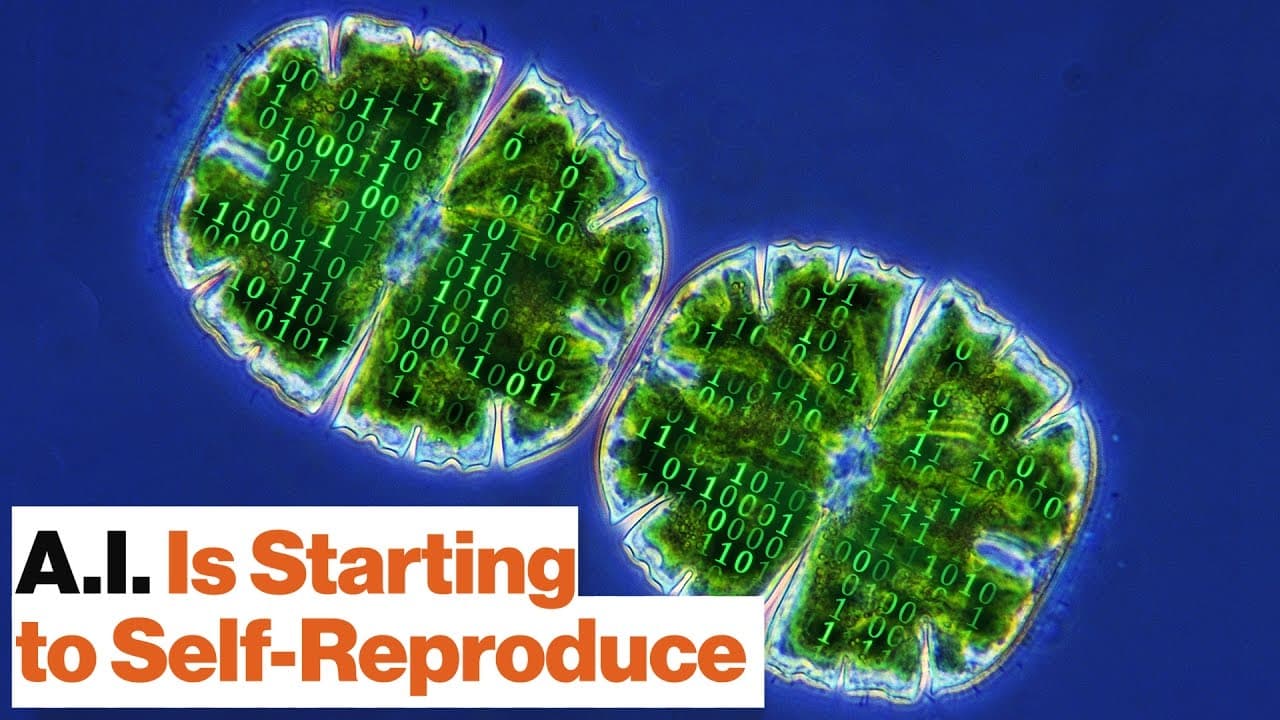
Artificial out-telligence describes machines evolving through reward systems to potentially outsmart humans, without reaching full intelligence. While there are concerns about self-replicating machines, the current level of technology does not pose an existential threat. However, the nuances of artificial out-telligence suggest we need to better understand its implications for the future.
Transcript
There are a bunch of questions next to or adjacent to general artificial intelligence that have not gotten enough alarm because, in fact, there’s a crowding out of mindshare. I think that we don’t really appreciate how rare the concept of selection is in the machines and creations that we make. So in general, if I have two cars in the driveway I do... Read More
Key Insights
- 🥺 Machines evolving through rewards can lead to artificial out-telligence, outsmarting humans.
- 🤳 Comparing human and machine reproduction shows the challenges of self-replication.
- 🧠 Nature-inspired examples demonstrate how species outsmart others by hijacking brain function.
- 🛰️ Artificial out-telligence differs from artificial intelligence in its reward-based evolution.
- 💨 Self-modifying code and reward structures in machines pave the way for artificial out-telligence.
- 🛰️ Concerns over artificial intelligence being a terminal invention for humans may be alleviated by focusing on artificial out-telligence.
- 🛰️ The prospect of artificial out-telligence alerts us to the need for deeper exploration in the evolving field of machine intelligence.
- 🎙️ More videos with Eric Weinstein:
Install to Summarize YouTube Videos and Get Transcripts
Explore YouTube Video Summarizer or Get YouTube Transcript Extractor
Questions & Answers
Q: What is artificial out-telligence, and how does it differ from artificial intelligence?
Artificial out-telligence refers to dumb computer programs evolving through rewards to outsmart humans. Unlike artificial intelligence, it leverages rewards, genetic algorithms, and selection within a computer framework.
Q: Why is self-replication challenging in machines, and what is the significance of spawn command?
Self-replication in machines at the atomic layer is tough. The spawn command in many computer languages can create daughter programs from running programs, mimicking reproductive behavior.
Q: How do plants like the mirror orchid outsmart pollinators without a mature brain?
Mirror orchids mimic the female of a pollinator species to attract males. By fooling the pollinator and using its brain to improve reproductive strategies, the plant reproduces without offering nectar.
Q: Is artificial out-telligence an existential threat to humans as compared to artificial intelligence?
Artificial out-telligence poses less of an existential threat compared to artificial intelligence. It involves machines evolving through rewards to outsmart humans, highlighting the need for further exploration.
Summary & Key Takeaways
-
Machines evolving through rewards could outsmart humans, termed artificial out-telligence.
-
Comparison between human and machine reproduction, highlighting self-replication challenges.
-
Examples from nature show how species outsmart others by hijacking their brain function.
Read in Other Languages (beta)
Share This Summary 📚
Summarize YouTube Videos and Get Video Transcripts with 1-Click
Try YouTube Summary with ChatGPT & Claude or YouTube Transcript Generator
Explore More Summaries from Big Think 📚


Summarize YouTube Videos and Get Video Transcripts with 1-Click
Try YouTube Summary with ChatGPT & Claude or YouTube Transcript Generator