How Do Beliefs Shape Identity and Behavior?
TL;DR
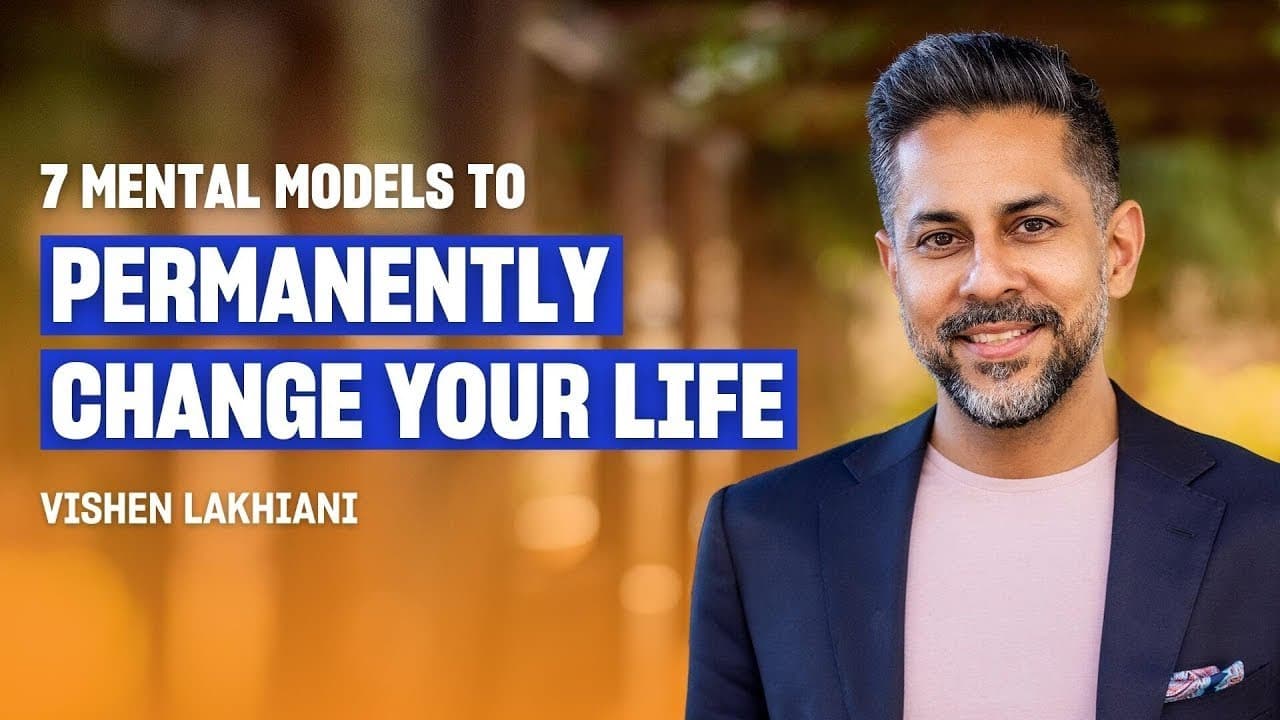
Beliefs about yourself and the world can influence your identity, behavior, relationships, and perception of results. Lasting transformation therefore requires examining underlying models of reality, not only adopting new habits. By deliberately replacing limiting beliefs with healthier ones and reinforcing a chosen identity, you may change how you act and how other people respond to you.
Transcript
the idea that whatever you believe about the world becomes true for the world it is about what are your fundamental ideas about the world that you believe and are convinced are true if you change that that is the most important trigger for transformation what you believe about someone else will affect how they show up to you if you believe your par... Read More
Key Insights
- Beliefs are models of reality that shape how people interpret themselves, other people, and the world. Lakhiani presents changing these fundamental assumptions as a primary trigger for transformation because new beliefs can produce different expectations, behaviors, and experiences.
- Identity crafting is the fifth and most important element in the growth mindset framework presented in the talk. It involves deliberately deciding who you are becoming, then reinforcing beliefs that support health, wellness, confidence, ease, or another desired way of living.
- Models of reality function like computer hardware, while systems for living function like software. Diets, exercise routines, sleep rituals, parenting practices, and work procedures are systems, but their effects may remain limited when underlying beliefs conflict with the behaviors being practiced.
- The law of resonance states that the universe reflects who you are rather than simply giving you what you want. In Lakhiani's account, desired results become more likely when a person's identity, beliefs, and behavior are aligned with those results.
- Repeated or uncritically accepted ideas can operate like hypnosis. Drawing on the account of plastic surgeon Maxwell Maltz, the talk argues that people may become convinced of ideas received from others or repeatedly stated to themselves, often without recognizing the process.
- Confidence can alter how others perceive a person even when the confidence trigger is not directly observable. In the cited cologne study, women watching men through video rated cologne-wearing participants as more attractive despite being unable to smell them.
- Perception can influence how the body responds to ordinary activity. Hotel maids who were told that their demanding work counted as beneficial exercise later showed healthier biomarkers, according to the study described, even though the physical tasks themselves had not changed.
- Beliefs about other people can influence how those people appear and respond within a relationship. The talk suggests that labeling a partner as lazy or holding fixed expectations about a child may contribute to interactions that reinforce the original belief.
Install to Summarize YouTube Videos and Get Transcripts
Explore YouTube Video Summarizer or Get YouTube Transcript Extractor
Questions & Answers
Q: How do beliefs shape identity and behavior?
Beliefs provide a mental framework for interpreting experiences and deciding how to act. When someone believes they are attractive, creative, healthy, or capable, that identity may influence posture, confidence, choices, and persistence. Lakhiani argues that the world then appears to reflect the identity because behavior changes and other people respond to the signals produced by that changed behavior.
Q: What is identity shifting in Vishen Lakhiani's framework?
Identity shifting is the deliberate replacement of beliefs that no longer serve a person with beliefs supporting a healthier or more useful identity. Lakhiani describes it as changing the mental hardware beneath everyday habits. Rather than focusing only on a new diet, exercise practice, or routine, a person first decides what they believe about themselves and reinforces that chosen identity.
Q: What is the difference between models of reality and systems for living?
Models of reality are beliefs about yourself and the world, while systems for living are repeated practices such as diets, sleep rituals, exercise routines, parenting methods, and work procedures. Lakhiani compares beliefs to computer hardware and systems to software. His central claim is that changing the underlying beliefs can make behavioral systems more effective and sustainable.
Q: What does the law of resonance mean?
The law of resonance, as presented in the talk, means that the universe reflects who a person is rather than simply delivering what the person wants. Lakhiani uses this idea to emphasize identity over desire. If beliefs, self-concept, and behavior align with a goal, the person's actions and interactions may begin producing experiences consistent with that identity.
Q: Why can changing beliefs be more important than changing habits?
Habits operate within assumptions about identity, capability, and the world. A person can adopt a new exercise routine or diet while continuing to believe they are unhealthy, incapable, or destined to fail. Lakhiani argues that changing these underlying models of reality creates a stronger foundation because habits can then express and reinforce the new identity instead of conflicting with it.
Q: How did cologne affect perceived attractiveness in the study described?
Men were recorded introducing themselves to a camera, and women later rated their attractiveness through video. Some men had applied an expensive cologne before recording. Although the women could not smell the participants, the men wearing cologne were rated as more attractive. The talk attributes this result to a changed self-perception that subtly influenced how the men presented themselves.
Q: What did the hotel maid study show about perceived exercise?
Hotel maids performed physically demanding work, including walking up and down stairs, vacuuming, moving mattresses, and making beds, but they did not necessarily view those tasks as exercise. Researchers told some maids that their work involved 10,000 daily steps and benefited their bodies. One month later, those who received that message showed healthier biomarkers, according to the talk.
Q: How can someone begin changing a limiting identity?
A person can begin by identifying a repeated belief that shapes unwanted behavior, then choosing a healthier belief connected to the identity they want to embody. The talk recommends treating this as an upgrade to the mind's underlying hardware. Repeating and implanting the new belief is intended to influence expectations, choices, confidence, and the systems practiced in daily life.
Summary & Key Takeaways
-
Vishen Lakhiani argues that personal transformation begins with identity and the beliefs people accept as true. He calls these beliefs models of reality and compares them to computer hardware. Habits, routines, diets, exercise practices, and other systems for living function like software operating on top of that underlying mental structure.
-
The talk contrasts wanting an outcome with becoming the kind of person who naturally produces it. Through the law of resonance, Lakhiani claims that the world reflects who a person believes they are. Changing identity can therefore alter behavior, confidence, perception, and the responses a person receives from other people.
-
Examples involving hypnotherapy, cosmetic surgery, cologne, clothing, and hotel maids illustrate how changed perceptions may produce observable effects. The central practice is identity shifting: identify beliefs that no longer serve you, choose healthier beliefs, and repeatedly implant those beliefs until the new identity begins guiding actions, expectations, and daily experience.
Read in Other Languages (beta)
Share This Summary 📚
Summarize YouTube Videos and Get Video Transcripts with 1-Click
Try YouTube Summary with ChatGPT & Claude or YouTube Transcript Generator
Explore More Summaries from Mindvalley Talks 📚





Summarize YouTube Videos and Get Video Transcripts with 1-Click
Try YouTube Summary with ChatGPT & Claude or YouTube Transcript Generator