How Much Do Americans Support Voter ID Laws?
TL;DR
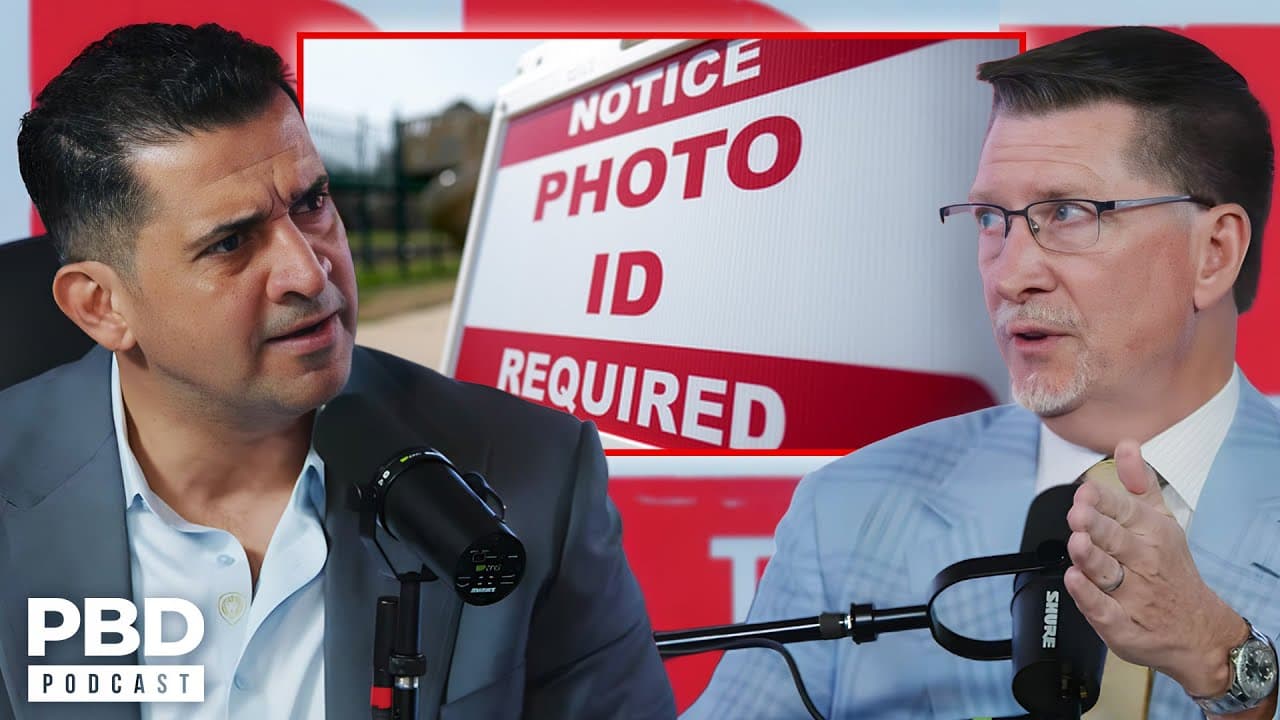
A CNN poll found photo ID to vote is favored by 85% of white Americans, 82% of Latinos, and 76% of black Americans, making it a roughly 90-10 issue with no real split by party or race. The PBD panel argues Democratic opposition suggests the requirement affects vote counts at the margins.
Transcript
Did you guys see the poll yesterday of what percentage of Americans are okay with people having ID IDs, valid IDs? Did you see this from CNN? I'm so glad you guys haven't seen it cuz I want to see a raw reaction from you. Can you please can you please play this clip right there? Watch this folks. Go ahead. Favorite photo ID to vote. 85% of white pe... Read More
Key Insights
- A CNN poll found favor for photo ID to vote across racial groups: 85% of white Americans, 82% of Latinos, and 76% of black Americans, leading the analyst to conclude voter ID is not controversial by party or by race.
- The panel frames voter ID as an 80-20 or even 90-10 or 95-5 issue, arguing no reasonable average person on the street, regardless of race, would make a strong argument against requiring a photo ID to vote.
- The SAVE Act is the specific voter ID legislation being debated, which Chuck Schumer called an abomination and 'Jim Crow 2.0 across the country,' vowing Democrats would do everything they can to stop it.
- More than half of US states either do not require ID to vote at all or do not require a photo, with states like New York, California, Nevada, and Illinois cited as requiring no ID.
- 15 states allow some or all voters to sign an affidavit attesting to their identity at the poll instead of presenting identification, according to the numbers displayed on screen.
- The panel argues that if the opposing side fears a law, it signals a real impact, reasoning that Democratic opposition means voter ID must affect voting counts at the margins in close races.
- The 'voter ID is racist' argument holds that requiring paid IDs disproportionately burdens people of color who may lack IDs, discouraging voting, which panelists dismiss as ignorant given widespread ID access.
- Immigration attitudes reflect proximity, not just party: in Arizona, Republicans and Democrats were only seven points apart, versus 21 points in Missouri, because Arizonans directly encountered illegal immigrants near their homes.
Install to Summarize YouTube Videos and Get Transcripts
Explore YouTube Video Summarizer or Get YouTube Transcript Extractor
Questions & Answers
Q: What did the CNN poll say about voter ID support by race?
The CNN poll found that support for requiring a photo ID to vote crosses racial lines. According to the clip, 85% of white people favor it, 82% of Latinos favor it, and 76% of black Americans favor it. The analyst concluded that voter ID is not controversial in the country, and that it is not controversial by party and not controversial by race, since the vast majority of Americans agree you should have a photo ID to be able to vote.
Q: What is the SAVE Act and why is it controversial?
The SAVE Act is the voter ID legislation debated in the video. Senator Chuck Schumer called it an abomination and described passing it as 'Jim Crow 2.0 across the country,' vowing Democrats would do everything they can to stop it, including using Senate rules to force a talking filibuster. The panel argued the strong Democratic opposition suggests the law would meaningfully affect voting counts at the margins in close races, which is why it is contentious.
Q: Why do some people argue voter ID laws are racist?
In the clip, critics argue voter ID laws are racist because they claim Republicans are trying to make it hard for minorities to vote. The argument states that requiring paid IDs disproportionately burdens people who don't have IDs, who are described as usually people of color, forcing them to pay money to vote. One speaker framed it as a legacy of white supremacy. Supporters countered that this reasoning is ignorant, since IDs are easy to get and widely held.
Q: How many states don't require ID to vote?
According to the panel, more than half of US states either do not require ID to vote at all or do not require a photo ID. The on-screen graphic categorized states into photo ID required, non-photo ID required, and no ID required. States cited as requiring no ID included New York, California, Nevada, and Illinois. Additionally, 15 states allow some or all voters to sign an affidavit attesting to their identity at the poll instead of presenting identification.
Q: Why does the panel believe voter ID would make a difference?
The panel reasons that you know a law could have a massive impact when the opposing side fears it. They argue the only reason the Democratic Party opposes voter ID is that it must affect voting counts at the margins. They are not claiming millions of fraudulent votes, but suggest that in races decided within a narrow margin, a voter ID requirement could remove marginal votes, flip some districts, and flip some races.
Q: What was the panel's reaction to CNN running this poll?
The panel was surprised the poll came from CNN, with one panelist noting CNN had been on the other side of the voter ID issue for as long as they had been discussing it. They joked that people in the DNC would be furious, imagining angry calls to the CEO asking what the newsroom was doing. They also referenced Larry Ellison potentially owning CNN, joking it would bring more neutrality and stories.
Q: How does immigration proximity affect political attitudes according to the panel?
The panel argued that direct exposure to illegal immigration narrows the partisan gap on the issue. In Arizona, Republicans and Democrats were only seven points apart on immigration because residents personally encountered homeless immigrants panhandling outside Walmart, at gas stations, at ATMs, and sleeping in alleyways near their homes. In Missouri, the gap was 21 points apart, because it remained a purely ideological party difference without those personal safety concerns from direct encounters.
Q: What point did the panel make comparing airport ID to voting?
A panelist argued it is inconsistent to require ID at the airport but not to vote, asking how someone can afford to show ID at the airport but not to vote. Another clarified that airport travel requires not just any ID but the up-to-date REAL ID from your state, the one with the little symbol in the corner of your driver's license. The comparison was used to suggest that requiring ID to vote is a reasonable, everyday standard already accepted in other contexts.
Summary & Key Takeaways
-
A CNN poll showed majority support for requiring photo ID to vote across all racial groups: 85% of white people, 82% of Latinos, and 76% of black Americans. The panel expressed surprise the poll came from CNN, given the network's history opposing voter ID, and called it a reasonable position.
-
The debate centers on the SAVE Act, which Chuck Schumer labeled 'Jim Crow 2.0' and an abomination. Critics who call voter ID racist argue it disproportionately makes people of color pay to get IDs, discouraging them from voting. Panelists dismissed these arguments as ignorant and stupid.
-
More than half of states don't require ID or photo ID to vote, with 15 allowing affidavits instead. The panel argued Democratic opposition proves voter ID affects vote counts at the margins, potentially flipping close districts, and predicted the left will fight hard to stop it from passing.
Read in Other Languages (beta)
Share This Summary 📚
Summarize YouTube Videos and Get Video Transcripts with 1-Click
Try YouTube Summary with ChatGPT & Claude or YouTube Transcript Generator
Explore More Summaries from Valuetainment 📚



Summarize YouTube Videos and Get Video Transcripts with 1-Click
Try YouTube Summary with ChatGPT & Claude or YouTube Transcript Generator