How Ryan Holiday Writes a First Draft Without Editing
TL;DR
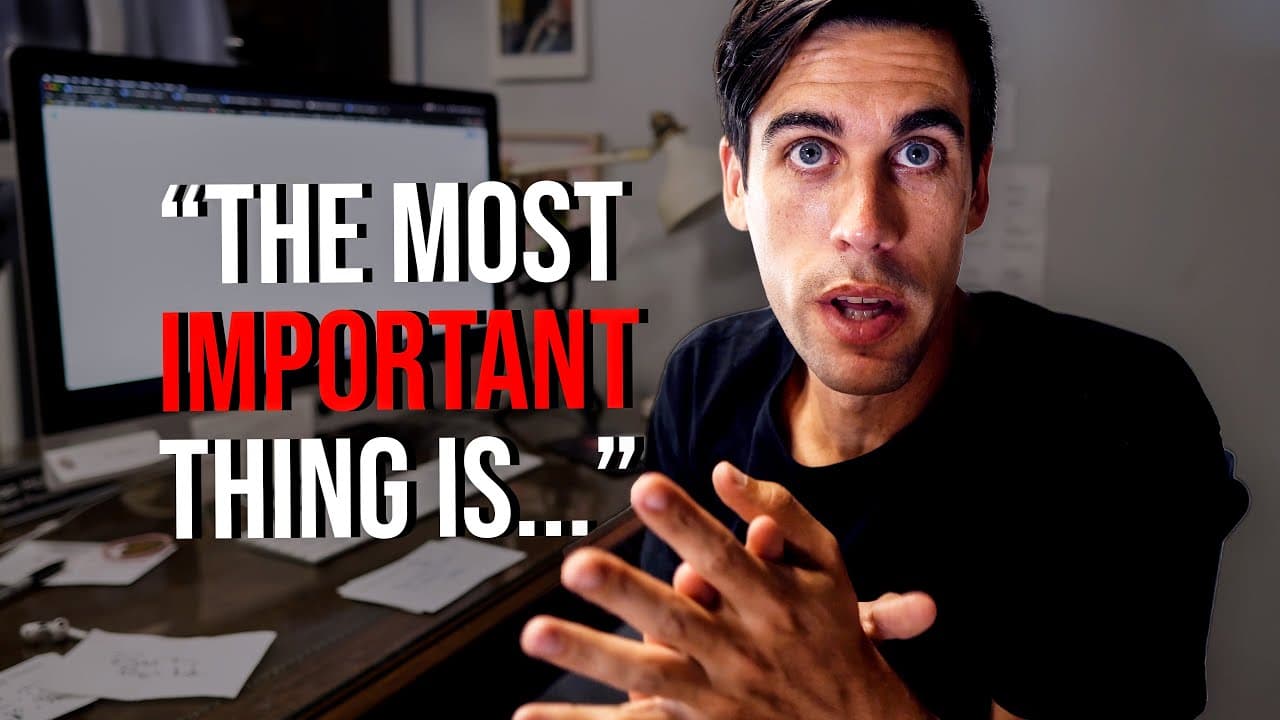
Momentum matters more than perfection in a first draft, so keep writing new generative material and mark rough spots to fix later rather than editing as you go. Ryan Holiday writes note cards to himself, keeps a focused uninterrupted hour a day on the book, and lets the title emerge only once the book reveals what it is really about.
Transcript
so it's funny I wrote that do your best chapter for courage originally and then I the you know the Jimmy Carter one yeah and then I moved it to this book now that I'm thinking about how I want to structure part one of the justice book about the sort of personal code of conduct and ethics or whatever I'm wondering if that actually fits better there ... Read More
Key Insights
- Forward momentum is the most important thing on any big project like a book, which means writing new, generative material and refusing to get bogged down in the weeds of editing while you draft.
- Editing while you write stalls progress, compared to plowing a field: if you look behind you as you plow, the horse veers, so you focus on where you are going next rather than what is behind you.
- Note cards written to yourself are a core tool, and some turn out to be nothing while others turn out to be exactly what you needed even though you could not have conceived of needing it when you wrote it.
- An uninterrupted, focused hour a day on a book can make a huge difference, which is why Ryan keeps working on the book even while on vacation, treating the book as what he actually wants to do.
- A book's title often cannot be known at the outset because you do not know the book until you have written a chunk of it, and the title emerges as the book becomes clear to you.
- Justice in the stoic sense means doing the right thing, not just the legal system or how government treats people, which reshaped the book toward personal and communal everyday action.
- The Justice book is structured into parts: personal justice built on honor and ethics with Harry Truman as the main example, and communal justice told through the Abolitionist and women's rights movements rather than one person.
- Practicing philosophy requires seeking out things that make you deeply uncomfortable, so Ryan visits the African Burial Ground to confront profound injustices rather than staying with high-minded ideals alone.
Install to Summarize YouTube Videos and Get Transcripts
Explore YouTube Video Summarizer or Get YouTube Transcript Extractor
Questions & Answers
Q: Why should you not edit while writing a first draft?
Editing while you write kills forward momentum, which Ryan Holiday considers the most important thing on any big project like a book. He compares it to plowing a field: someone told him that if you look behind you as you plow, the horse will veer, and it is even echoed in the Bible about not looking behind you as you plow. So he marks rough spots to return to later in a pseudo editing and refining phase, and keeps writing new generative material to preserve momentum.
Q: How does Ryan Holiday use note cards in his writing process?
Ryan writes short notes to himself on note cards, sometimes years before he needs them. He describes a card, probably seven or eight years old from before he even started using the cards, referencing page 28 of a Maxwell Perkins book about a young Perkins watching a friend nearly drown and learning to never refuse a responsibility. Some notes turn out to be nothing and some turn out to be exactly what you needed, even though you could not have conceived of needing them when you wrote them.
Q: How much does Ryan Holiday write while on vacation?
Ryan says he is technically on vacation but not on vacation from the book, only from doing the stuff he does not want to do, since the book is what he actually wants to be doing. He tries to spend about a good hour a day on it, and notes that an uninterrupted, focused hour can make a huge difference. He balances work and family while still finishing the intro and moving on to reading for later parts of the book.
Q: Why doesn't Ryan Holiday know the book's title at the start?
Ryan explains that it can be rare not to know the title at the outset, but you do not know the book until you have written it or written a chunk of it. As the book becomes clearer to him, so does what it is really about. He started with 'And Justice For All' but disliked that it did not tell you what to do, and a random note card phrase, 'right thing right now,' emerged as a possible title once he understood the book was about doing the right thing.
Q: What is the new book about according to Ryan Holiday?
The new book is about Justice, but Ryan reframes justice away from the legal system or how government treats people toward doing the right thing in everyday actions and decisions. He cites Marcus Aurelius saying you do the right thing and the rest does not matter. The book covers personal justice, communal justice or the common good, and can include designing a government, culture, or organization that does the right thing, but is really about you and me doing the right thing.
Q: How is Ryan Holiday structuring the Justice book?
The book splits into parts. Part one is personal justice built on a code of values, personal honor, and ethics, with examples like Regulus keeping his word and returning under penalty of death, and Harry Truman as the main example of personal rectitude and responsibility. The next part covers communal justice and the common good, told not through one singular person but through multiple stories like a passing of torches, starting with the Abolitionist Movement and the women's rights movement.
Q: Why does Ryan Holiday visit uncomfortable places while writing about Justice?
Ryan visits the African Burial Ground Memorial in New York, where thousands of enslaved Africans were buried over a hundred or so years and then forgotten both literally and figuratively in American history, near a US Courthouse. He argues that while high-minded ideals are inspiring, you must also explore the unpleasant, uncomfortable parts. If you are not seeking out things that challenge you, you are probably not practicing philosophy or stoicism or pursuing wisdom and justice, which he says are rooted in truth and fact.
Q: What books is Ryan Holiday reading for the Justice book?
For the communal justice section, Ryan plans to use 'The Women's Hour' for the women's rights movement and 'Bury the Chains' for the Abolitionist Movement, and he is looking for one or two more recommendations to help. For Harry Truman, he references an oral history called 'Plain Speaking' by Merle Miller, which covers Truman's reading of Marcus Aurelius's Meditations, and a book about Maxwell Perkins written by A. Scott Berg that inspired his responsibility chapter.
Summary & Key Takeaways
-
Ryan keeps momentum by writing new generative material and marking rough sections to revisit in a later editing and polishing phase, rather than editing while drafting. He compares editing mid-draft to a horse veering while plowing if you look behind, so he focuses only on where the writing is going next.
-
His process relies on note cards written to himself, some from seven or eight years ago. One card pointing to page 28 of a Maxwell Perkins book about never refusing responsibility became the perfect story for a chapter, showing how old notes can turn out to be exactly what was needed.
-
The Justice book, over a third done and due at the end of August, splits into personal justice with Harry Truman and communal justice told through the Abolitionist and women's rights movements. The title shifted from 'And Justice For All' toward 'Right Thing, Right Now' as the book revealed its true subject.
Read in Other Languages (beta)
Share This Summary 📚
Summarize YouTube Videos and Get Video Transcripts with 1-Click
Try YouTube Summary with ChatGPT & Claude or YouTube Transcript Generator
Explore More Summaries from Daily Stoic 📚


Summarize YouTube Videos and Get Video Transcripts with 1-Click
Try YouTube Summary with ChatGPT & Claude or YouTube Transcript Generator