What Are the 5 Foods That Won't Break Your Fast?
TL;DR
Black coffee, unsweetened tea, heavy cream, MCT oil, soluble fiber, and small portions of selected nuts are presented as options that may preserve fasting ketone production. Sugar and protein generally raise insulin and suppress ketones, while C8 MCT oil is described as especially ketogenic. Read on to compare these choices, spot hidden fasting disruptors, and ease into time-restricted eating.
Transcript
- Now fasting is all the rage, but it doesn't have to mean total deprivation. In fact, there are a few smart things you can consume that won't break your fast and may even make your fast more effective. Whether you're fasting to support your gut burn fat, improve mental clarity, or extend your health span, this episode is for you. I'll walk you thr... Read More
Key Insights
- Ketone production is presented as the main measure of an effective fast because ketones signal mitochondria to waste calories, uncouple, repair themselves, and produce more mitochondria. Extending the daily period of ketone production is therefore the central aim of time-restricted eating.
- Black coffee and unsweetened tea are fasting-compatible drinks that may support energy and mental focus. Their polyphenols are said to promote mitochondrial uncoupling even without ketosis, although adding heavy cream is claimed to reduce the availability of those polyphenols.
- Sugar and protein are described as fasting disruptors because both stimulate insulin production. Rising insulin restricts the release of free fatty acids from fat cells and, with rare exceptions, stops the liver from producing ketones.
- MCT oil is presented as an exception among fats because it passes through the intestinal wall and travels directly to the liver, where it promotes ketone production regardless of insulin levels. C8 MCT is identified as the most ketogenic type discussed.
- Soluble fiber is described as a tool for controlling hunger without providing absorbable fuel. Basil seeds and psyllium husk feed gut microbes, which may send appetite-related signals such as GLP-1 to the brain and reduce the desire to eat.
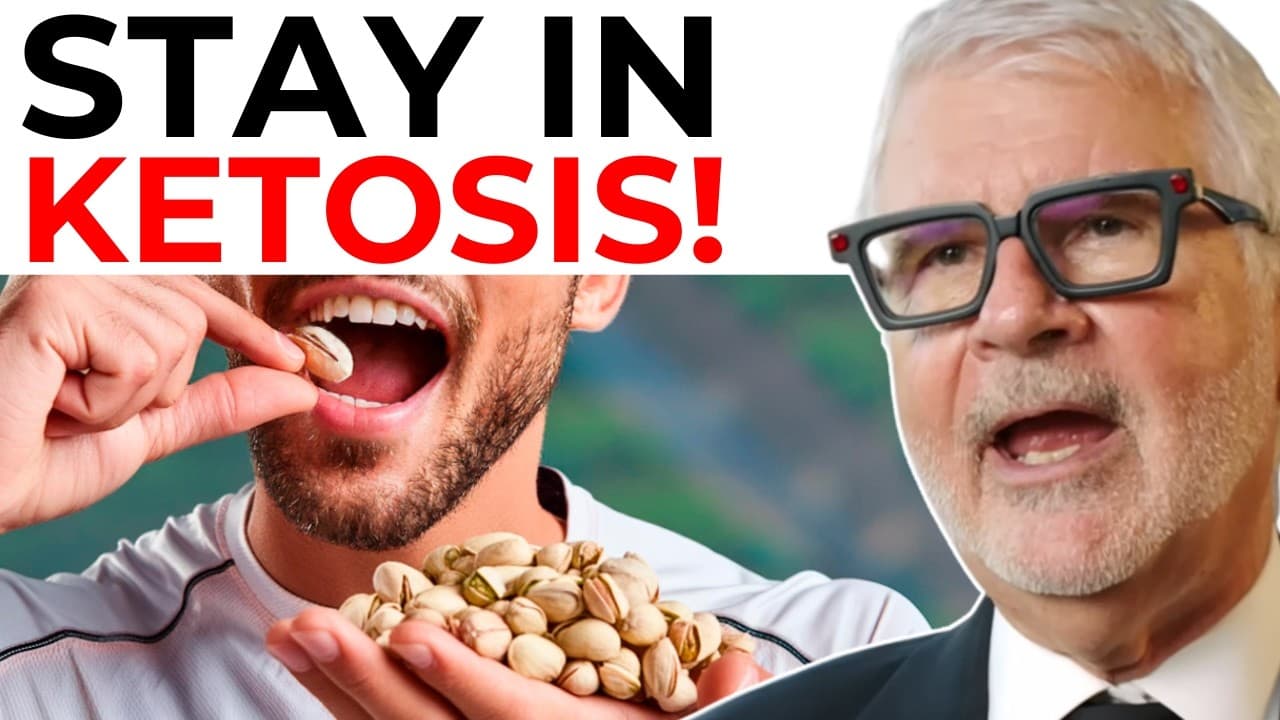
- Small portions of pistachios, macadamias, or Brazil nuts may preserve ketone production during fasting-mimicking protocols. The transcript cites one human study involving a nut bar, while acknowledging that this limited evidence leaves the choice open to individual judgment.
- Supplement suitability is determined mainly by hidden sugar and protein content. Unsweetened electrolyte powders are considered acceptable, while most gummy supplements, collagen drinks, amino acids, flavor boosters, and sweetened products may interfere with fasting or ketone production.
- Time-restricted eating is best developed gradually by moving breakfast later each week instead of immediately attempting a narrow eating window. The stated target is a six-to-eight-hour eating window, with fasting-safe options used strategically when hunger or poor concentration makes the transition difficult.
Install to Summarize YouTube Videos and Get Transcripts
Explore YouTube Video Summarizer or Get YouTube Transcript Extractor
Questions & Answers
Q: What can you consume without breaking a fast?
The fasting-compatible options presented include black coffee, unsweetened black or green tea, heavy cream, allulose, monk fruit, MCT oil, basil seeds, psyllium husk, and unsweetened electrolyte powders. Small portions of pistachios, macadamias, or Brazil nuts may also preserve ketone production, although the cited human evidence is limited. Check packaged products for hidden sugar, protein, collagen, or amino acids.
Q: Why is ketone production important during fasting?
The transcript presents extending ketone production as the central goal of time-restricted eating. Ketones fuel cells and signal mitochondria to uncouple, repair themselves, and make more mitochondria. Foods or drinks that stop ketone production may therefore undermine the intended fasting period.
Q: Does coffee or tea break a fast?
Black coffee and unsweetened black or green tea are described as compatible with fasting and may support energy and mental focus. Their polyphenols are also said to promote mitochondrial uncoupling without ketosis. Milk is discouraged because it contains sugar, while heavy cream is presented as fasting-compatible but may reduce polyphenol availability.
Q: Does MCT oil break a fast?
MCT oil is presented as an exception that promotes ketone production rather than stopping it. It passes through the intestinal wall and travels directly to the liver, where the transcript says it supports ketone production regardless of insulin levels. C8 MCT is identified as the most ketogenic type discussed.
Q: How much MCT oil should a beginner use while fasting?
The suggested approach is to start with a teaspoon and gradually work up to a tablespoon. The speaker preferably recommends about three tablespoons per day. Small initial amounts are advised as the body adjusts.
Q: How can soluble fiber reduce hunger during a fast?
Basil seeds and psyllium husk are presented as soluble-fiber options that feed gut microbes without supplying absorbable fuel. Those microbes may send signals such as GLP-1 to the brain that reduce hunger and cravings. The fibers should be mixed with water or tea rather than juice or sweeteners.
Q: Can you eat nuts without stopping ketone production?
A small handful of pistachios, macadamias, or Brazil nuts may preserve ketone production during a fasting-mimicking protocol. The cited human research involved a nut bar eaten as a morning meal, but the transcript acknowledges that the human evidence is limited. Flavored nuts should be checked for hidden sugar.
Q: Which supplements and fasting products should be avoided?
Products containing sugar, protein, collagen, amino acids, or problematic sweeteners may stimulate insulin or digestion and interfere with fasting. The page specifically cautions against most gummy supplements, flavored powders, collagen drinks, amino acids, and sweetened products. Unsweetened electrolyte powders are presented as acceptable.
Summary & Key Takeaways
-
The central goal of time-restricted eating is to extend daily ketone production rather than pursue total deprivation. Ketones are described as signals that encourage mitochondria to uncouple, repair themselves, and multiply. Because insulin usually suppresses ketone production, fasting choices should minimize ingredients that stimulate insulin, especially sugar and protein.
-
Black coffee and unsweetened tea are recommended for energy and focus, while heavy cream, allulose, and monk fruit are presented as fasting-compatible additions. MCT oil, especially C8 MCT, is highlighted because it promotes ketone production. Beginners should start with a teaspoon and gradually work toward larger amounts as tolerated.
-
Soluble fibers such as basil seeds and psyllium husk may reduce hunger by feeding gut microbes without supplying absorbable fuel. Small portions of selected nuts may also preserve ketones, although the supporting human evidence described is limited. Fasting should be introduced gradually by delaying breakfast and shortening the daily eating window.
-
The transcript advises checking supplements, fasting drinks, flavored nuts, gummies, and gum carefully. Products containing sugar, protein, collagen, amino acids, or certain sweeteners may interrupt the fasted state. Electrolyte powders without problematic ingredients are presented as acceptable, while fasting should always support health rather than create excessive physical stress.
Read in Other Languages (beta)
Share This Summary 📚
Summarize YouTube Videos and Get Video Transcripts with 1-Click
Try YouTube Summary with ChatGPT & Claude or YouTube Transcript Generator
Explore More Summaries from The Dr. Gundry Podcast 📚




Summarize YouTube Videos and Get Video Transcripts with 1-Click
Try YouTube Summary with ChatGPT & Claude or YouTube Transcript Generator