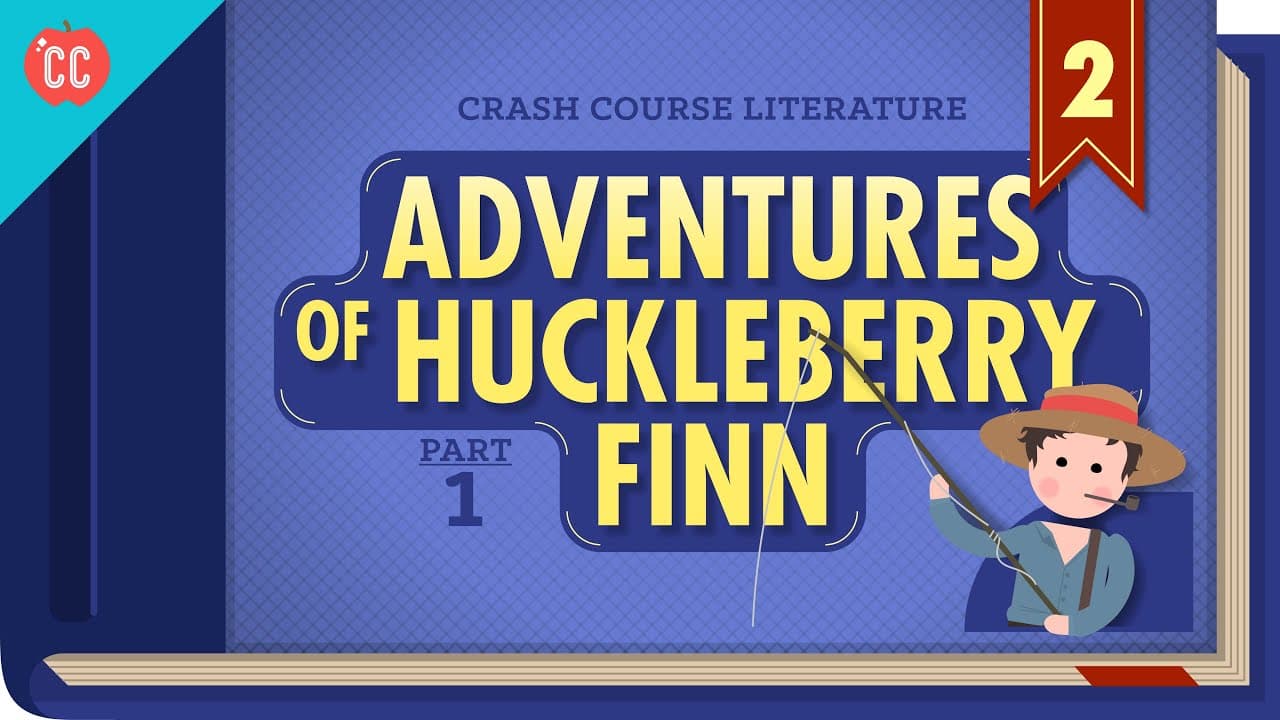
The Adventures of Huckleberry Finn Part 1: Crash Course Literature 302
TL;DR
Exploration of Huck Finn's themes and Mark Twain's life.
Transcript
Hi, I’m John Green, this is Crash Course Literature, and today we’re on a raft, floating down the great American river, reading the great american novel. That’s right, today we’re going to be discussing Mark Twain’s the “Adventures of Huckleberry Finn.” Ernest Hemingway once said, “It’s the best book we’ve had.” “All American writing comes from tha... Read More
Key Insights
- Mark Twain's early life and experiences heavily influenced his writing, particularly 'The Adventures of Huckleberry Finn,' which draws from his boyhood dreams and adventures.
- The novel is celebrated for its casual, conversational language, which was revolutionary at the time and helped establish a new style in American literature.
- Huck Finn is considered the Great American Novel for its exploration of themes such as race, class, and freedom, despite its controversial use of language.
- The relationship between Huck, a poor white boy, and Jim, an enslaved African-American man, is central to the novel, highlighting issues of race and morality.
- Huck's moral journey involves rejecting societal norms and laws that he has been taught, as he chooses to help Jim, even at the risk of damnation.
- The novel's ending is often criticized for its chaotic and jumbled nature, but it remains a significant work for its insights into American society.
- Twain's use of the n-word in the book serves to highlight the racist attitudes of the time, while also allowing Jim's virtues to emerge as refutations of these prejudices.
- Huck's decision to follow his own moral path, despite the risks, makes him a hero in Twain's narrative, embodying the conflict between a sound heart and a deformed conscience.
Install to Summarize YouTube Videos and Get Transcripts
Explore YouTube Video Summarizer or Get YouTube Transcript Extractor
Questions & Answers
Q: What is the significance of the language used in 'Huckleberry Finn'?
The language of 'Huckleberry Finn' is significant because it was revolutionary for its time, using a casual, conversational style that mimicked real speech. This approach set the novel apart from the formal, high-flown language typical of earlier American literature and helped establish a new style that influenced future writers.
Q: Why is Huck Finn considered a hero in the novel?
Huck Finn is considered a hero because he chooses to follow his own moral compass, even when it contradicts societal norms and laws. His decision to help Jim, an escaped slave, despite believing it could lead to his damnation, demonstrates his sound heart and moral courage, making him a heroic figure in Twain's narrative.
Q: How does Twain's use of the n-word affect the novel?
Twain's use of the n-word in 'Huckleberry Finn' reflects the racist attitudes of the time and serves to highlight the dehumanization of African-Americans. However, it also allows Jim's virtues to emerge as a refutation of these prejudices, emphasizing his humanity and the moral growth of Huck as he learns to see Jim as a friend and equal.
Q: What role does the Mississippi River play in the novel?
The Mississippi River serves as a symbol of freedom and adventure in 'Huckleberry Finn.' It represents an escape from the constraints of society and civilization, allowing Huck and Jim to form a bond away from the prejudices and injustices of the world. The river is a central metaphor for the journey towards moral and personal growth.
Q: Why was 'Huckleberry Finn' controversial upon its release?
Upon its release, 'Huckleberry Finn' was controversial due to its use of language and its portrayal of race relations. Some critics believed it could corrupt young readers, while others took issue with its depiction of African-Americans. Despite this, the novel's importance and innovative style were eventually recognized, cementing its place in American literature.
Q: How does Huck's relationship with Jim evolve throughout the novel?
Huck's relationship with Jim evolves from one of superiority and condescension to genuine friendship and respect. Initially, Huck views Jim through the lens of societal racism, but as they journey together, he comes to see Jim's humanity and moral integrity, ultimately deciding to help him gain his freedom at great personal risk.
Q: What impact did 'Huckleberry Finn' have on American literature?
'Huckleberry Finn' had a profound impact on American literature by introducing a new style of writing that emphasized natural speech and dialect. Its exploration of complex themes such as race, freedom, and morality challenged readers and writers alike, influencing countless authors and helping to shape the direction of American literature.
Q: What is the central theme of 'Huckleberry Finn'?
The central theme of 'Huckleberry Finn' is the conflict between societal norms and individual morality. Huck's journey with Jim forces him to question the laws and beliefs he has been taught, ultimately deciding to follow his own moral compass and defy the expectations of society to do what he believes is right.
Summary & Key Takeaways
-
Mark Twain's 'The Adventures of Huckleberry Finn' is a seminal work of American literature, exploring themes of race, class, and freedom through the experiences of its protagonist, Huck Finn.
-
The novel is noted for its groundbreaking use of casual, conversational language, which was a departure from the formal style of earlier American writers.
-
Huck's journey with Jim, an escaped slave, challenges societal norms and highlights the moral complexities of helping a friend versus adhering to the law.
Read in Other Languages (beta)
Share This Summary 📚
Summarize YouTube Videos and Get Video Transcripts with 1-Click
Try YouTube Summary with ChatGPT & Claude or YouTube Transcript Generator
Explore More Summaries from CrashCourse 📚




Summarize YouTube Videos and Get Video Transcripts with 1-Click
Try YouTube Summary with ChatGPT & Claude or YouTube Transcript Generator