Why Bitcoin's 50-Week Moving Average Matters
TL;DR
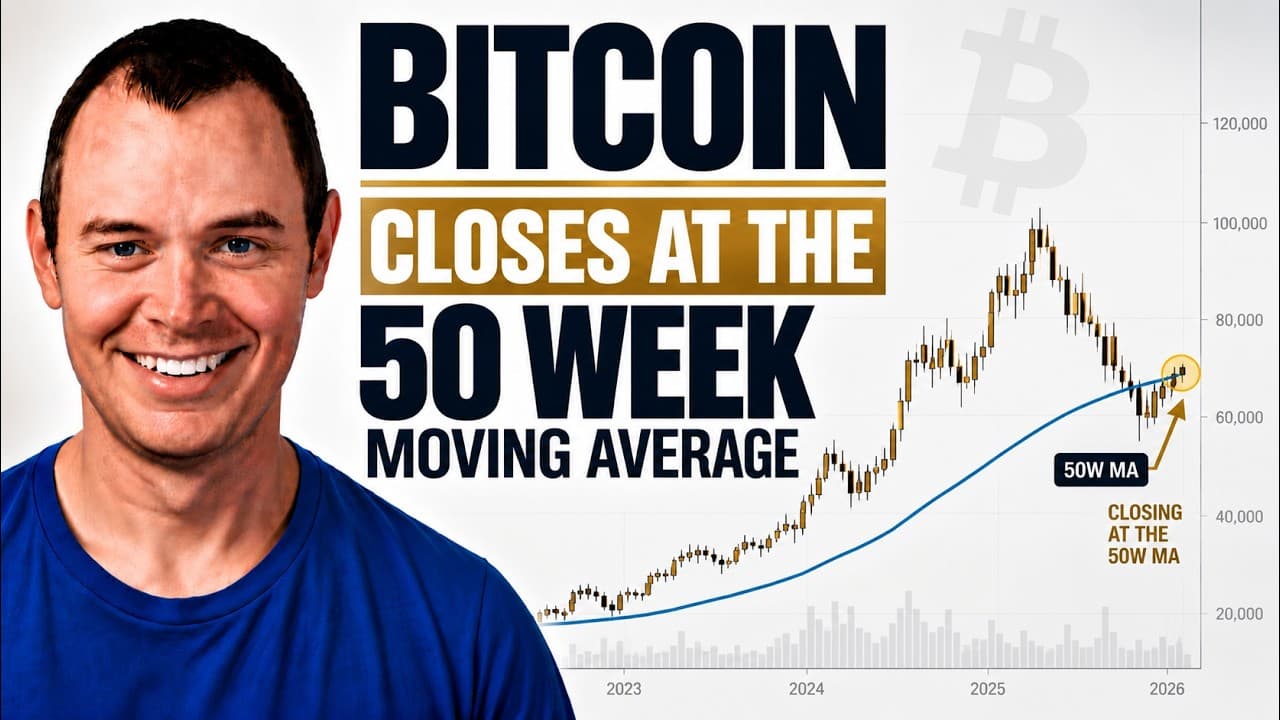
Bitcoin closed at its 50-week moving average, with variations across different exchanges. This position is critical as it could indicate the end of the bear market if Bitcoin maintains its position above this average. Historically, multiple closes above the 50-week moving average have signaled a bullish trend, while rejections often led to further declines.
Transcript
Hey everyone and thanks for jumping back into the cryptoverse. Today we're going to talk about Bitcoin as it closed right at the 50week moving average. If you guys like the content, make sure you subscribe to the channel, give the video a thumbs up, and also check out the sale on Into the Cryptoverse Premium at into the cryptoverse.com. Let's go ah... Read More
Key Insights
- Bitcoin closed at its 50-week moving average, which varies slightly across exchanges.
- The 50-week moving average is a critical indicator for potential market direction changes.
- Historically, multiple closes above this average often indicate the end of a bear market.
- Current market uncertainty is influenced by economic reports, like the non-farm payroll report.
- A strong labor market report increased the likelihood of a rate hike, impacting Bitcoin's price.
- Bitcoin has seen a 40% rally from its lows, typical of summer trends in previous years.
- If Bitcoin maintains above the 50-week average, it could signal a shift to a bullish market.
- Upcoming economic data, such as the inflation report, could further influence Bitcoin's trajectory.
Install to Summarize YouTube Videos and Get Transcripts
Explore YouTube Video Summarizer or Get YouTube Transcript Extractor
Questions & Answers
Q: Why is the 50-week moving average significant for Bitcoin?
The 50-week moving average is an important technical indicator that can signal potential market direction changes. Historically, when Bitcoin closes above this average multiple times, it often marks the end of a bear market and the beginning of a bullish trend. Conversely, rejections at this level have led to further price declines, making it a critical point for traders and investors to watch.
Q: How did the non-farm payroll report affect Bitcoin?
The non-farm payroll report indicated a strong labor market, which increased the likelihood of a Federal Reserve rate hike. This potential for higher interest rates can negatively impact risk assets like Bitcoin, leading to a sell-off as investors adjust their expectations for future economic conditions. The report's influence highlights the interconnectedness of economic data and cryptocurrency markets.
Q: What historical patterns influence Bitcoin's current market position?
Bitcoin's historical patterns show that multiple closes above the 50-week moving average often signal the end of a bear market. In contrast, rejections at this level can lead to further declines. Past market cycles have shown different top formations, such as euphoric, double, and apathetic tops, indicating that while certain patterns repeat, the specifics can vary each cycle.
Q: What impact could the upcoming inflation report have on Bitcoin?
The upcoming inflation report could significantly impact Bitcoin by influencing the Federal Reserve's monetary policy decisions. If inflation data comes in higher than expected, it may increase the probability of a rate hike, which could negatively affect Bitcoin's price as investors move away from riskier assets. Conversely, lower inflation could support Bitcoin's bullish momentum.
Q: How does Bitcoin's current rally compare to previous years?
Bitcoin's current 40% rally from its lows is consistent with historical summer trends seen in 2018, 2022, and 2026. These rallies are typical for the period and do not necessarily indicate a sustained bullish trend. The key question is whether Bitcoin will maintain its position above the 50-week moving average, which could signal a longer-term market shift.
Q: What are the implications of Bitcoin closing at the 50-week moving average?
Closing at the 50-week moving average places Bitcoin at a critical juncture, where maintaining or breaking this level could determine future market direction. Historically, maintaining above this average has marked the end of bear markets, while failure to do so has led to further declines. This position is crucial for traders and investors assessing Bitcoin's potential trajectory.
Q: What role do exchanges play in Bitcoin's closing price at the 50-week moving average?
Exchanges can show slight variations in Bitcoin's closing price relative to the 50-week moving average due to differences in trading volume, liquidity, and data reporting. These variations can create discrepancies in whether Bitcoin is perceived as closing above or below the average, affecting market sentiment and analysis. However, the overall trend remains a key focus for traders.
Q: How might Bitcoin's price movement be influenced by the Federal Reserve meeting?
The Federal Reserve meeting could influence Bitcoin's price movement by impacting interest rate expectations. If the Fed signals a rate hike, it could lead to a sell-off in risk assets like Bitcoin as investors seek safer investments. Conversely, if the Fed maintains rates or suggests a dovish outlook, it could support Bitcoin's bullish momentum, highlighting the significance of monetary policy on cryptocurrency markets.
Summary & Key Takeaways
-
Bitcoin's recent closure at the 50-week moving average is a pivotal moment, as it could signal a market shift. Historically, maintaining a position above this average has marked the end of bear markets, while rejections have led to further declines. Economic reports, such as the non-farm payroll and upcoming inflation data, are influencing market sentiment and Bitcoin's price movements.
-
The 50-week moving average serves as a critical indicator, with Bitcoin's price closure varying slightly across exchanges. A strong labor market report has increased the likelihood of a rate hike, impacting Bitcoin's short-term performance. Bitcoin's 40% rally from its lows is consistent with past summer trends, raising questions about whether this will lead to a sustained bullish trend.
-
Bitcoin's position relative to the 50-week moving average is crucial for determining future market direction. Historically, multiple closes above this average have signaled a bullish market shift. However, the upcoming inflation report and Federal Reserve meeting could influence Bitcoin's trajectory, as the market awaits further economic data to guide its movements.
Read in Other Languages (beta)
Share This Summary 📚
Summarize YouTube Videos and Get Video Transcripts with 1-Click
Try YouTube Summary with ChatGPT & Claude or YouTube Transcript Generator
Explore More Summaries from Benjamin Cowen 📚






Summarize YouTube Videos and Get Video Transcripts with 1-Click
Try YouTube Summary with ChatGPT & Claude or YouTube Transcript Generator